
The difference between a forgettable steak and one people ask you about later is almost always what happened before it hit the pan. This steak marinade does that work with soy sauce, Worcestershire, garlic, lime, and a little brown sugar, building a dark, caramelized crust on a cut that cost a fraction of a ribeye. Fifteen minutes of mixing, two hours in the fridge, and nothing in it you have to go looking for.
Worth knowing before you scroll: a marinade is a surface treatment, not a magic tenderizer, so what you do in the two minutes before the steak meets the heat matters as much as the hours it spent in the bag. I cover both below. If you like cooking beef in cast iron, you will also love my Skillet Ribeye Steak with Chimichurri Sauce and my Skillet Fajitas.
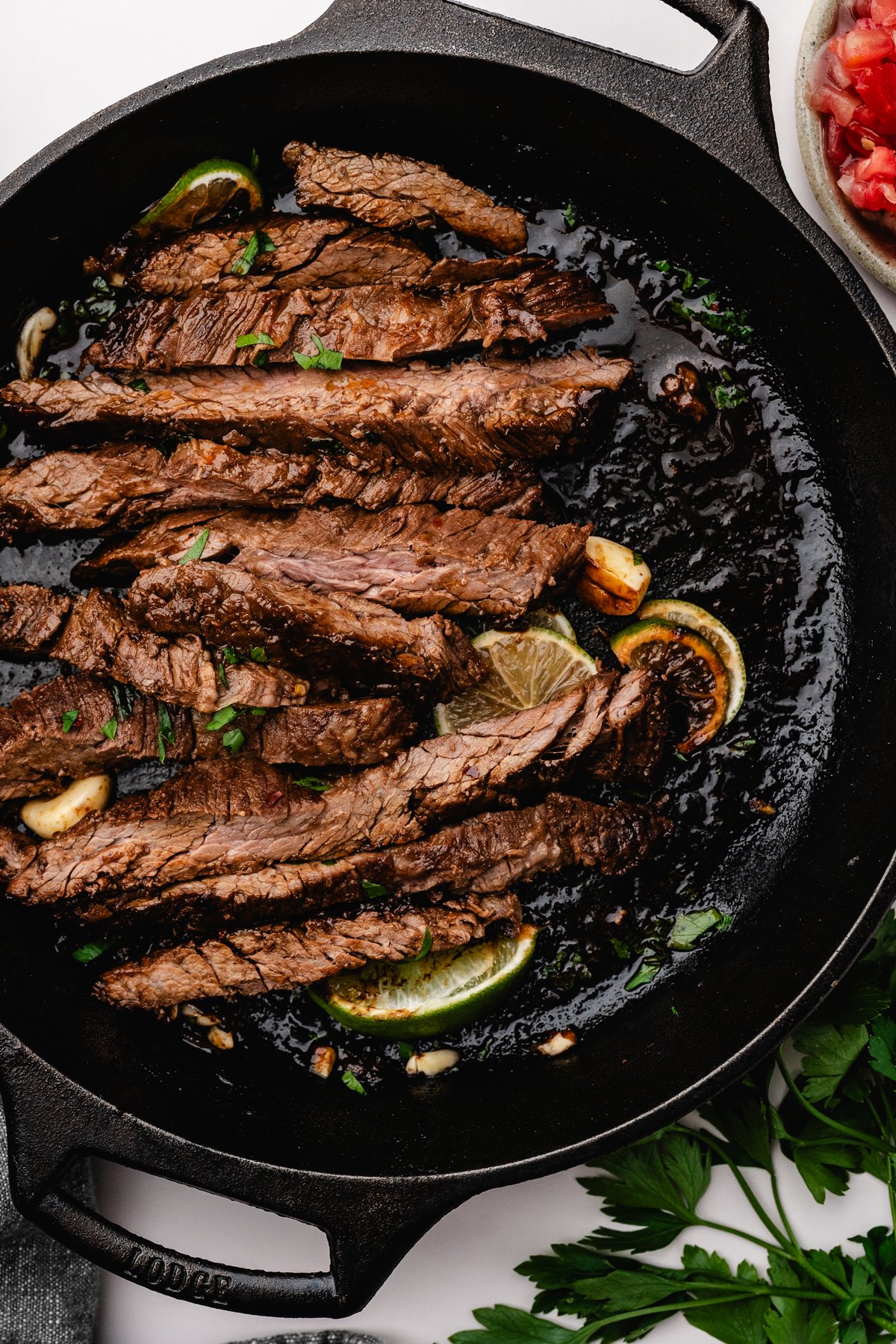
Why You’ll Love This Recipe
- Pantry Staples Only: Soy sauce, olive oil, Worcestershire, a lime, and a little brown sugar. No special trip, and no single-use bottle living in the fridge door for a year.
- Works on Any Cut: Skirt and flank come out noticeably more tender, while ribeye and strip pick up a far better crust and a deeper savory flavor.
- Ready in as Little as 2 Hours: Overnight gets you the most flavor, but a weeknight window is genuinely enough to make a difference.
- Freezer Friendly From Raw: Bag the steak with the marinade and freeze it flat. It marinates itself as it thaws, so dinner is ready to cook the moment it defrosts.
Steak Marinade Ingredients
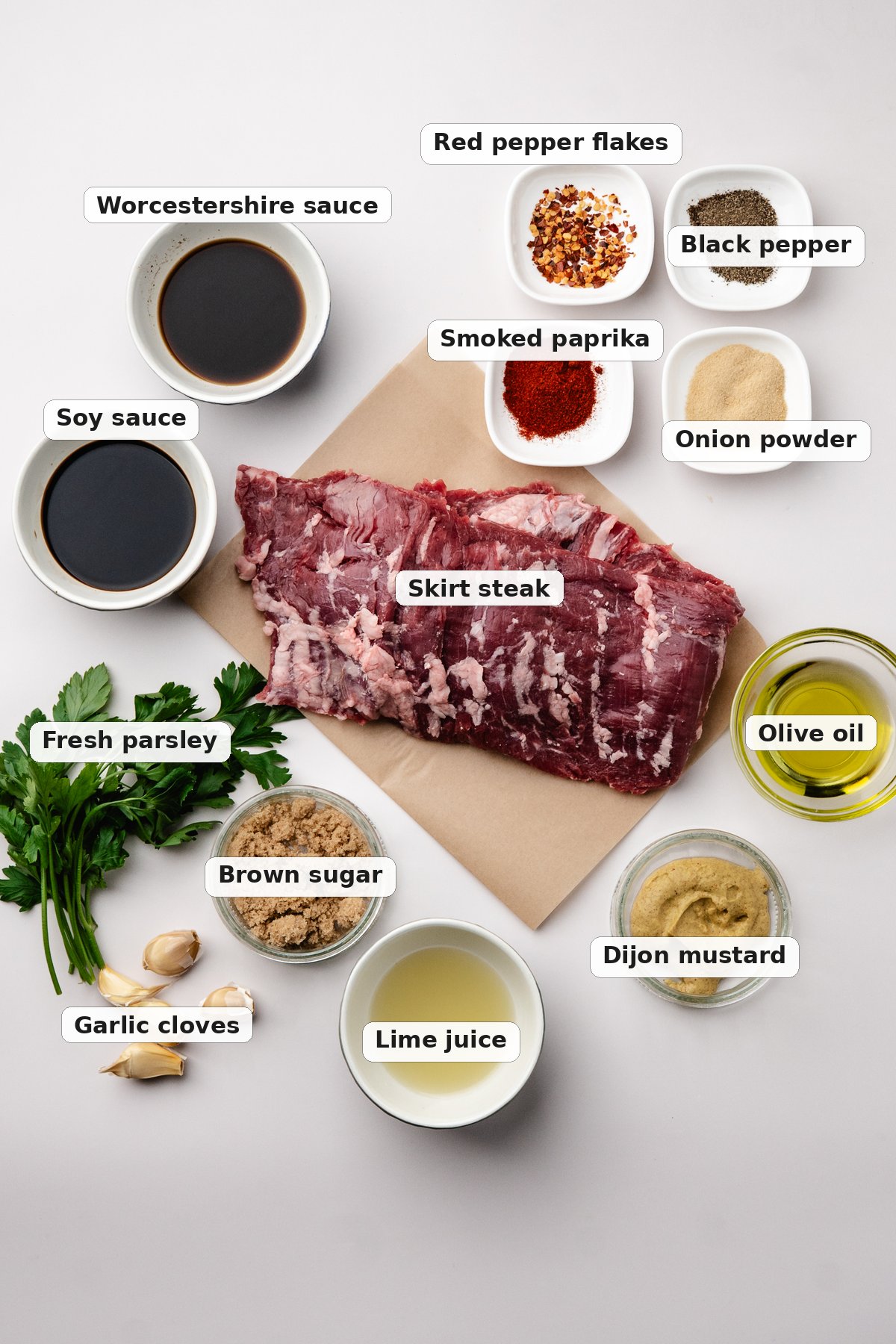
- Low-Sodium Soy Sauce: Salt and glutamates. It seasons the surface deeply without making the steak taste like a salt lick.
- Olive Oil: Carries the fat soluble flavors, helps the marinade cling, and keeps the steak from welding itself to the pan.
- Worcestershire Sauce: Anchovy and tamarind. This is where the deep, meaty, hard to place savoriness comes from.
- Fresh Lime Juice: Brightness, plus a light tenderizing effect on the surface of the meat.
- Brown Sugar: Not for sweetness. It is there so the surface caramelizes into a dark crust instead of going gray.
- Dijon Mustard: The quiet workhorse. Dijon is an emulsifier, so it holds the oil and the soy sauce together instead of letting them separate into two useless layers in the bag.
- Garlic and Spices: Fresh minced garlic, smoked paprika, onion powder, black pepper, and crushed red pepper flakes build the layers of flavor and a little heat behind everything else.
See the recipe card below for exact ingredient amounts, nutritional information, and detailed instructions.
How to Make Steak Marinade
This comes together in about fifteen minutes of actual work. Grab a bowl, a whisk, a large zip-top bag, and a cast iron skillet, then follow along:
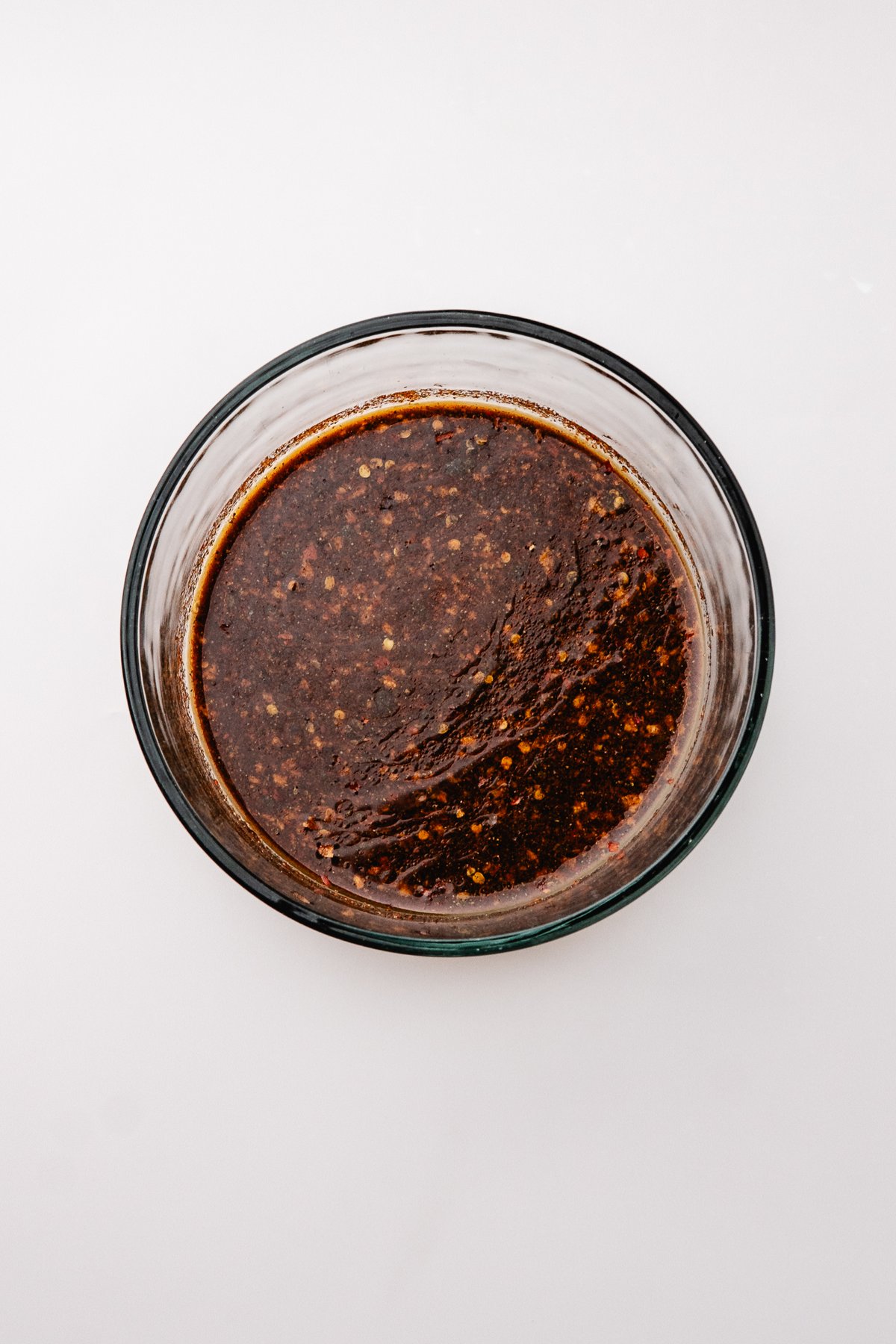
- Step 1: Whisk the Marinade. In a medium bowl, whisk together the soy sauce, olive oil, Worcestershire sauce, lime juice, brown sugar, garlic, Dijon mustard, smoked paprika, onion powder, black pepper, and red pepper flakes. Keep whisking until it looks glossy and combined rather than separated.
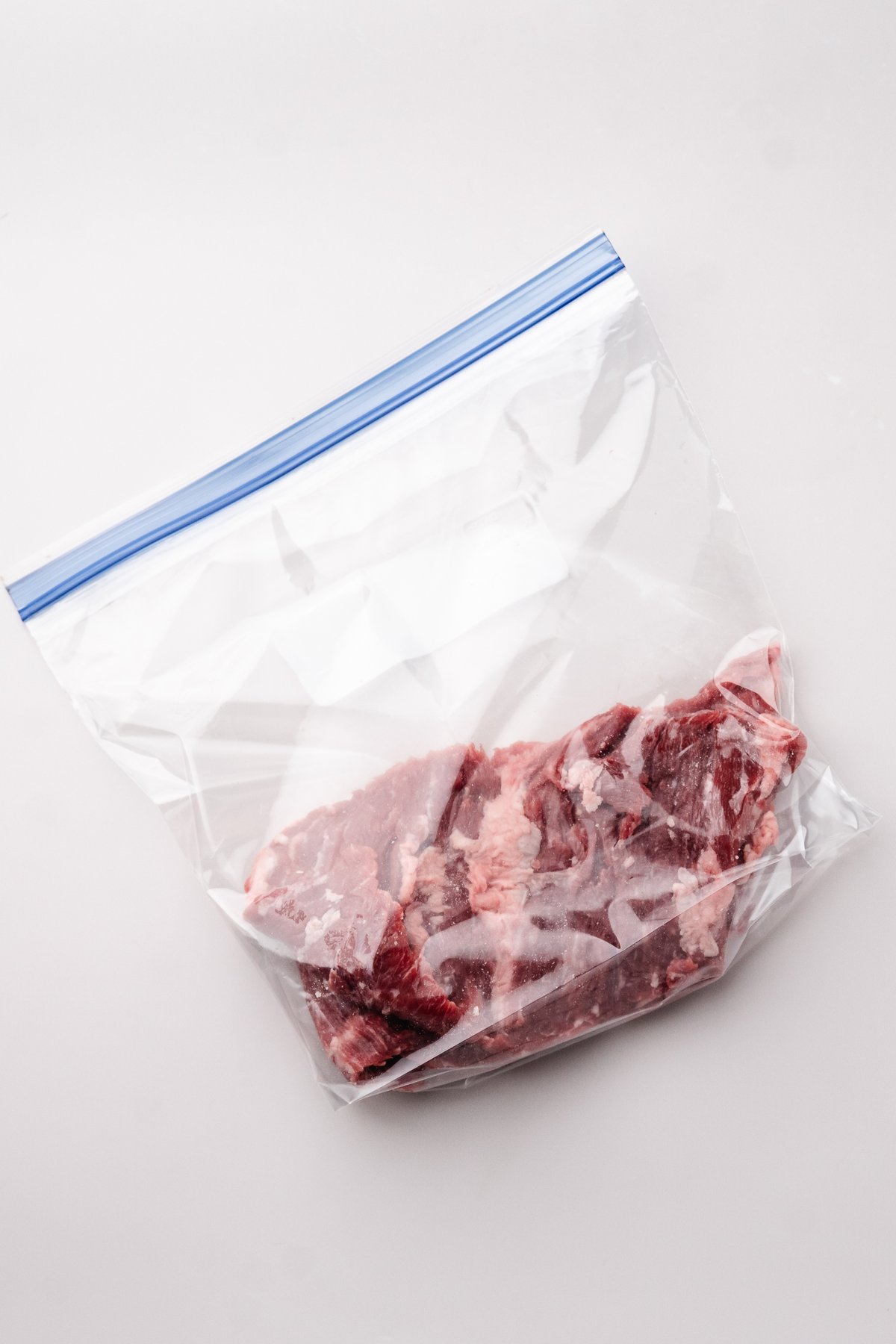
- Step 2: Bag the Steak. Pat the steak dry and place it in a large zip-top bag or shallow dish. Patting it dry first helps the marinade cling instead of sliding off.
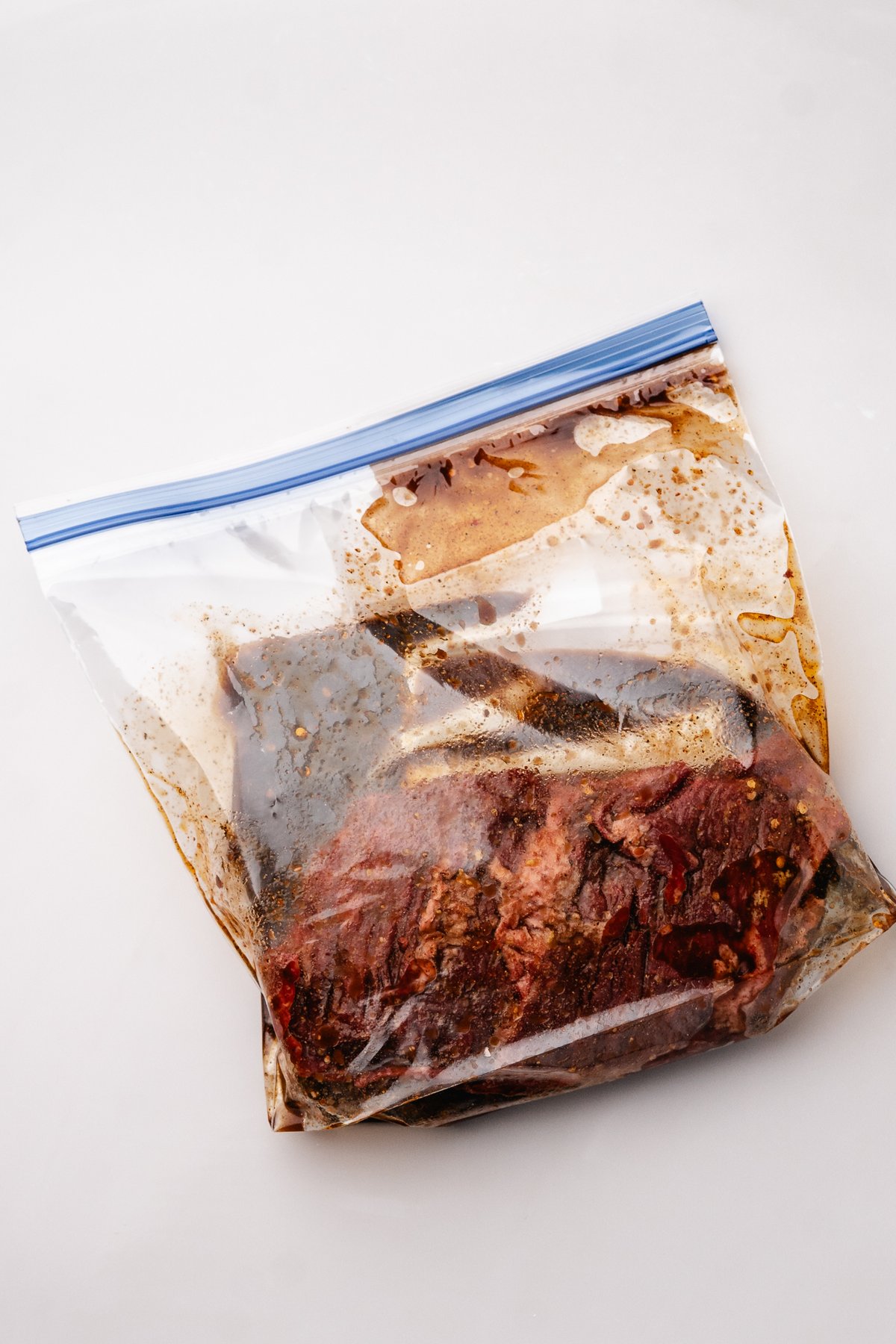
- Step 3: Marinate. Pour the marinade over the steak, press out the air, and seal. Refrigerate at least 2 hours, ideally 8 to 12. Never go past 24 hours.
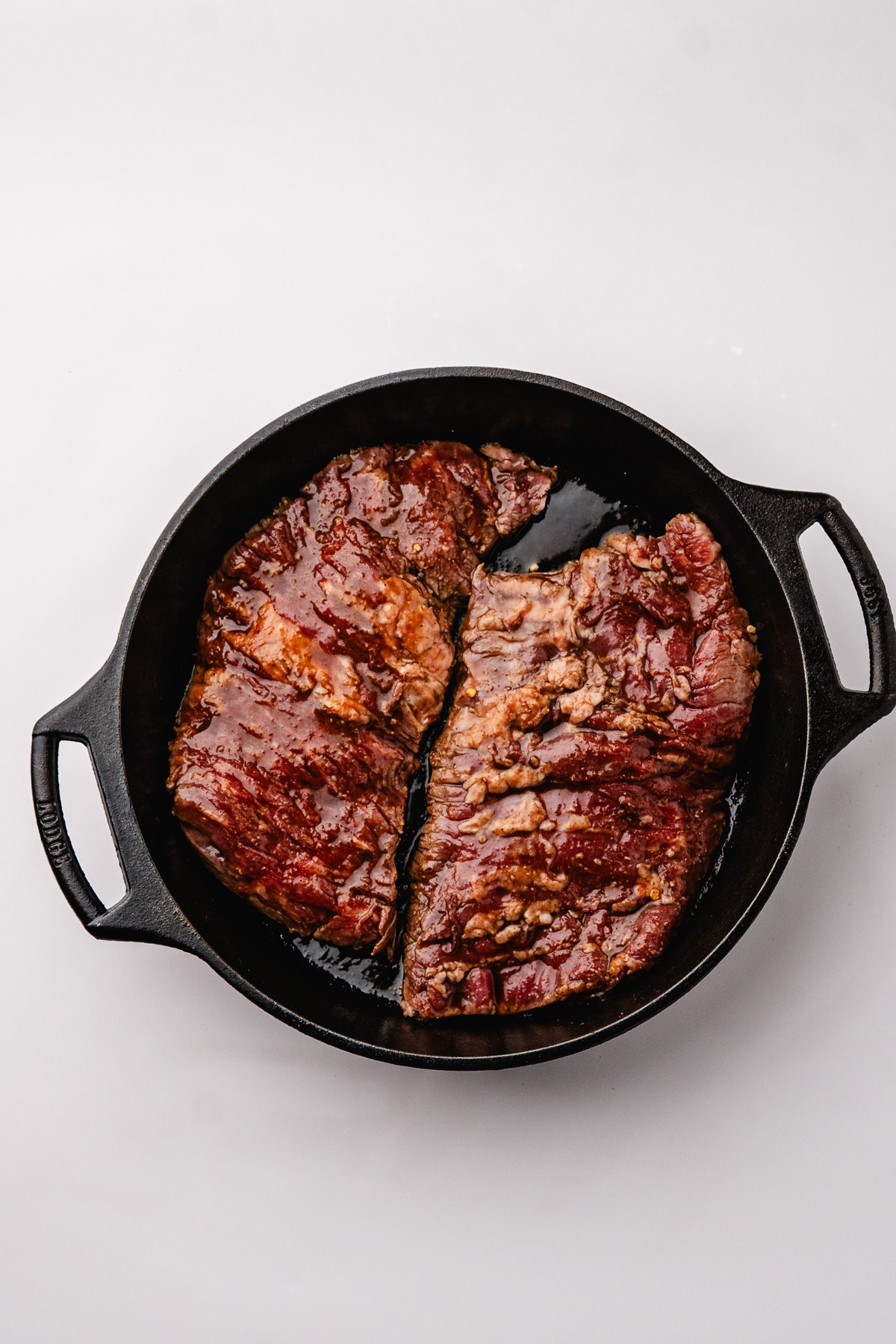
- Step 4: Pat Dry and Sear. Take the steak out 30 minutes before cooking. Blot both sides dry and scrape off any clinging garlic. Lay it in a screaming hot cast iron skillet and leave it undisturbed for 3 to 5 minutes.
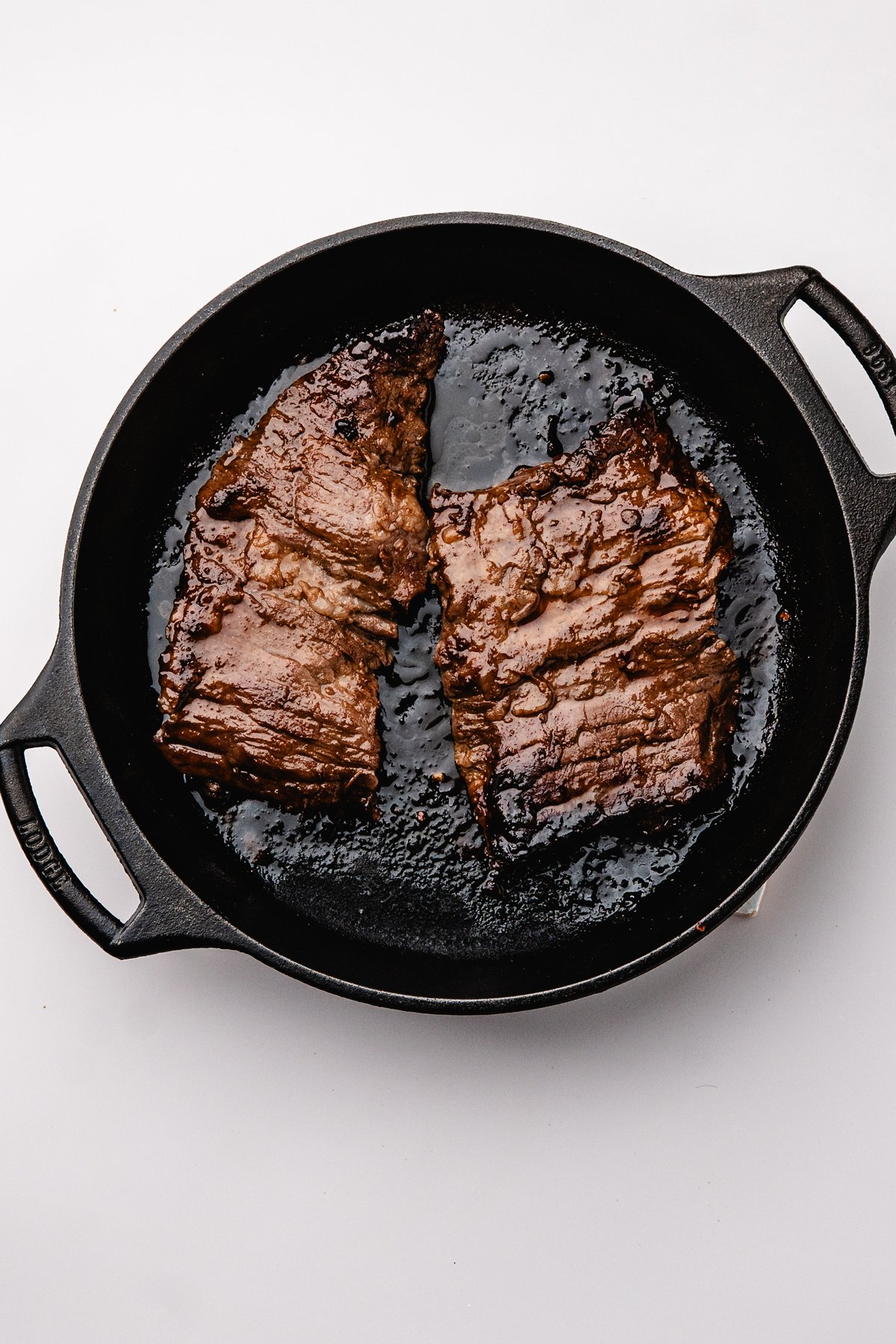
- Step 5: Flip and Check. Flip and cook another 2 to 4 minutes, until an instant-read thermometer reads about 5°F below your target. Medium rare is 130 to 135°F.
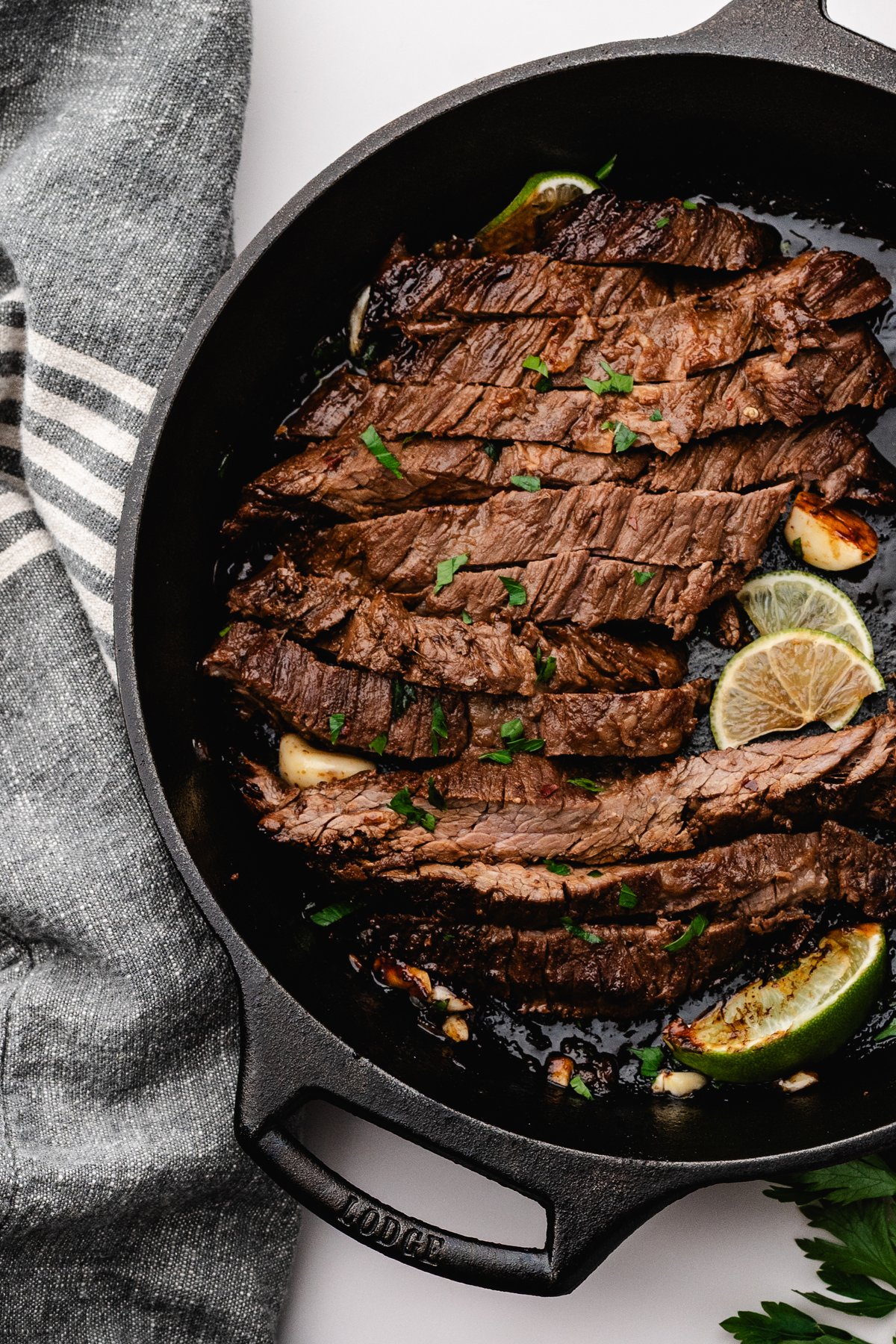
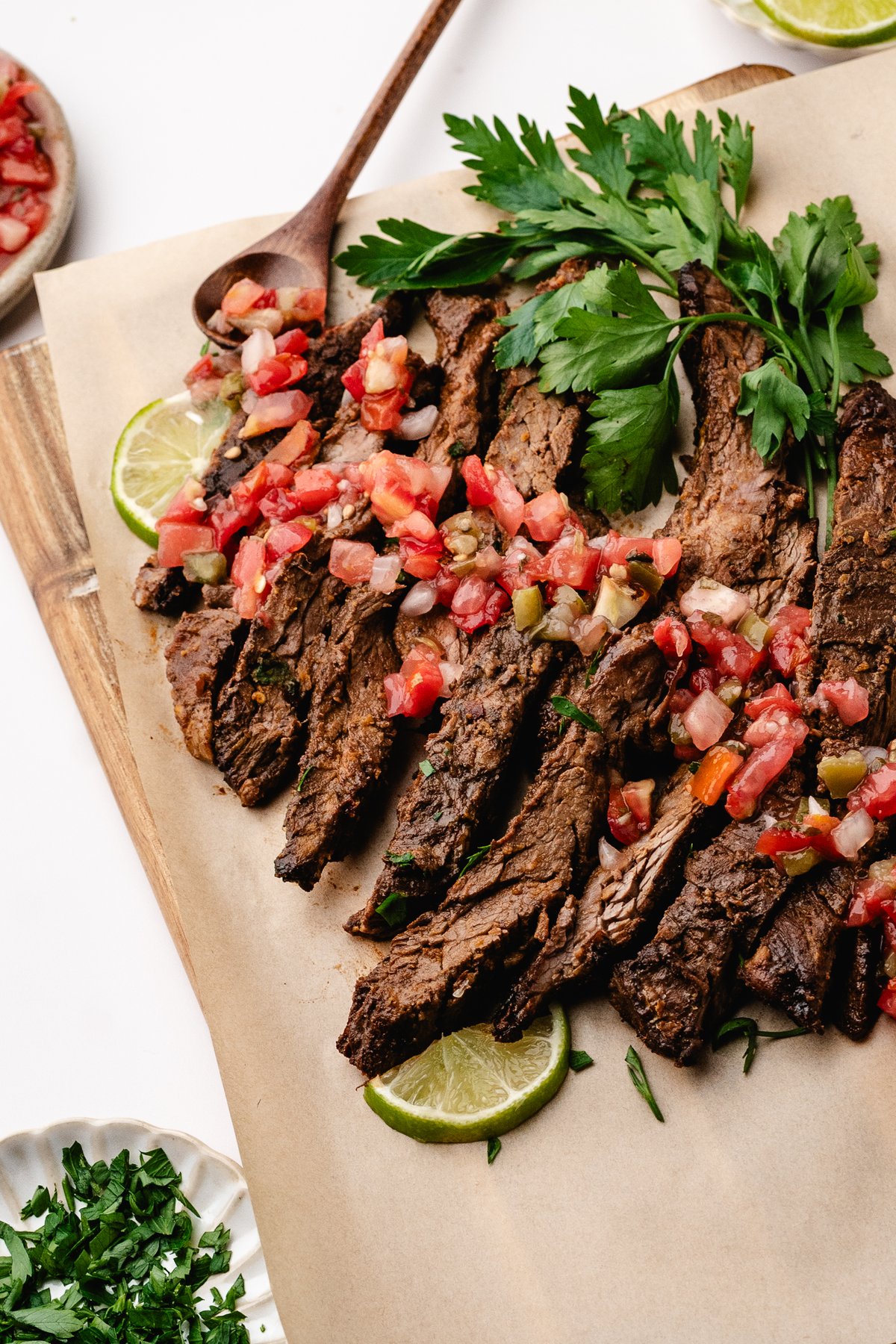
- Step 6: Rest and Slice. Rest the steak 10 minutes tented with foil, then slice it thin against the grain on a slight bias. Sprinkle with parsley and serve with lime wedges.
How Much Marinade Do You Need Per Pound of Steak?
This batch makes about 1½ cups, which is the right amount for 2 pounds of steak. The working ratio is roughly ¾ cup of marinade per pound of meat.
You want enough to coat every surface, not so much that the steak is swimming. Extra liquid does not add extra flavor, it just dilutes the sugars that build your crust. If you scale the recipe up, scale the marinade, not the marinating time.
Best Cuts of Steak for This Marinade
There are two groups here, and they benefit in completely different ways.
Cuts that need it: skirt, flank, hanger, top sirloin, London broil, chuck eye. These are lean, coarse grained, and full of connective tissue. They have the most surface area relative to their thickness, so they soak up the most flavor and gain the most.
Cuts that just get better: ribeye, New York strip, tri-tip, flat iron. These are already tender, so the marinade is not doing tenderizing work. It is adding crust and savoriness. Two to four hours is plenty for these.
The photos in this post are skirt steak, which is the cut I built this steak marinade recipe around. If you would rather cook beef low and slow instead, my Dutch oven beef brisket and braised short ribs take the opposite approach.
How Long to Marinate Steak
Minimum 2 hours. Sweet spot 8 to 12 hours. Hard stop at 24 hours.
Past 24 hours the salt and the lime juice start breaking down the surface proteins, and the texture goes soft and mealy rather than tender. That is a real failure mode, not a vague warning. Set a reminder if you are marinating overnight.
Now the part almost nobody tells you. A marinade only penetrates a few millimeters. It is a surface treatment. That is not a reason to skip it, because the surface is where every bit of crust and the entire first bite live, but it explains two things people get wrong.
First, marinating a thick ribeye for three days does nothing useful. The middle will never taste like the marinade no matter how long you wait. Second, it is why thin, coarse grained cuts like skirt and flank benefit so much more than thick ones. More surface, less interior, so a bigger share of every bite has been seasoned.
Pat the Steak Dry Before It Hits the Pan
This is the step that separates a good marinated steak from a gray one, and it takes fifteen seconds.
Three things go wrong if you drop a dripping steak straight onto heat. The surface moisture has to boil off before browning can even begin, so the steak steams itself gray. The brown sugar clinging to the outside scorches and turns acrid. And the loose garlic and spice solids burn long before the meat is done.
Pull the steak from the bag, let it drip for a few seconds, then blot both sides with paper towels and scrape off any clinging bits of garlic or spice. It should look almost dry going in. You are not wiping off the flavor. That is already in the meat.
Cast Iron vs. Grill for Marinated Steak
Most recipes say either one works and leave it there. For a marinade with sugar and oil in it, the two are genuinely different.
Cast iron gives you edge to edge contact and the most even crust, the same reason it is my default for a plain cast iron steak too, and the sugars caramelize in the pan instead of dripping away. You need a seriously hot pan and serious ventilation, because this will smoke. Get your cast iron skillet preheated until it is just starting to smoke before the steak goes near it.
A grill gives you char and smoke and no kitchen full of haze. The tradeoff is that the oil and sugar drip onto the flame and cause flare-ups, so you want a two zone setup with a cool side to move to, and you do not walk away.
For a marinade with brown sugar in it, cast iron is the more forgiving of the two.
Steak Doneness Temperatures
- Rare: 120 to 125°F
- Medium Rare: 130 to 135°F
- Medium: 140 to 145°F
- Medium Well: 150 to 155°F
- Well Done: 160°F
Pull the steak about 5°F below your target, because it keeps cooking while it rests. Then rest it a full 10 minutes, loosely tented with foil, so the juices redistribute instead of running out onto the board.
Use an instant read thermometer. Skirt and flank are thin enough that the window between a perfect medium rare and an overcooked steak is roughly ninety seconds.
Slice Against the Grain
This does more for tenderness than any marinade can, and it is the step most recipes skip.
The grain is the direction the muscle fibers run, and on skirt steak you can see it with the naked eye. Look at the raw steak before it goes in the marinade and note which way the lines run, because the sear makes it harder to read later.
When you slice, cut across those lines rather than along them, on a slight bias, as thin as you can manage. You are shortening the fibers so your teeth do less work. Slice a skirt steak with the grain and it will be chewy no matter how long it marinated.
Make It Ahead and Freeze It
The marinade on its own keeps in an airtight container in the fridge for 5 days, or in the freezer for 3 months. Bring it back to room temperature and whisk it again before using, because the olive oil solidifies cold.
Raw steak in the marinade is the better move. Put the steak and marinade in a freezer bag, press out the air, and freeze it flat for up to 3 months. Thaw it overnight in the refrigerator and it marinates itself as it defrosts, so it is ready to cook the moment it is thawed. No extra step, no remembering to start it that morning.
What To Do With the Leftover Marinade
Marinade that has touched raw beef is not safe to use as is. You have two good options.
Set aside a few tablespoons before the steak goes in, and use that clean portion as a finishing drizzle over the sliced steak. Or take the used marinade, bring it to a full rolling boil for at least 3 minutes, then simmer it down until it is glossy and slightly thick. The boil makes it safe and the reduction makes it very good.
Marinade that never met raw meat keeps 5 days in the fridge.
Variations
- Different Acid: Swap the lime for lemon juice or red wine vinegar.
- Different Sweetener: Use honey or maple syrup in place of the brown sugar.
- Herby Steakhouse: Add chopped fresh rosemary and thyme for a richer, steakhouse butter direction.
- Gluten Free: Use tamari or coconut aminos in place of the soy sauce.
- Extra Heat: Double the red pepper flakes and add a minced chipotle in adobo.
- Enzyme Boost: For a very tough cut, add 2 tablespoons of fresh pineapple or kiwi juice, but cut the marinating time to 2 hours maximum. Enzymes work far faster and harder than acid, and they will turn the surface to mush if you leave them.
- Other Proteins: The same marinade works on chicken thighs and pork chops with the same timing.
Storage and Reheating
Cool leftover cooked steak completely, then refrigerate it airtight for up to 4 days. Store the slices with whatever juices came off the board, because that is where a lot of the flavor went. Cooked slices freeze for up to 3 months.
To reheat, best to worst: a skillet over medium low with a splash of beef broth for 2 to 3 minutes, a 300°F oven covered with foil for about 10 minutes, or the microwave at 50 percent power in 30 second bursts.
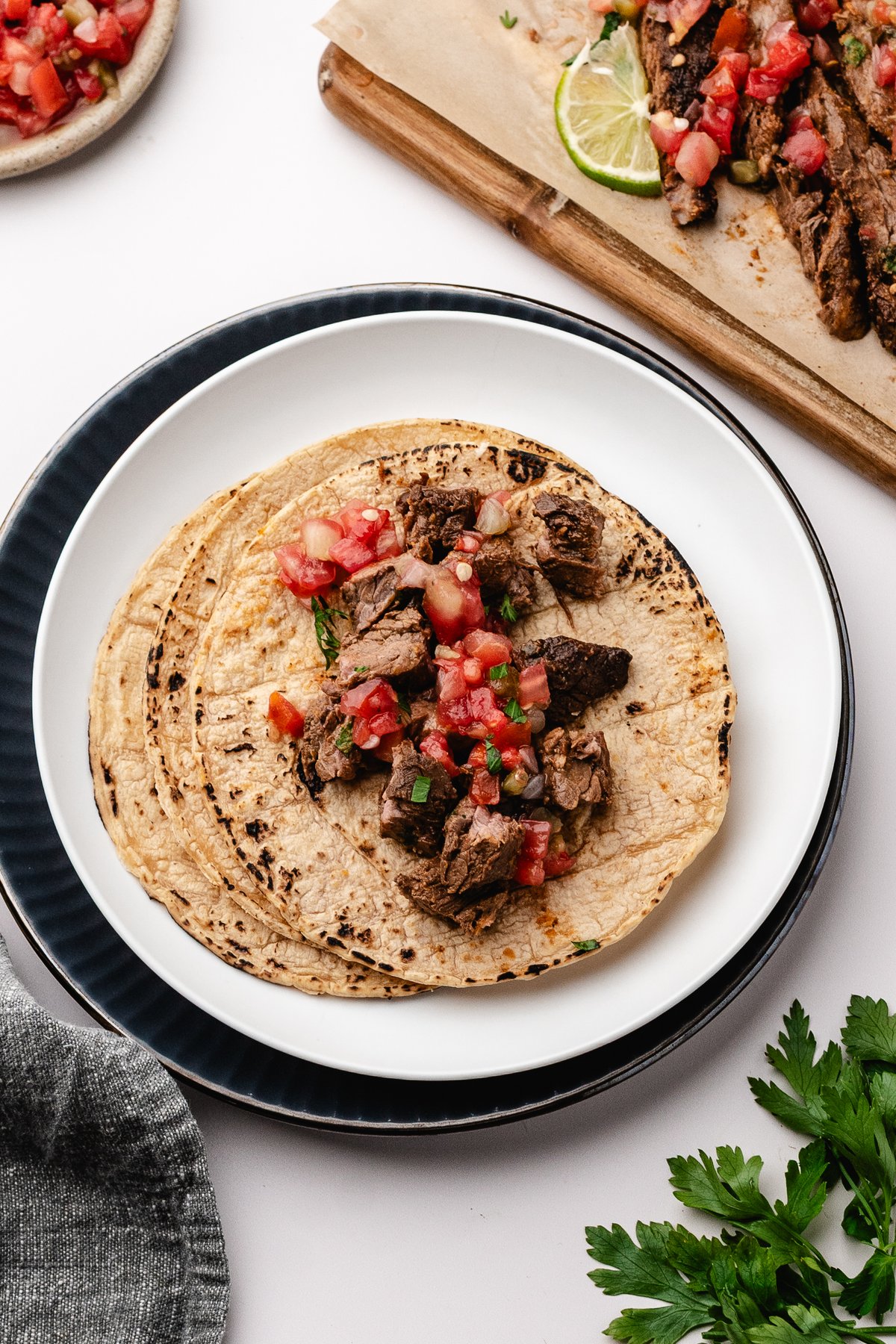
Honestly though, reheated steak always gives up a little. Leftovers are better cold or barely warmed, piled into skillet fajitas, tacos, salads, or rice bowls. Sliced thin, it also makes a fast stand-in for the beef in a Philly cheesesteak skillet.
Expert Tips
- Temper the Steak: Take it out of the fridge 30 minutes before cooking so it cooks evenly instead of going gray at the edges.
- Get the Pan Truly Hot: Preheat until it is actually smoking, not just hot. A lukewarm pan steams the steak.
- Do Not Move It: Once the steak is down, leave it alone for the full 3 to 5 minutes. Moving it restarts the crust.
- Give It Room: Do not crowd the pan. Cook in batches if you have more than one piece.
- Slice Thin: As thin as you can manage, always across the grain.
- Rest It: A full 10 minutes. There is no shortcut here.
What To Serve With Marinated Steak
This steak goes with almost anything, but a few favorites:
- Garlic butter skillet corn
- Fondant potatoes
- Chimichurri sauce
- Skillet roasted asparagus
- Crispy buttermilk onion rings
- Cranberry broccoli salad
- Cilantro lime rice
- Tomato and cucumber salad
- Warm flour tortillas for tacos
- Macaroni or potato salad for a summer cookout
For a fun, crowd-pleasing side, serve your steak with Cheetos Cheesy Potatoes.
Recipe FAQs
At least 2 hours, ideally 8 to 12, and never more than 24. Two hours is enough to season the surface and start building crust. Overnight gets you the most flavor. Past 24 hours the salt and acid break down the surface proteins and the texture turns soft and mealy instead of tender.
Only at the surface, and only a little. A marinade penetrates a few millimeters at most, so it is really a flavor and crust treatment rather than a tenderizer. That is why thin, coarse grained cuts like skirt and flank benefit the most, and why slicing against the grain does more for tenderness than any marinade can.
Not as is. Marinade that has touched raw beef carries bacteria from the meat. You have two safe options: set some aside before the steak goes in and use that clean portion as a finishing sauce, or boil the used marinade at a full rolling boil for at least 3 minutes and reduce it into a pan sauce.
Yes, and it matters more than most people realize. A wet steak steams instead of searing, and the brown sugar and spice solids clinging to the surface will scorch and turn bitter. Let the steak drip, blot both sides with paper towels, scrape off loose solids, and put it in the pan almost dry.
Skirt steak, flank steak, hanger, top sirloin, and London broil gain the most, since they are lean and coarse grained. Ribeye, New York strip, and flat iron do not need tenderizing but still pick up a noticeably better crust and more savory flavor.
Yes, and it is the best way to use this recipe. Put the raw steak and marinade in a freezer bag, press out the air, and freeze flat for up to 3 months. Thaw it overnight in the refrigerator and it marinates itself as it defrosts, so it is ready to cook as soon as it is thawed.
More Cast Iron Beef Recipes
- Cast Iron Steak
- Pecan Smoked Skillet Beef Short Ribs
- Philly Cheesesteak Skillet
- Ground Beef and Potatoes Skillet
- Dutch Oven Beef Brisket
- Skillet Fajitas
If you tried this steak marinade recipe or any other recipe on my blog, please leave a 🌟 star rating and let me know how it went in the 📝 comments below. Thanks for visiting!
Get the Recipe
Steak Marinade
Ingredients
For the Marinade
- ½ cup low-sodium soy sauce
- ¼ cup olive oil
- 3 tablespoon Worcestershire sauce
- 2 tablespoon lime juice fresh
- 2 tablespoon brown sugar packed
- 5 cloves garlic minced
- 1 tablespoon Dijon mustard
- 2 teaspoon smoked paprika
- 1 teaspoon onion powder
- 1 teaspoon black pepper
- ½ teaspoon crushed red pepper flakes
For the Steak
- 2 lb skirt steak or flank, sirloin, or your cut of choice
- fresh parsley chopped, for garnish
- lime wedges for serving

Instructions
- In a medium bowl, whisk together the soy sauce, olive oil, Worcestershire sauce, lime juice, brown sugar, garlic, Dijon mustard, smoked paprika, onion powder, black pepper, and red pepper flakes until fully combined and emulsified.
- Pat the steak dry and place it in a large zip-top bag or shallow dish. Pour the marinade over, making sure every surface is coated. Press the air out and seal.
- Refrigerate at least 2 hours. For the deepest flavor, marinate 8 to 12 hours. Do not exceed 24 hours or the texture will turn mealy.
- Take the steak out of the refrigerator 30 minutes before cooking. Remove it from the marinade, let it drip, then blot both sides dry with paper towels and scrape off any clinging garlic or spice. Discard the used marinade, or boil it a full 3 minutes if you want to reduce it into a sauce.
- Heat a large cast iron skillet over high heat, or heat a grill to high with a two-zone setup, until it is just beginning to smoke.
- Lay the steak down and leave it undisturbed for 3 to 5 minutes, until a dark crust forms.
- Flip and cook another 2 to 4 minutes, until an instant-read thermometer reads about 5°F below your target doneness. Medium rare is 130 to 135°F.
- Transfer to a cutting board, tent loosely with foil, and rest 10 minutes.
- Slice thin against the grain on a slight bias. Sprinkle with parsley and serve with lime wedges.
Notes
- Marinating window. Minimum 2 hours, best at 8 to 12 hours, never more than 24. Past that the salt and acid break down the surface and the texture goes mealy.
- How much you need. This makes about 1½ cups, roughly ¾ cup of marinade per pound of meat.
- Pat it dry. A wet steak steams instead of searing, and the brown sugar on the surface will scorch. Blot both sides before it hits the pan.
- Freeze from raw. Bag the raw steak with the marinade and freeze flat up to 3 months. It marinates itself as it thaws in the fridge overnight.
- Leftover marinade. Never reuse marinade that touched raw beef without boiling it for at least 3 minutes. Set some aside before adding the steak if you want a clean finishing sauce.
- Storage. Cooked steak keeps 4 days in the fridge or 3 months frozen. Unused marinade keeps 5 days in the fridge.
- About the nutrition. Most of the marinade is discarded rather than eaten, so the sodium and calorie figures below overstate what actually ends up on your plate.
Nutrition
Dutch Oven Daddy is not a dietician or nutritionist, and any nutritional information shared is only an estimate. We recommend running the ingredients through an online nutritional calculator if you need to verify any information.
Dina and Bruce says
This marinade was perfect! Our steaks were so tasty and juicy! Will make again!
Spencer Adams says
I absolutely adore the Steak Marinade recipe! It infuses every cut of steak with an incredible flavor and tenderness!