
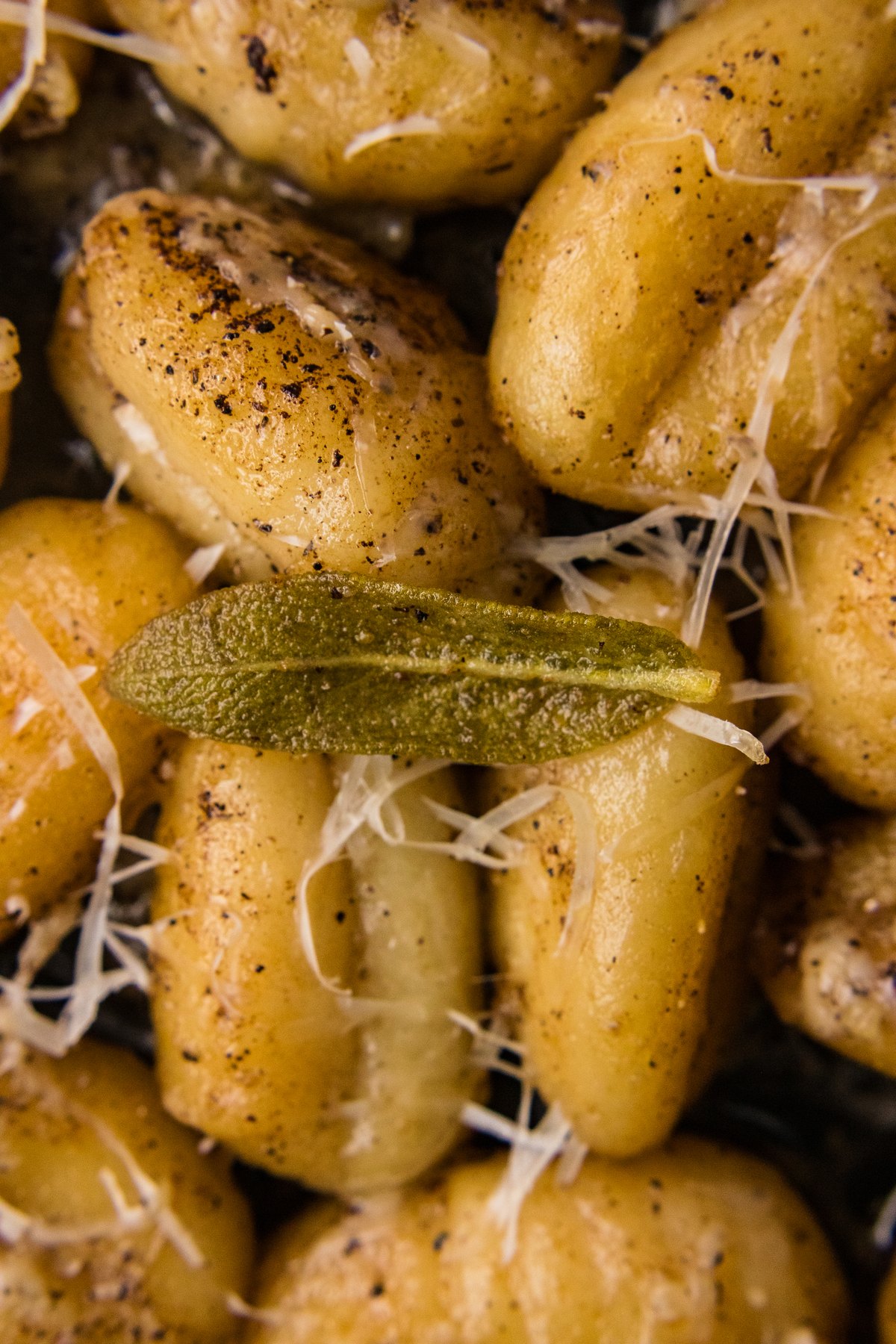
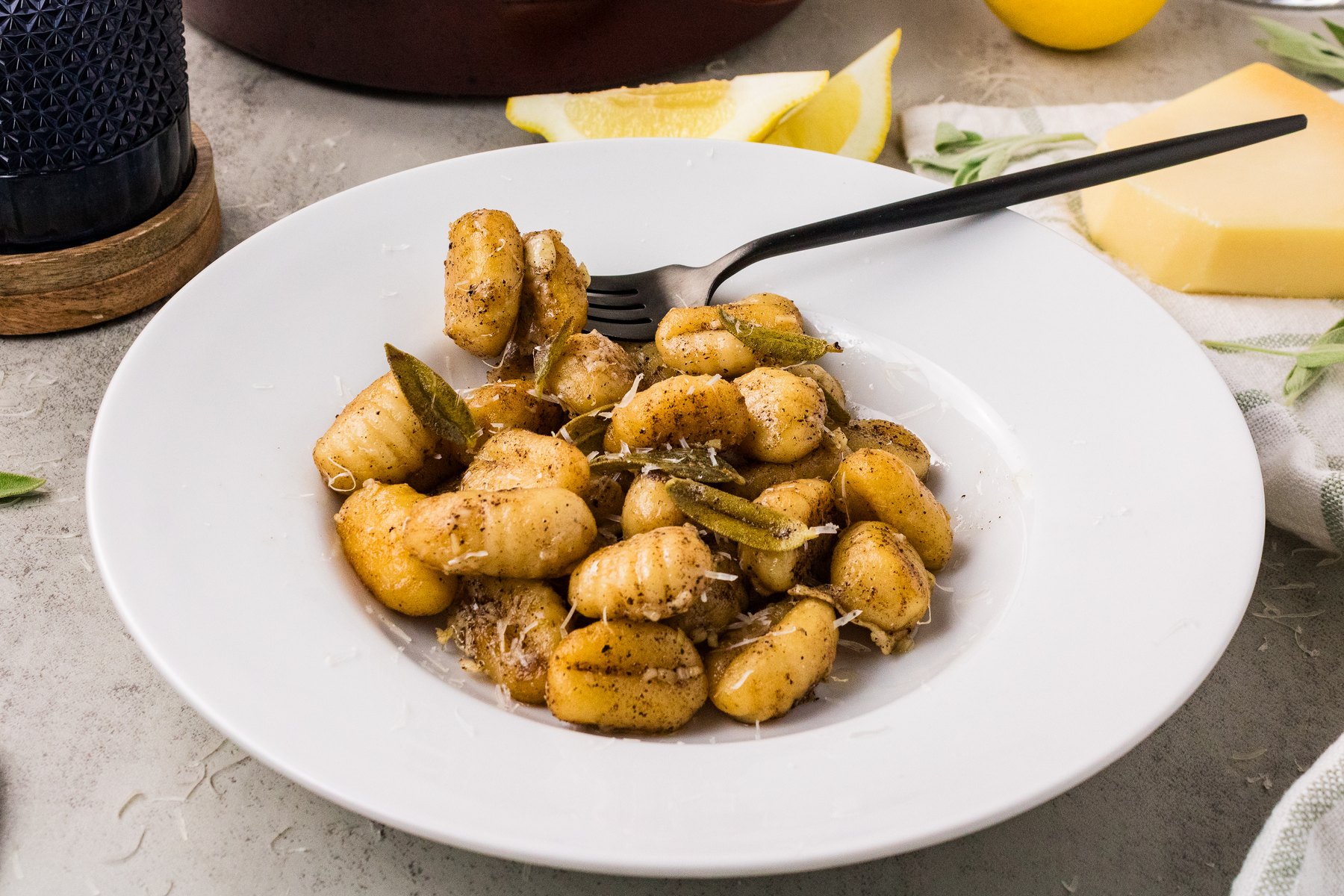
Brown Butter Sage Gnocchi announces itself by smell. Butter hits a hot cast iron skillet with a handful of whole sage leaves, and about three minutes later the kitchen smells like toasted hazelnuts. Thirty minutes, one skillet, and a short list of ingredients you probably already have.
The gnocchi gets boiled first, then seared in that browned butter until the edges turn golden and crisp while the middles stay pillowy. If you like what a good skillet can do on a weeknight, you will also want my cast iron skillet chicken and the rest of my cast iron skillet recipes.
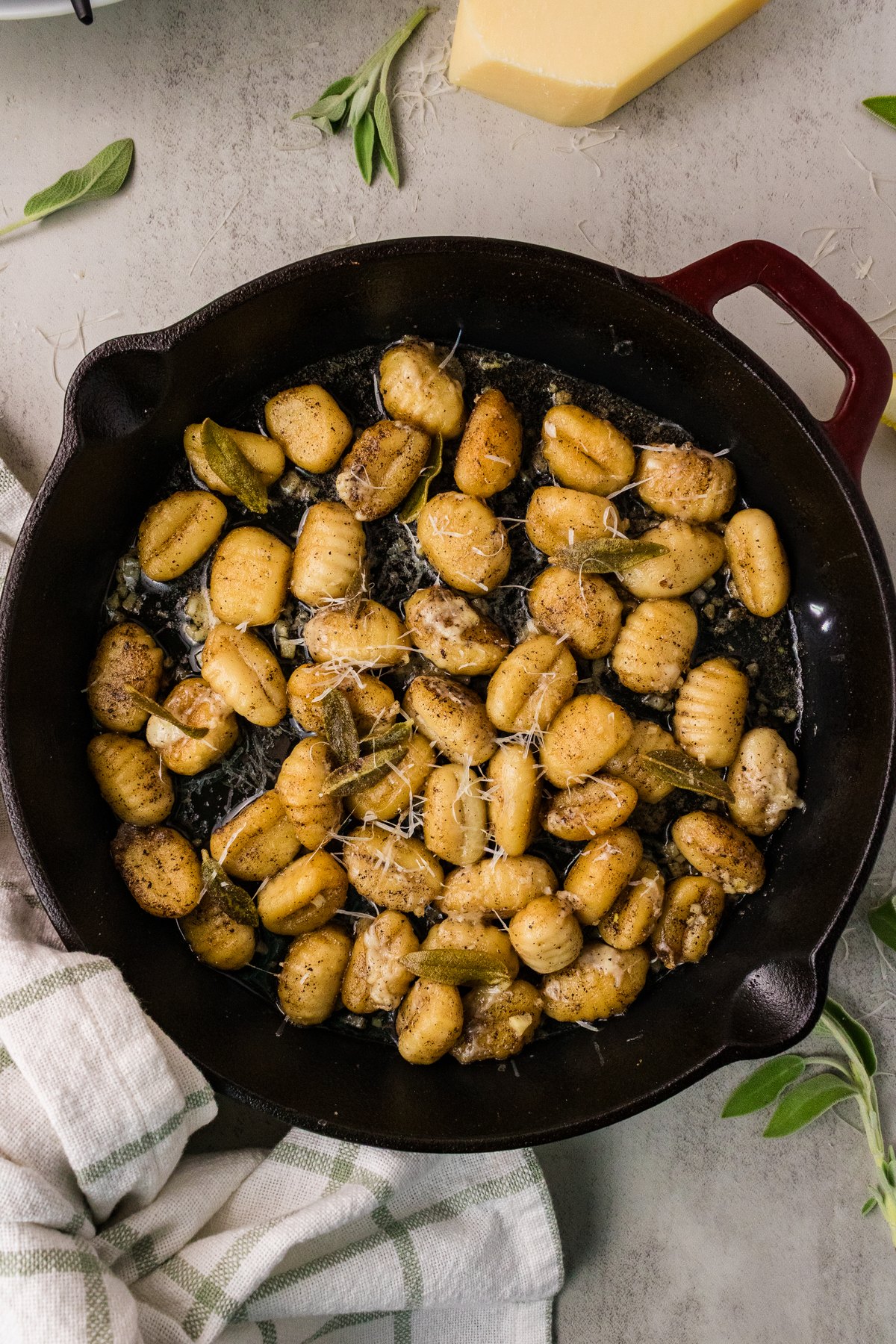
Quick Look at this Recipe
- ✅ Recipe Name: Brown Butter Sage Gnocchi
- 🕒 Ready In: 30 minutes (10 minutes prep, 20 minutes cook)
- 👪 Serves: 4 people
- 🥣 Main Ingredients: Potato gnocchi, unsalted butter, fresh sage, Parmesan cheese, garlic
- 📖 Dietary Info: Vegetarian. Easily made gluten-free with gluten-free potato gnocchi
- ⭐ Why You'll Love It: Crispy golden gnocchi in nutty brown butter, all in one skillet in half an hour
Summarize and Save the Recipe
Jump to:
- Quick Look at this Recipe
- Why You'll Love This Brown Butter Sage Gnocchi
- What Makes This Cast Iron Version Different
- How Brown Butter Actually Works
- Ingredients for Brown Butter Sage Gnocchi
- Variations
- Expert Tips
- Storage and Reheating
- What to Serve With Brown Butter Sage Gnocchi
- Frequently Asked Questions
- More Delicious Recipes
- Get the Recipe
Why You'll Love This Brown Butter Sage Gnocchi
- Ready in just 30 minutes. Ten minutes of prep, twenty on the stove, and dinner is done.
- One skillet does the heavy lifting. Brown the butter, crisp the sage, sear the gnocchi, build the sauce, and serve straight from the pan.
- Simple pantry ingredients. Store-bought gnocchi, butter, Parmesan, garlic, and a handful of fresh sage.
- Crispy outside, pillowy inside. That texture contrast is the whole point, and cast iron is what delivers it.
What Makes This Cast Iron Version Different
Most versions of this recipe call for a nonstick or stainless pan. Cast iron holds heat far better, so the gnocchi keeps searing the moment it hits the surface instead of dropping the pan temperature and steaming. That is the difference between gnocchi that is merely warm and gnocchi with a real golden crust.
There is a catch, and it is the reason almost nobody writes about making brown butter in cast iron: the dark surface hides the color change. You cannot judge doneness by looking at the butter against the pan the way you would in a light-colored skillet. You judge it by the milk solids and by smell, which is easier than it sounds once you know to look for it.
How Brown Butter Actually Works
Butter is roughly 80 percent fat, 16 percent water, and 4 percent milk solids. When it melts, the water boils off first, and that is the foaming stage you see and hear. Once the water is gone, the pan temperature climbs quickly and those milk solids toast through a Maillard reaction. That toasting is where all the nutty flavor comes from.
Past that point the solids burn fast, and in cast iron you will smell it before you ever see it. This is also why the sage comes out of the pan early. Whole leaves crisp in about two to three minutes, well before the butter finishes browning, and leaving them in any longer turns them black and bitter instead of green and crisp.
Ingredients for Brown Butter Sage Gnocchi
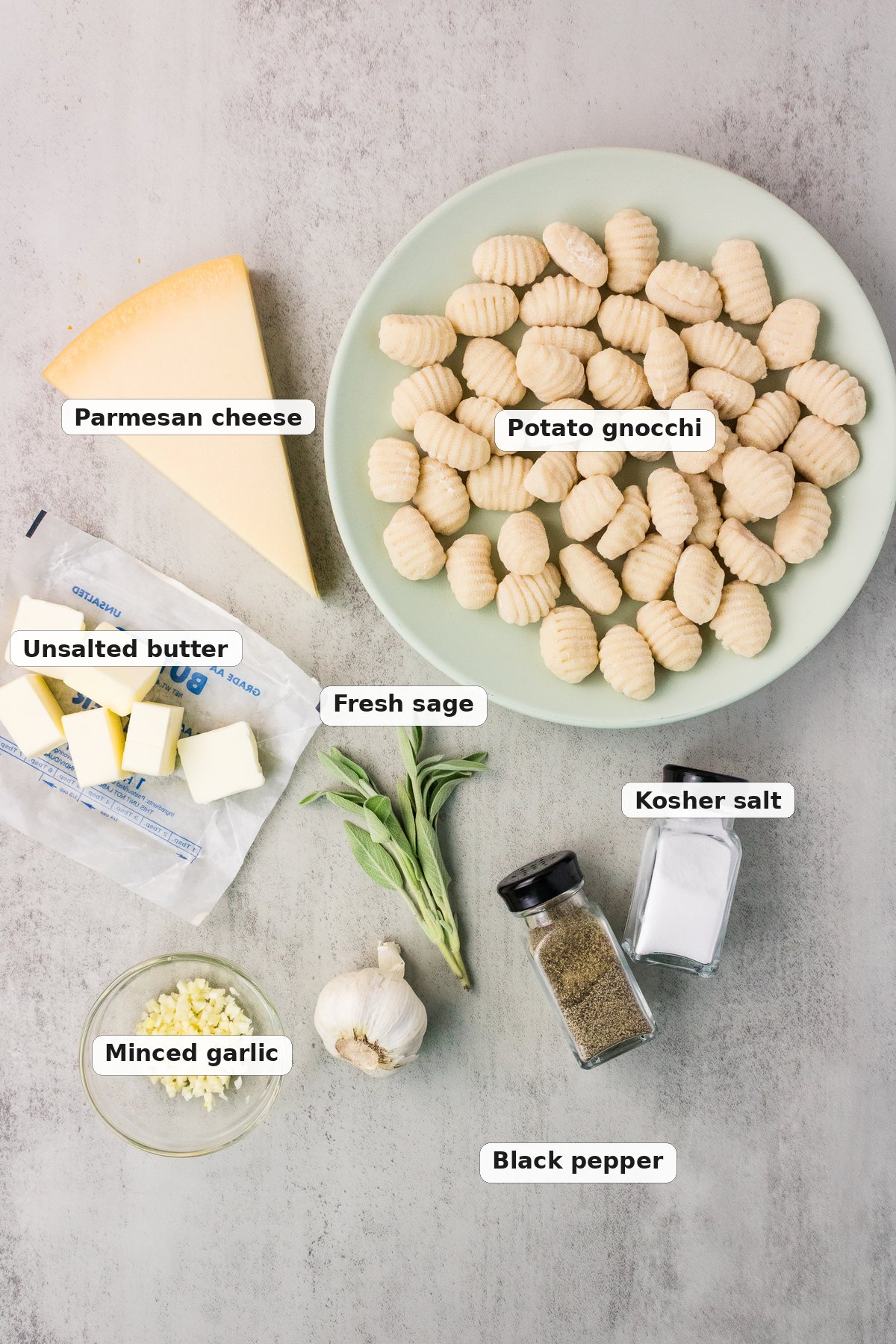
- Potato gnocchi. Shelf-stable or refrigerated both work. Gluten-free potato gnocchi works well too, it just wants a gentler hand when you move it to the skillet.
- Unsalted butter. Salted butter foams harder and hides the milk solids, which matters more in a dark cast iron pan than it would in a light one.
- Fresh sage, kept whole. Whole leaves crisp up and double as the garnish. Chopped sage burns and disappears into the butter.
- Finely grated Parmesan. A fine grate melts smoothly into the butter and cooking water. Coarse shreds clump and turn stringy.
- Reserved gnocchi water. The starch in it is the emulsifier. This is what turns brown butter into a glossy sauce instead of a greasy puddle.
- Lemon wedges at the table. Not in the pan. A squeeze at the end brightens the richness without pulling the dish away from the brown butter and sage.
See the recipe card below for full ingredient amounts and instructions.
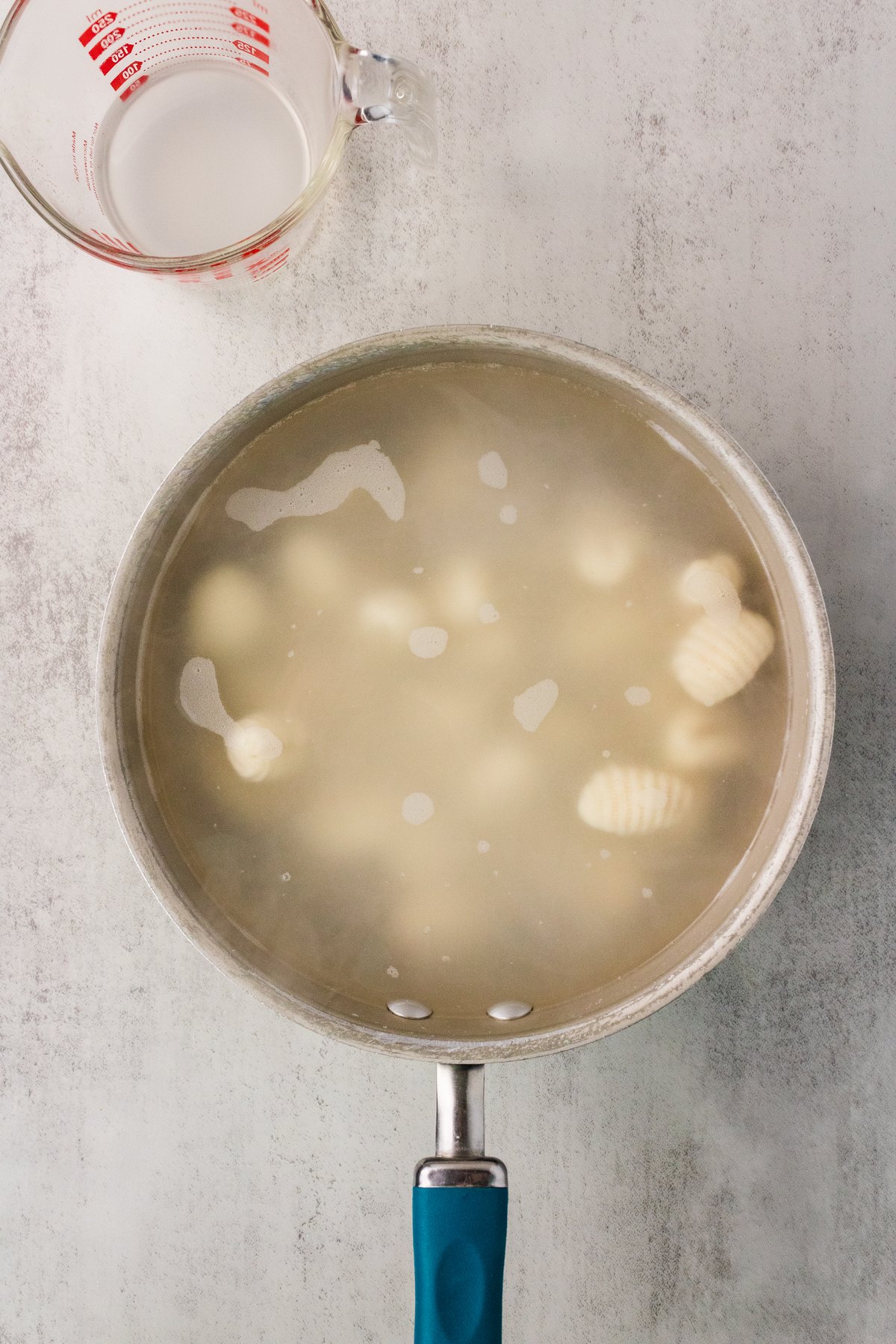
- Step 1: Boil the gnocchi. Cook it in generously salted water until tender and floating, then reserve a little of the cooking water.
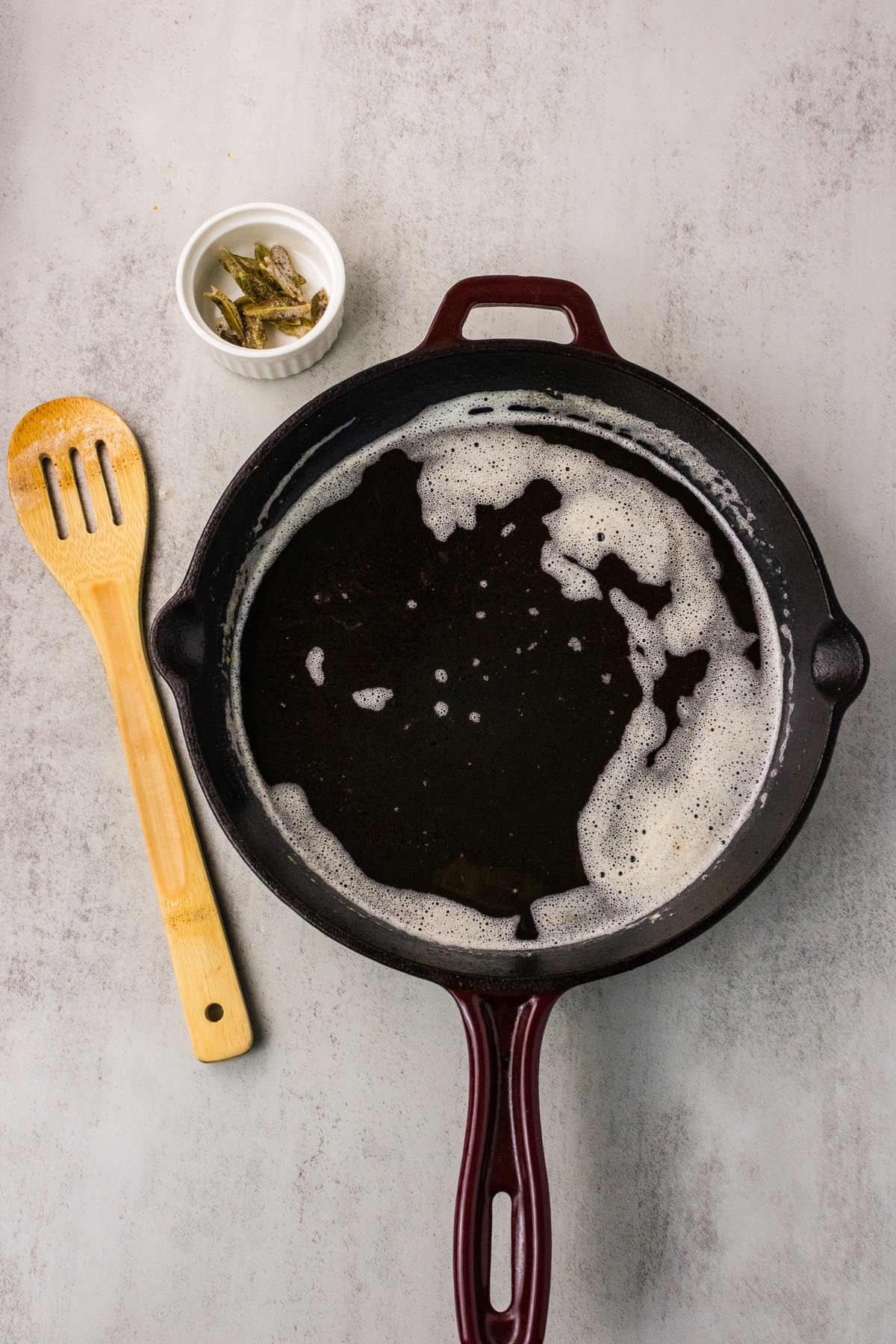
- Step 2: Brown the butter with sage. Melt butter with whole sage leaves in the skillet and cook until foamy, golden-flecked and nutty. Lift the crisp sage out onto a plate.
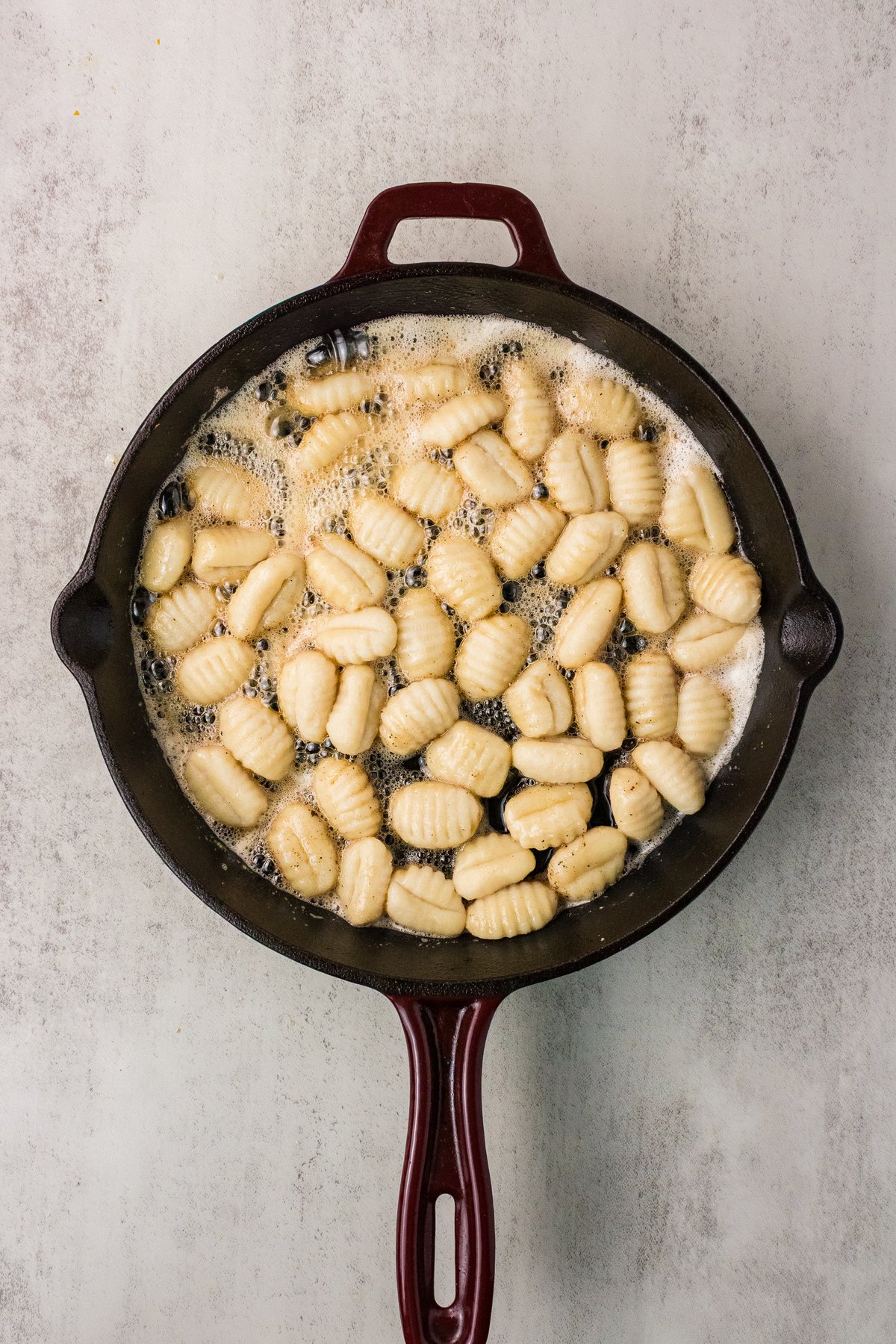
- Step 3: Sear the gnocchi. Add the drained gnocchi in a mostly single layer and leave it alone so a crust can form.
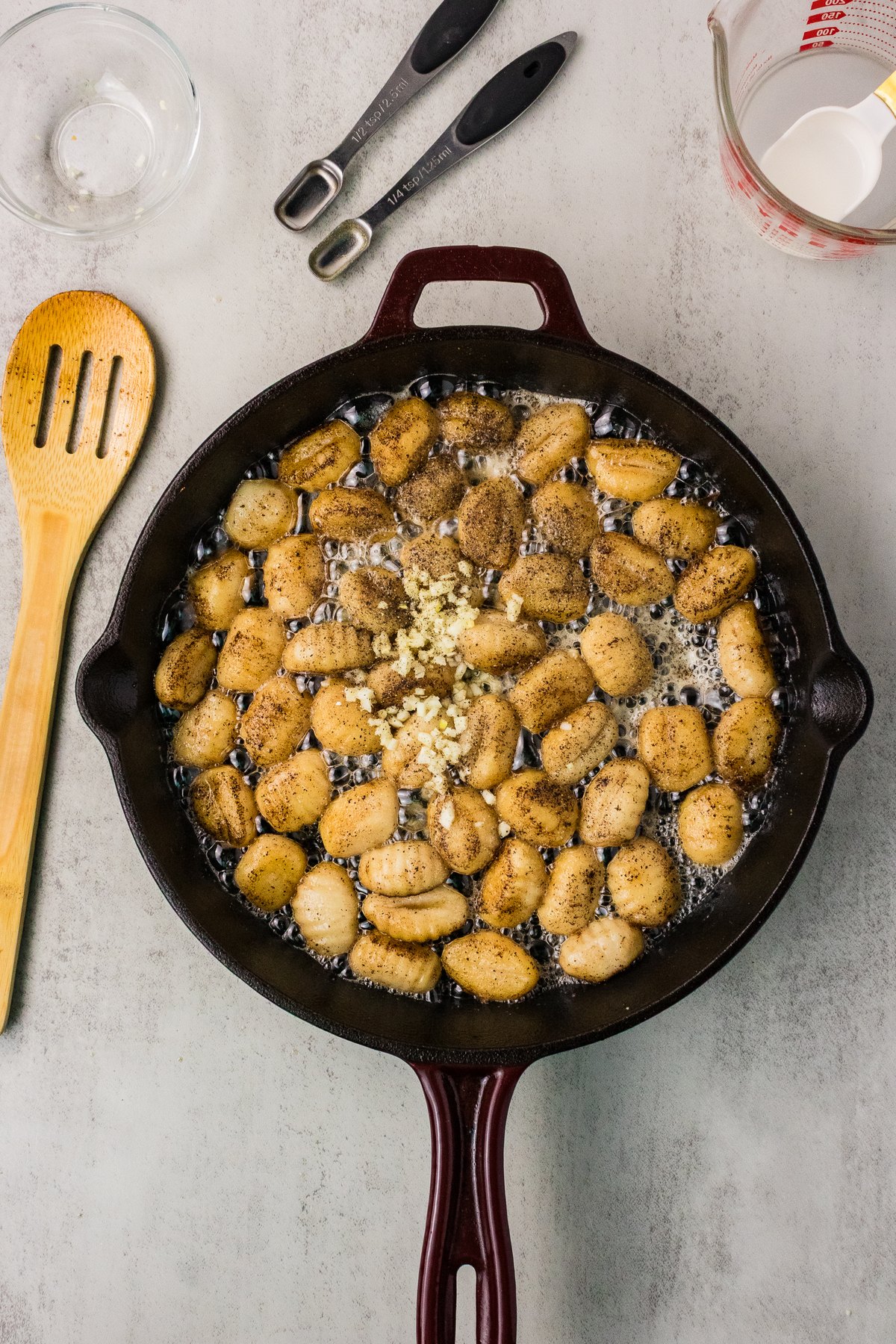
- Step 4: Add the garlic. Once the gnocchi is golden on several sides, stir in the minced garlic and season.
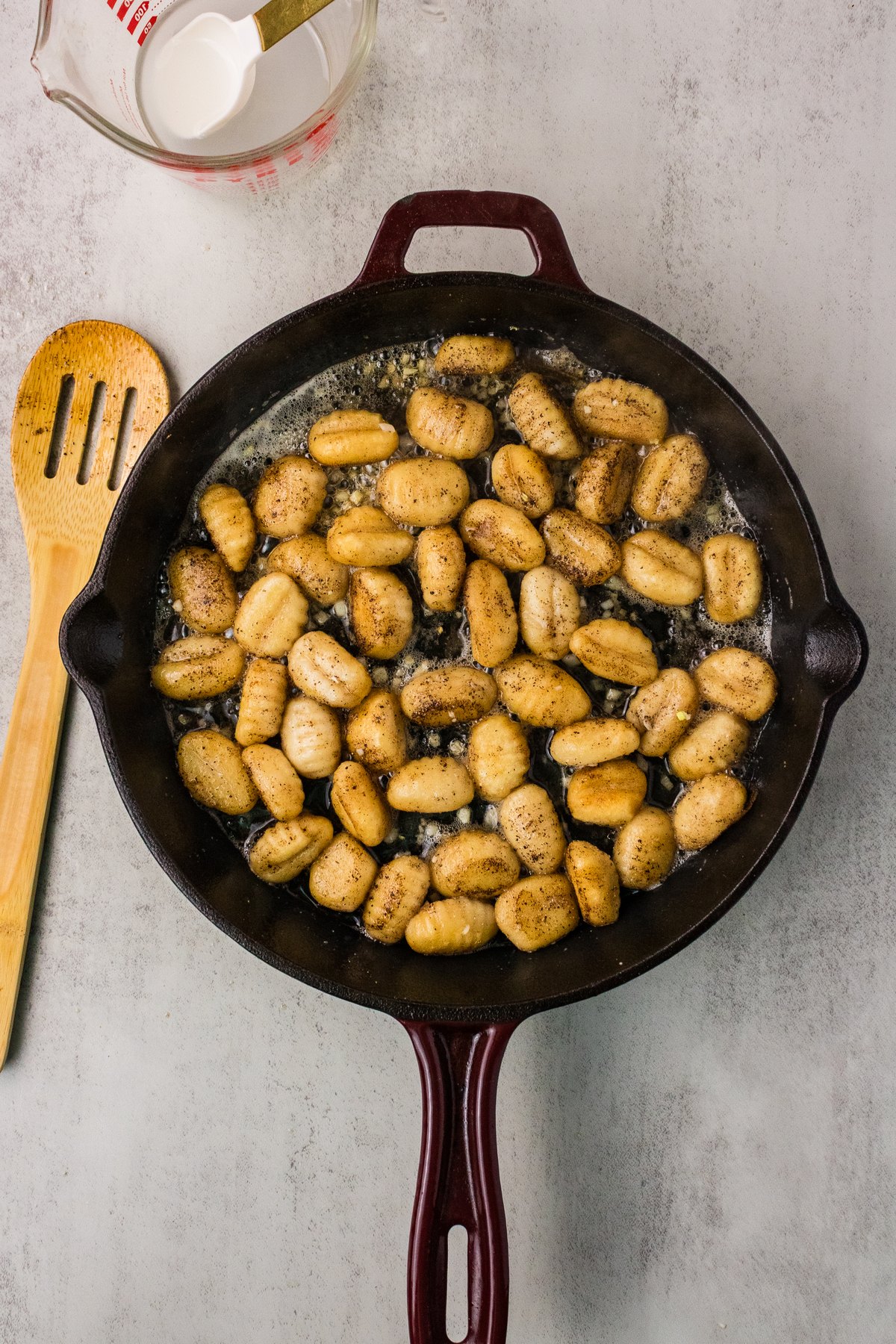
- Step 5: Add the cooking water. A tablespoon at a time, tossing until the butter turns glossy and coats every piece.
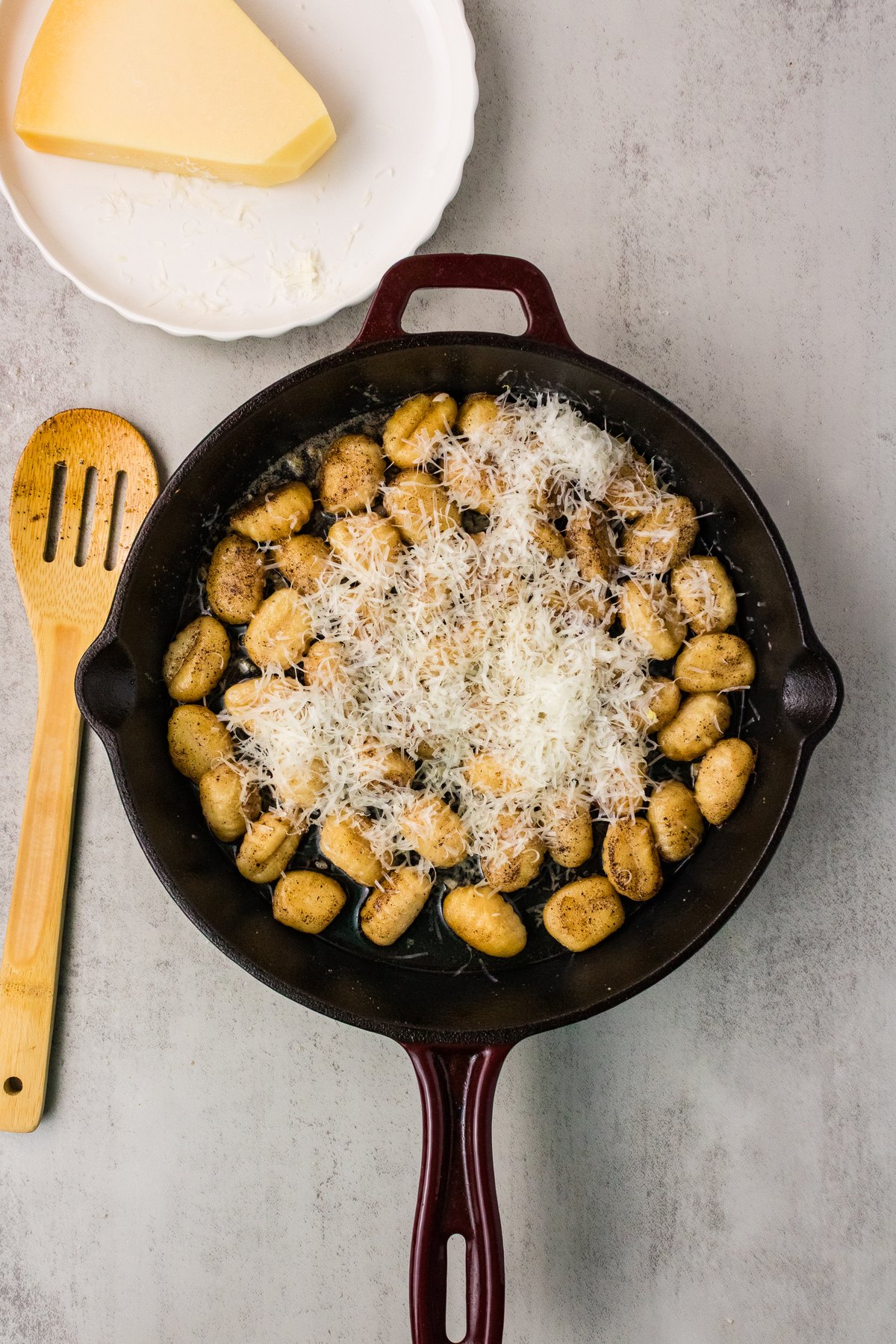
- Step 6: Finish with Parmesan. Off the heat, toss in the finely grated Parmesan and return the crispy sage.
Variations
- Garlic brown butter gnocchi. Bump the garlic up to 3 cloves.
- Spicy brown butter gnocchi. Add a quarter teaspoon of red pepper flakes with the garlic.
- Mushroom sage gnocchi. Fold in sauteed mushrooms at the end for something earthier.
- Fall brown butter gnocchi. Add roasted butternut squash and a sprinkle of toasted pumpkin seeds.
- No cast iron. A large stainless skillet will work. Nonstick will not build the same crust.
- Dairy-free. Use a dairy-free butter and a Parmesan-style cheese, keeping in mind that plant butters often will not brown or emulsify the same way.
Expert Tips
- Dry the gnocchi. Drain it well, then let it sit a minute or two so the surface moisture evaporates. Wet gnocchi steams instead of crisping.
- Do not crowd the pan. Keep it in a single layer and work in batches if you need to. This is the number one reason gnocchi does not crisp.
- Leave it alone for the first 2 to 3 minutes. The crust needs uninterrupted contact with the iron to form.
- Trust your nose on the butter. In cast iron, aroma beats color every time.
- Add the cooking water a tablespoon at a time. Stop as soon as the butter turns glossy. Too much and the sauce goes thin.
- Take the pan off the heat before the Parmesan goes in. Residual heat melts it smoothly. Direct heat makes it grainy and stringy.
Storage and Reheating
Store leftovers in an airtight container in the refrigerator for up to 3 days. Reheat gently in a skillet over medium-low with a splash of water or a small pat of butter, since the microwave turns gnocchi gummy.
Worth being straight with you: the crisp edges soften in the fridge. This is a dish that is genuinely at its best straight out of the pan, so cook what you plan to eat if you can. It does not freeze well after cooking.
What to Serve With Brown Butter Sage Gnocchi
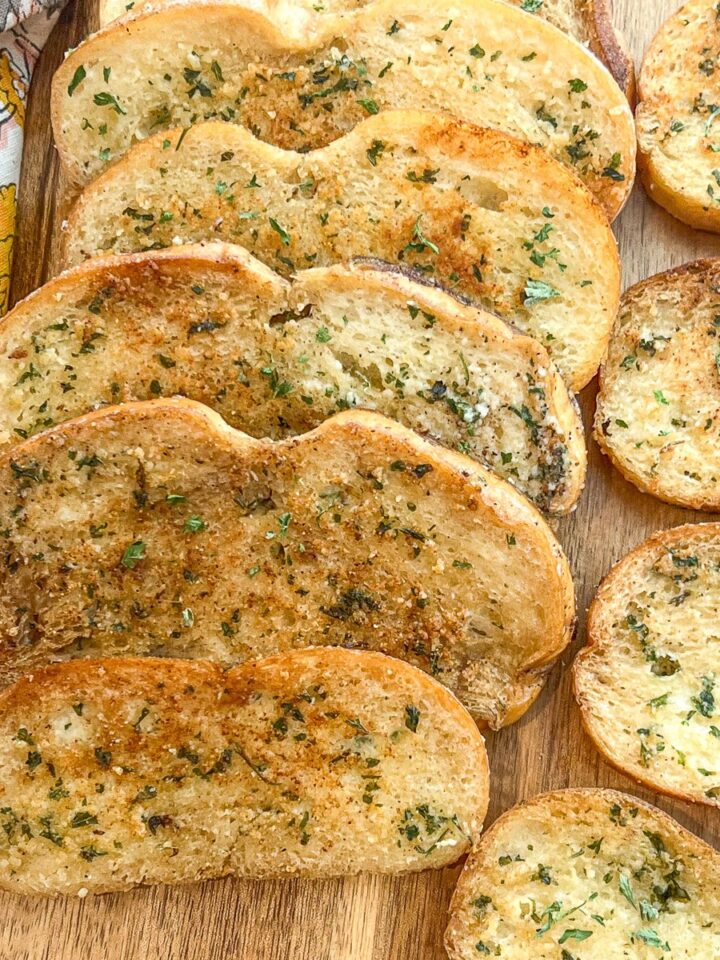
This is rich, so it likes company that cuts through it. A simple green salad with a sharp vinaigrette does most of the work, and a hunk of cast iron garlic bread is never a bad idea for chasing the last of the brown butter around the skillet.
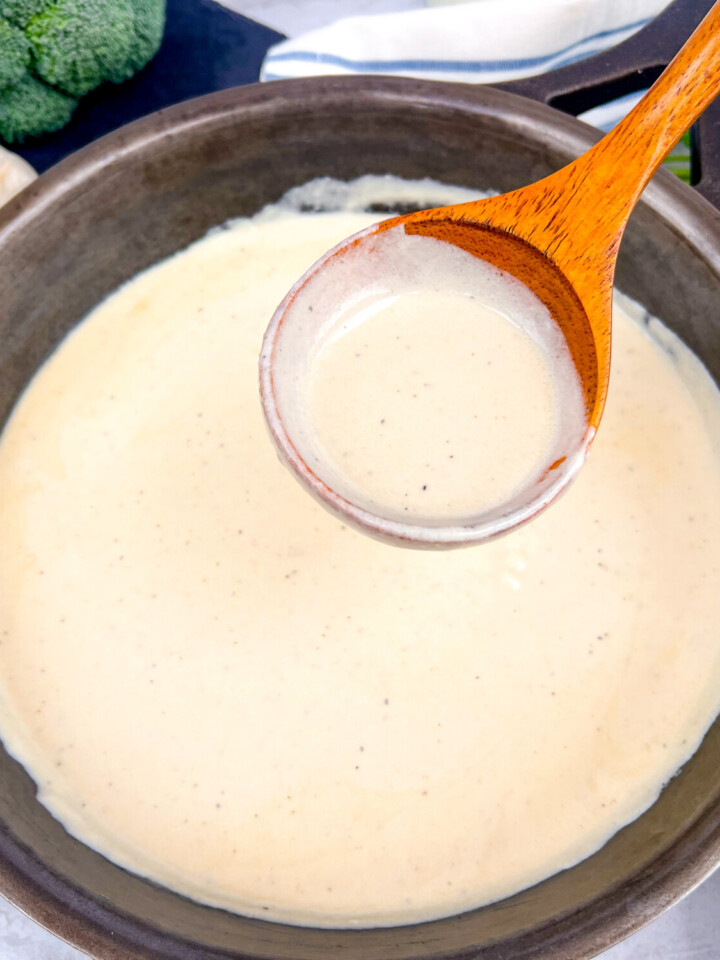
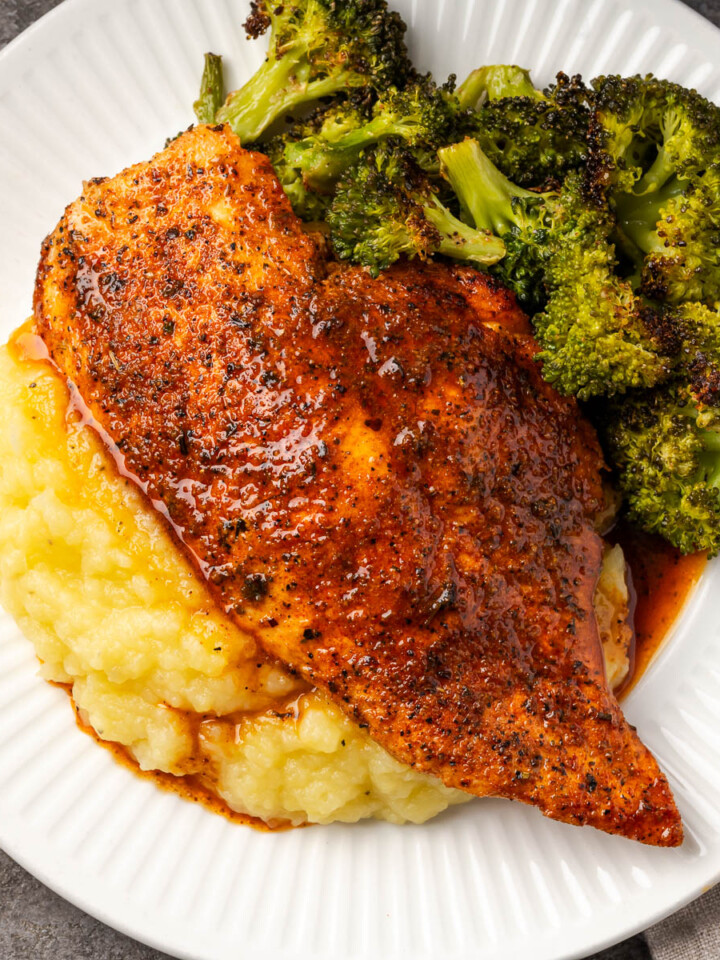
For something green on the plate, my skillet roasted asparagus comes together in about the same time and shares the oven-to-table spirit. And if you are in the mood to take skillet pasta night in the other direction, my easy creamy Alfredo sauce is the one I keep going back to.
Frequently Asked Questions
For this recipe, yes. Boiling first gives you the pillowy interior, and the quick pan sear afterward is what builds the golden crust. Some recipes skip the boil and fry straight from the package, but you end up with a denser, chewier bite and a much narrower window before the outside overcooks. Boil it, drain it well, let it dry for a minute or two, then it goes in the skillet.
Almost always one of three things. The gnocchi went into the pan still wet, so drain it well and give it a minute or two to release steam. The pan was crowded, so the gnocchi steamed instead of seared. Or it got stirred too soon. Let it sit undisturbed for the first 2 to 3 minutes so a crust has time to form, and work in batches if your skillet is full.
Go by smell and by the milk solids, not by the color of the butter against the pan. Dark cast iron hides the color change that you would see in a stainless or light-colored pan. Watch for the foaming to subside, look for golden-brown flecks settling at the bottom, and wait for that unmistakable nutty, toasted aroma. Once you smell it, move to the next step immediately, because it goes from browned to burnt in well under a minute.
Yes. Gluten-free potato gnocchi works well here. Cook it according to the package directions and handle it a little more gently when you move it to the skillet, since it can be softer than regular gnocchi. Everything else in the recipe stays the same. If you need the whole dish to be gluten-free, check that your Parmesan and any packaged ingredients are certified.
Fine grating is what lets the cheese melt into the sauce instead of clumping on top of it. Combined with the reserved gnocchi cooking water and the brown butter, finely grated Parmesan emulsifies into a smooth, glossy coating that clings to every piece. Coarse shreds tend to stay separate and can turn stringy when they hit direct heat.
Absolutely, and it is the best way to do it. Set the hot skillet on a trivet or another heat-safe surface, scatter the crispy sage and a little extra Parmesan over the top, add cracked black pepper, and put lemon wedges alongside. The cast iron keeps everything hot at the table, which matters with a butter sauce.
More Delicious Recipes
If you tried this Brown Butter Sage Gnocchi or any other recipe on my website, please leave a 🌟 star rating and let me know how it went in the 📝 comments below. Thanks for visiting!
Get the Recipe
Brown Butter Sage Gnocchi
Equipment
- 10 or 12-inch cast iron skillet
- Large pot
- Colander or slotted spoon
- Microplane or box grater
- Wooden spoon or silicone spatula
Ingredients
- 1 pound potato gnocchi gluten-free or regular
- 6 tablespoons unsalted butter
- 12-15 fresh sage leaves kept whole
- 2 cloves garlic finely minced
- ½ cup finely grated Parmesan cheese plus more for serving
- ½ teaspoon kosher salt plus more for the cooking water
- ¼ teaspoon freshly ground black pepper
- ¼ cup reserved gnocchi cooking water
- fresh lemon wedges for serving
- fresh sage leaves for garnish
- freshly cracked black pepper for garnish

Instructions
- Bring a large pot of generously salted water to a boil. Cook the gnocchi according to package directions, or until tender and floating.
- Before draining, reserve ¼ cup of the cooking water. Drain the gnocchi well and let it sit for 1 to 2 minutes to allow excess moisture to evaporate.
- Heat a 10 or 12-inch cast-iron skillet over medium heat. Add the butter and whole sage leaves.
- Cook the butter and sage for 2 to 3 minutes, turning the sage occasionally. Continue cooking, swirling the skillet frequently, until the butter is foamy, develops golden-brown milk solids, and smells nutty and toasted. Watch carefully to prevent burning.
- Transfer the crispy sage leaves to a small plate, leaving the browned butter in the skillet.
- Reduce the heat to medium-low and add the drained gnocchi to the skillet. Arrange the gnocchi in a mostly single layer. Cook undisturbed for 2 to 3 minutes to develop a golden crust.
- Gently toss or turn the gnocchi and continue cooking for 3 to 5 minutes, turning occasionally, until golden brown and lightly crisp on several sides.
- Add the minced garlic and cook for 30 to 60 seconds, stirring gently, until fragrant. Season with salt and black pepper.
- Add 2 tablespoons of the reserved gnocchi cooking water to the skillet. Gently toss the gnocchi to combine the water with the brown butter. Add additional cooking water, 1 tablespoon at a time, until the butter forms a glossy coating around the gnocchi.
- Remove the skillet from the heat. Sprinkle the finely grated Parmesan over the gnocchi and gently toss for 30 to 60 seconds, allowing the Parmesan to melt into the sauce.
- Return most of the crispy sage to the skillet, reserving a few leaves for garnish. Finish with additional Parmesan and freshly cracked black pepper.
- Serve immediately, directly from the cast-iron skillet, with fresh lemon wedges alongside. Squeeze a small amount of lemon over individual servings if desired.
Notes
- Dry the gnocchi. Drain well, then let it sit 1 to 2 minutes so surface moisture evaporates. Wet gnocchi steams instead of crisping.
- Do not crowd the pan. Keep the gnocchi in a single layer and work in batches if needed. This is the number one reason gnocchi does not crisp.
- Leave it alone at first. Let the gnocchi cook undisturbed for the first 2 to 3 minutes so the crust has time to form.
- Trust your nose on the butter. Dark cast iron hides the color change, so judge by the golden-brown milk solids and the nutty aroma rather than by looking at the butter.
- Add the cooking water slowly. One tablespoon at a time, stopping when the butter turns glossy and coats the gnocchi.
- Take the pan off the heat before the Parmesan goes in. Residual heat melts it smoothly. Direct heat makes it stringy.
Nutrition
Dutch Oven Daddy is not a dietician or nutritionist, and any nutritional information shared is only an estimate. We recommend running the ingredients through an online nutritional calculator if you need to verify any information.
Edward says
What a simple and delicious dinner recipe! Thank you!