
Pork Ragu is a slow-cooked meal that delivers tender, fall-apart meat in a rich, hearty pasta sauce with pork. Using budget-friendly pork shoulder, crushed tomatoes, and a splash of red wine, everything braises low and slow in a Dutch oven. This simple method turns an inexpensive cut into deep, satisfying flavor, while mostly hands-off cooking makes it an easy, reliable dinner any night of the week.
If you like slow-braised, comfort-style meals like this, you’ll definitely want to try my braised lamb shanks next.
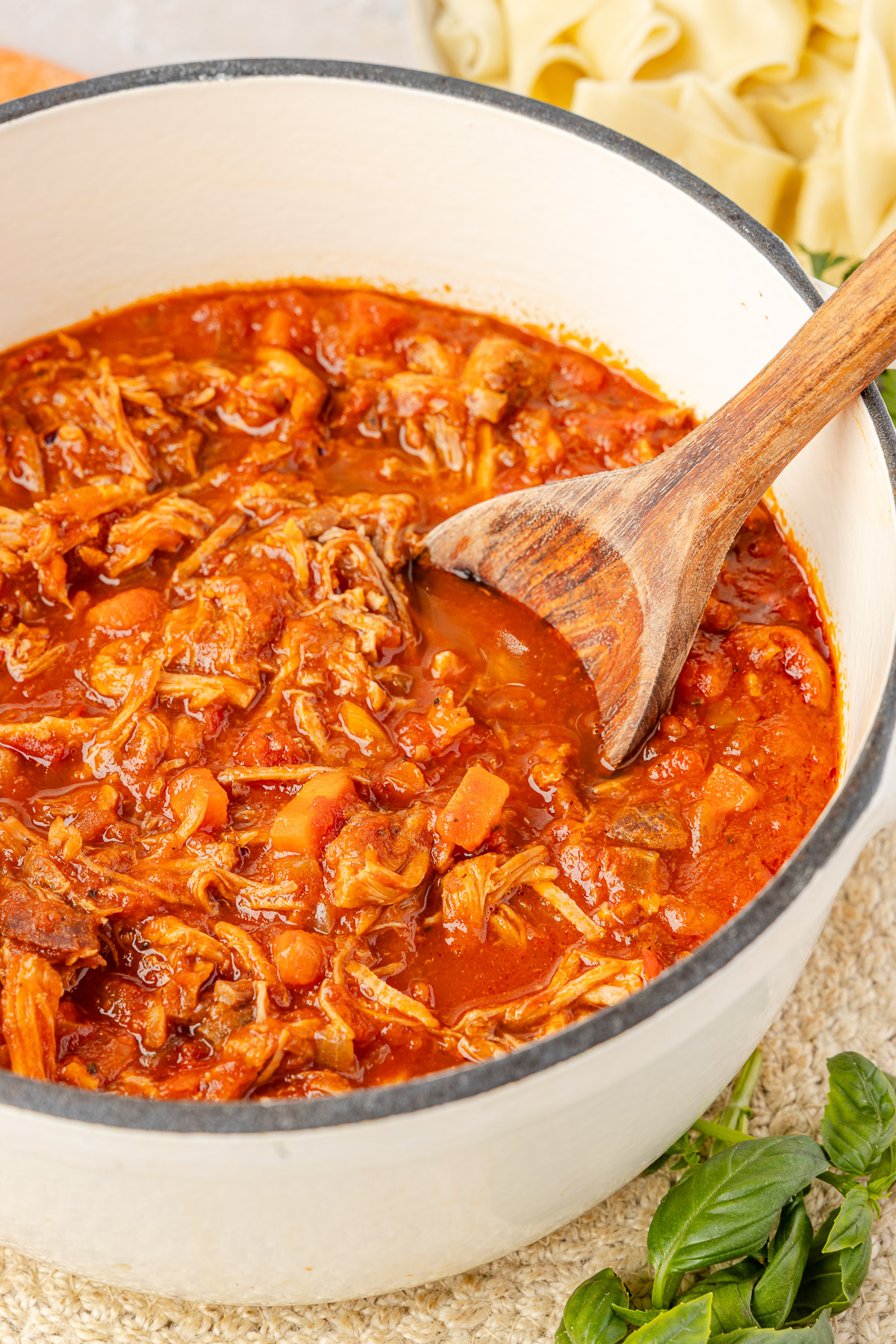
Quick Look at the Recipe
- ✅ Recipe Name: Pork Ragu
- 🕒 Ready In: About 3 hours 30 minutes
- 👪 Serves: 6
- 🥣 Main Ingredients: Pork shoulder, crushed tomatoes, red wine, chicken broth, onion, carrot, celery, garlic
- 📖 Dietary Info: Gluten-free (serve with GF pasta if needed), high-protein
- ⭐ Why You'll Love It: This rich pork ragu slow cooks until the meat is fall-apart tender and infused with a deep, savory tomato sauce.
Summarize and Save the Recipe
This braised pork ragu is a go-to at my house when I want a simple, satisfying meal. The first time I made it in my Dutch oven, the smell had everyone circling the kitchen before it was even done, and once you see how easily the pork shreds, it’s easy to see why it’s a regular in the rotation.
It’s also the kind of dish a Dutch oven handles best, holding steady heat and moisture, so the meat turns out tender every time.
For more hearty, slow-cooked pork meals, try my Dutch Oven pork roast or smoked pork ribs for rich flavors and easy, hands-off cooking.
Why You’ll Love This Recipe
- Easy, hands-off cooking: Once the pork is in the Dutch oven, it braises itself, giving you time to relax.
- Deep, rich flavor: Slow-cooking in a Dutch oven locks in moisture and develops a pork ragu sauce that’s full of savory, meaty goodness.
- Budget-friendly: Pork shoulder is an inexpensive cut that transforms into a restaurant-quality meal at home.
- Feeds a crowd: This recipe makes six servings, perfect for family dinners or meal prep for the week.
- Make-ahead friendly: The ragu tastes even better the next day and freezes well for later. If you like prepping ahead, my Dutch Oven chili is another family-friendly favorite.
Jump to:
Ingredients
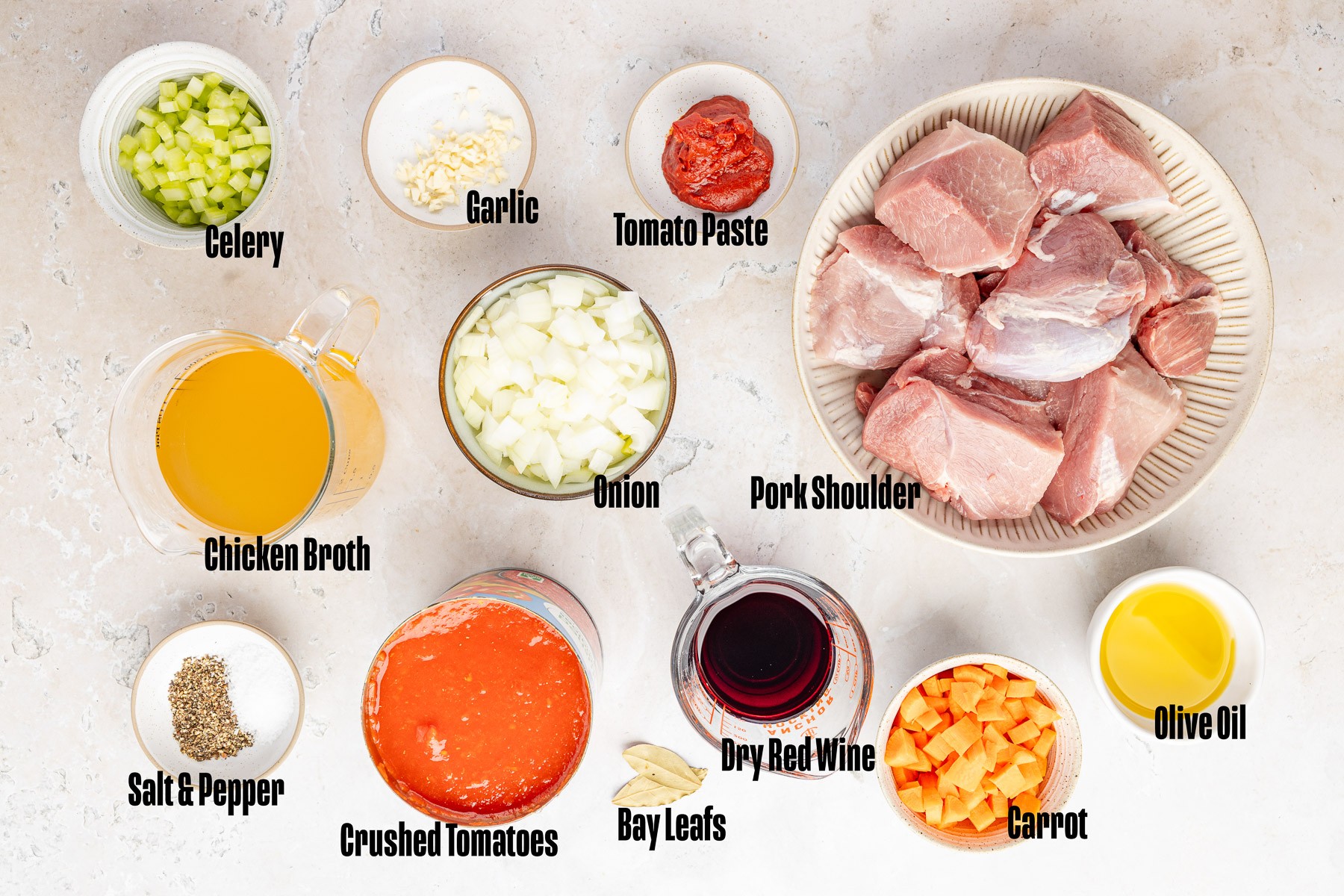
- Pork shoulder: Also called pork butt or Boston butt, this cut is perfect for shredding. Bone-in works fine, just remove the bone before serving.
- Onion, carrot, and celery: These aromatics form the flavor base of the ragu. Dice them evenly so they cook at the same rate.
- Garlic: Fresh is best for flavor, but jarred minced garlic works in a pinch. This ragu pairs perfectly with a side of skillet garlic bread for soaking up all that rich sauce.
- Crushed tomatoes: The heart of the pork pasta sauce, a 28-ounce can provides the rich, slightly sweet base for slow-cooked pork.
- Tomato paste: Cooking it for a full minute until it darkens brings out a richer, deeper flavor in the sauce.
- Dry red wine: Any inexpensive bottle you’d enjoy drinking works; try a Cabernet Sauvignon, Merlot, or Pinot Noir. There’s no need for special cooking wine.
See the recipe card below for exact ingredient amounts, nutritional information, and detailed instructions.
Variations
- Slow cooker pork ragu: If you don’t want to use a Dutch oven, sear the pork on the stove, then transfer everything to a slow cooker. Cook on low for 6–8 hours until the pork is tender and shreddable.
- Pork rib ragu: Swap pork shoulder for country-style ribs for a slightly fattier, richer flavor. Cook the same way; just remove bones before serving.
- Polenta or alternative base: While this ragu shines as a classic pork ragu with pappardelle, you can also spoon it over creamy polenta, mashed potatoes, or roasted vegetables for a different spin.
How to Make Pork Ragu
This pork shoulder ragu is easier than it looks. The Dutch oven does most of the work, giving you tender pork and a rich, slow-cooked sauce with minimal hands-on time. Preheat your oven to 350°F and have all your ingredients ready.
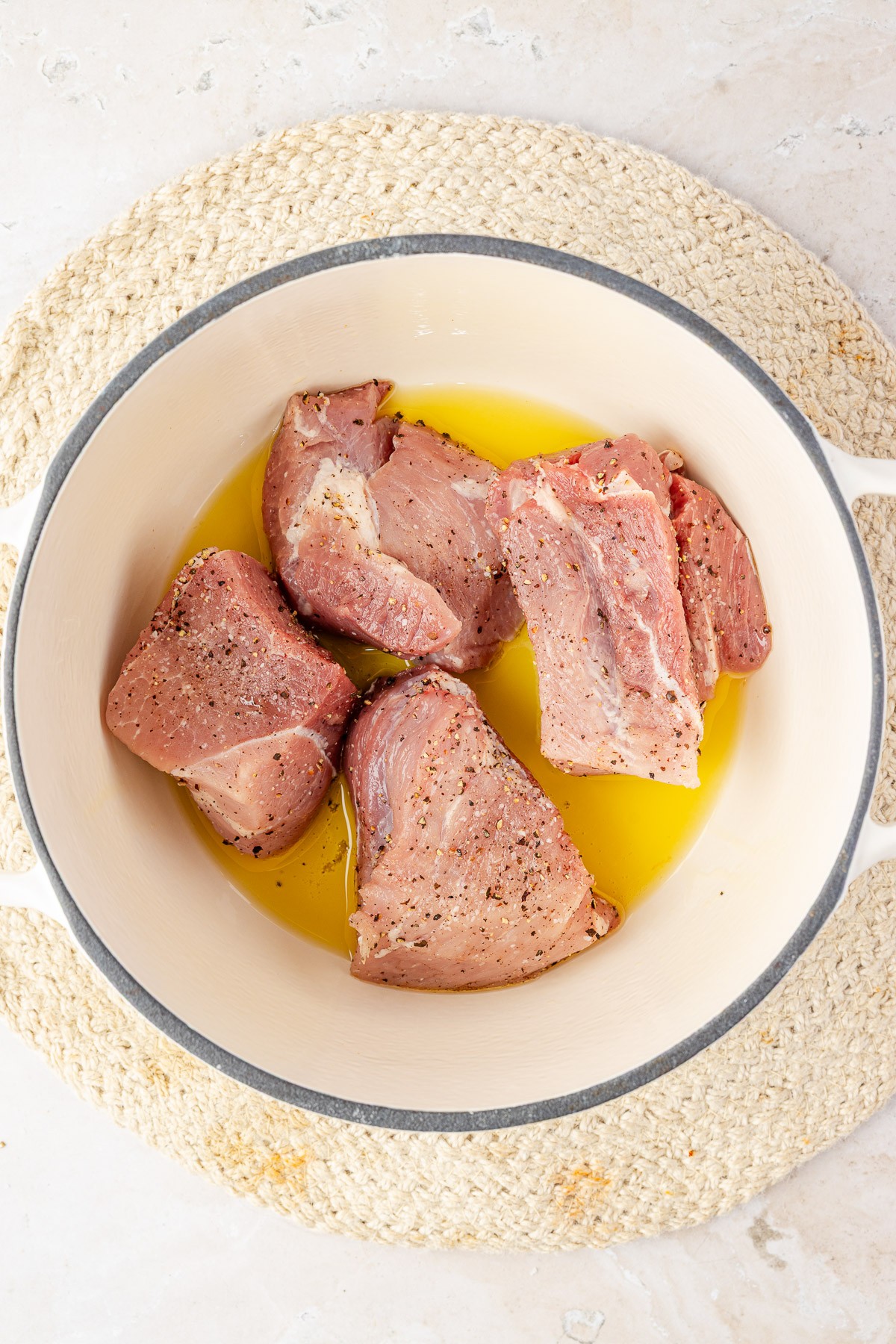
- Step 1: Season and sear the pork. Pat the pork shoulder chunks dry and season generously with salt and pepper. Heat the olive oil in a Dutch oven over medium heat and sear the pork in batches if needed. Crowding the pan causes steaming instead of browning, so take your time. Remove the browned pork to a plate and set aside.
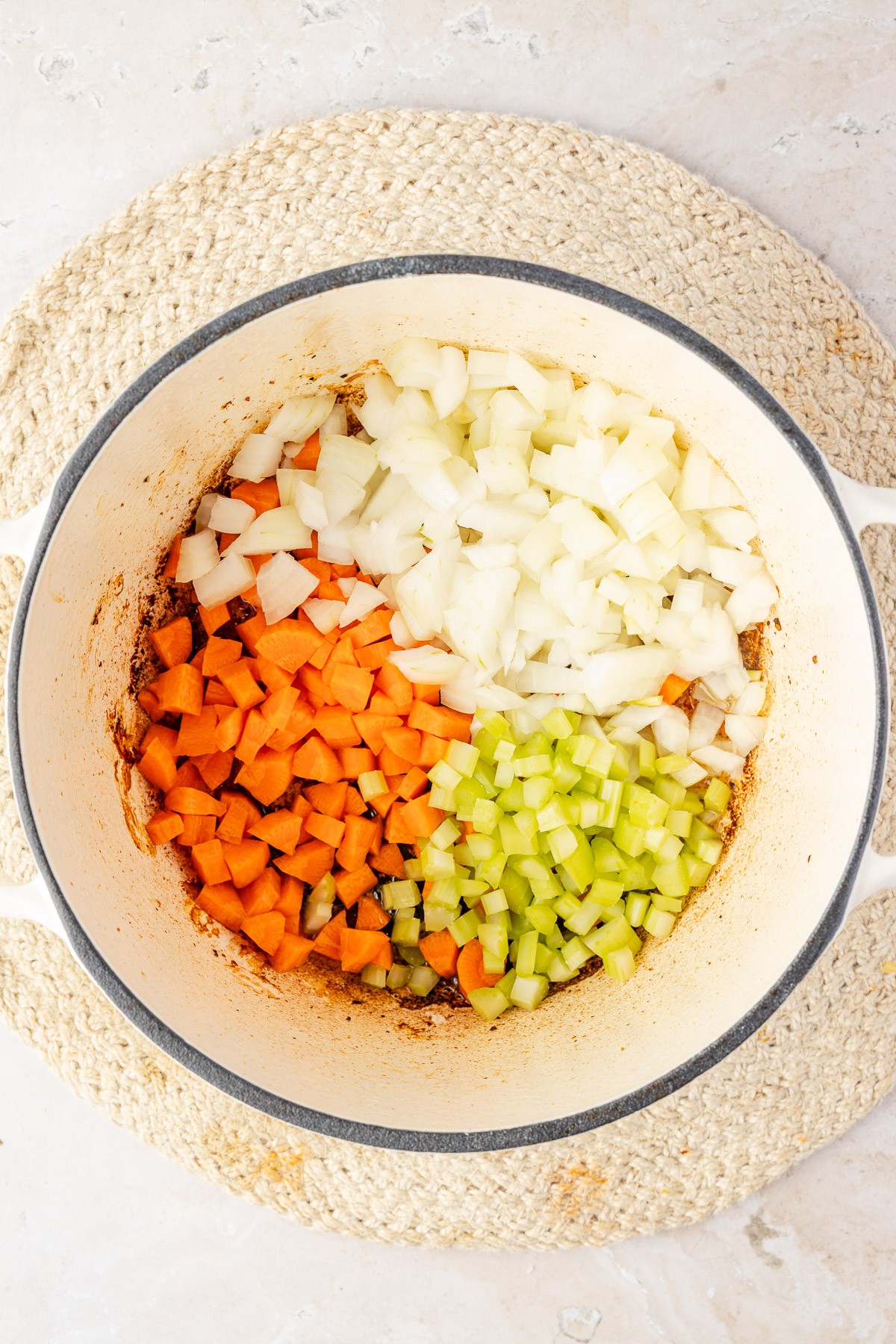
- Step 2: Cook the aromatics and tomato paste. Add the diced onion, carrot, and celery to the pan and cook until softened, about 4–5 minutes. Stir in the garlic for 30 seconds, then add the tomato paste. Cook for a full minute until it darkens; this builds rich flavor in your sauce.
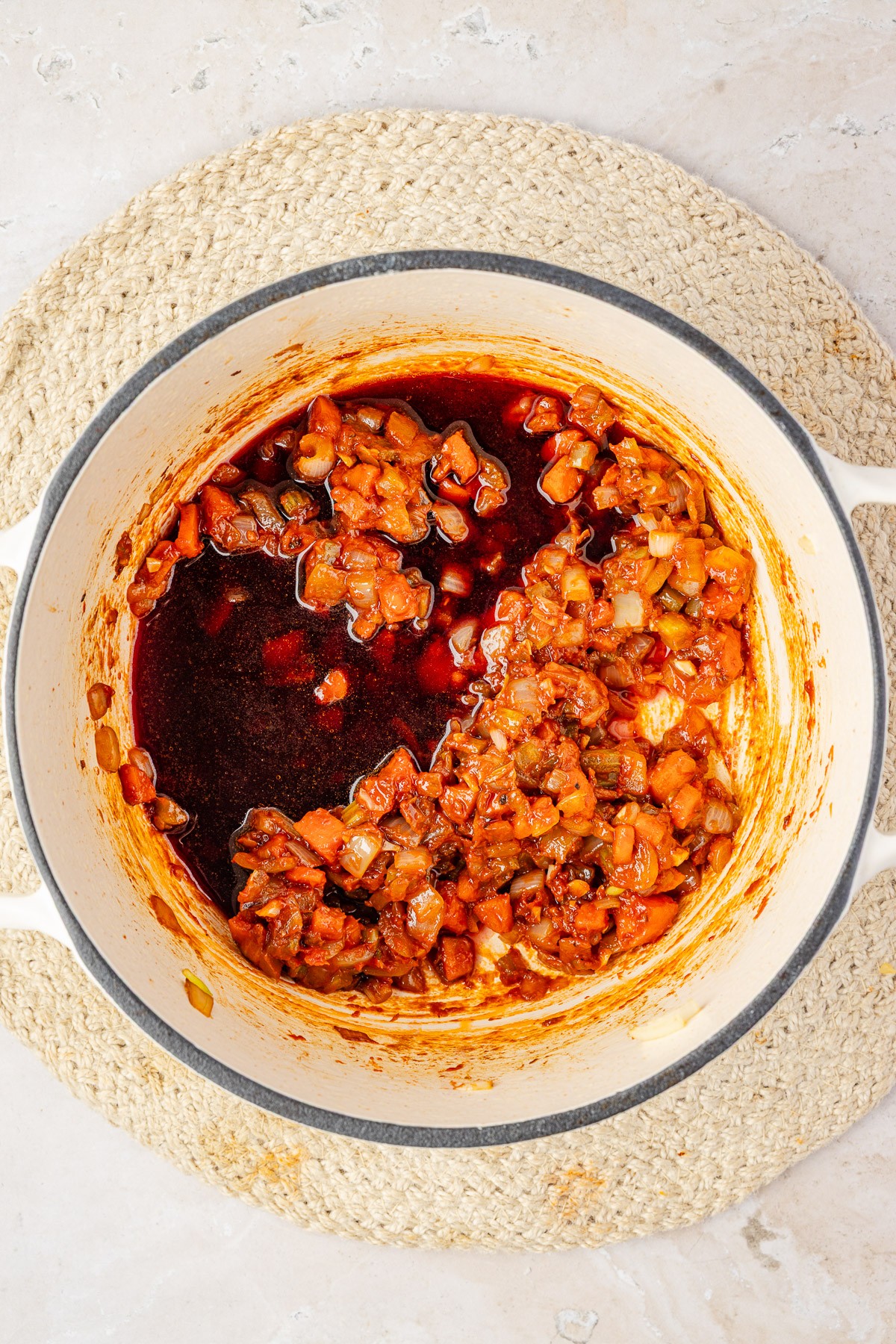
- Step 3: Deglaze. Pour in the red wine to deglaze the pan, scraping up all the browned bits from the bottom. This adds deep, concentrated flavor to the sauce.
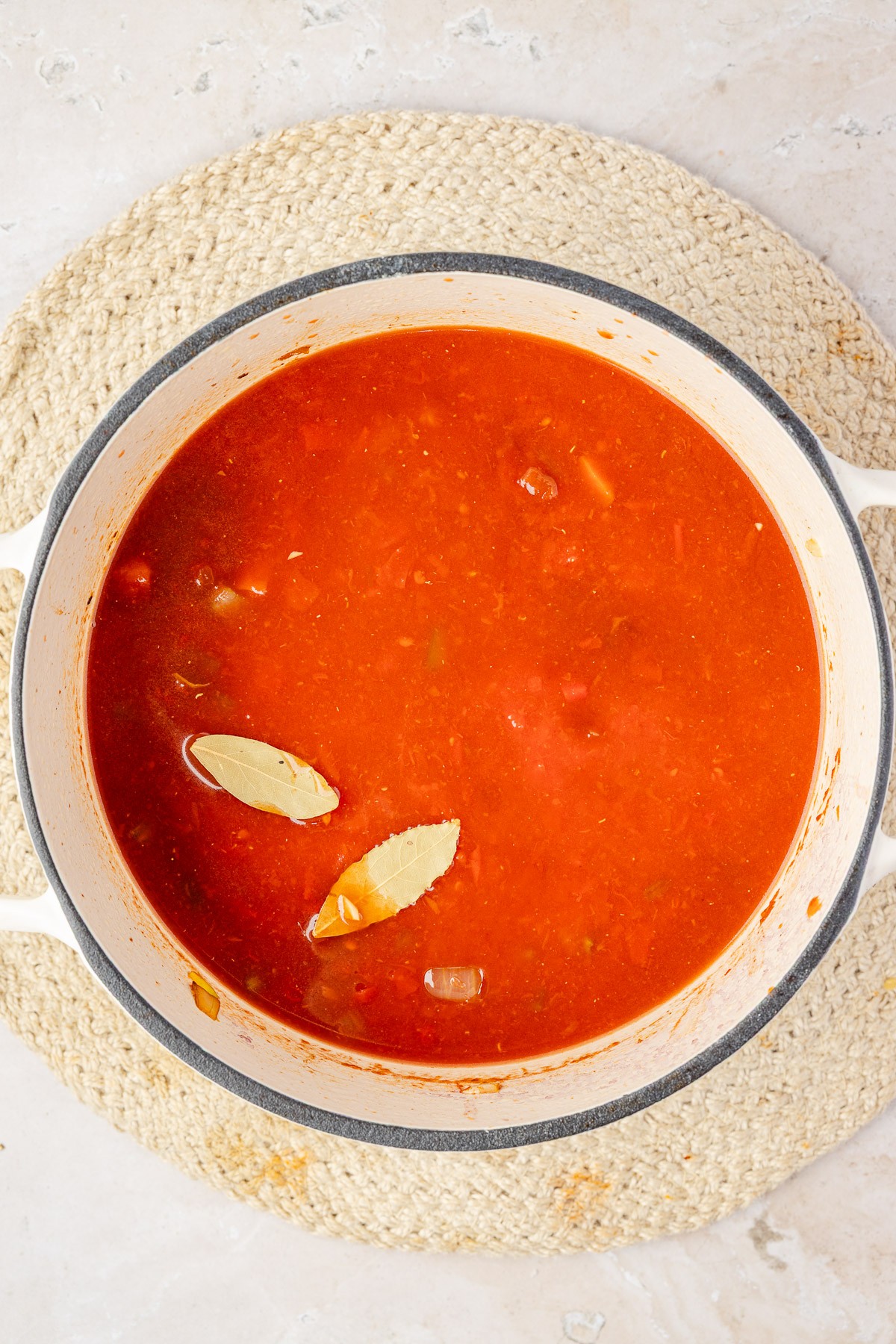
- Step 4: Add to the Pot. Stir in the chicken broth, crushed tomatoes, and bay leaves.
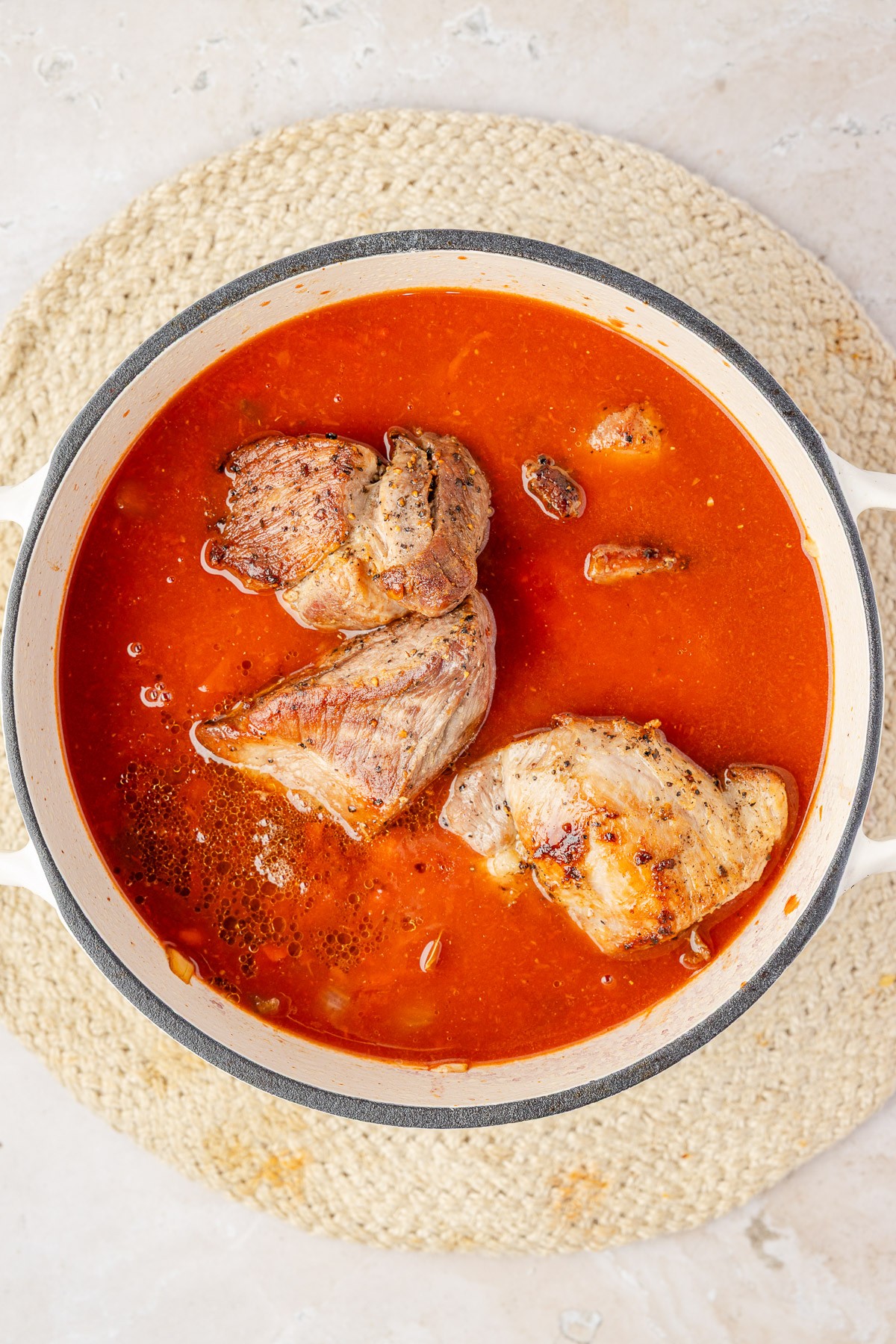
- Step 5: Slow-cook until tender. Season with salt and pepper, then return the pork to the Dutch oven. Cover and transfer to the oven. Bake for 3–4 hours until the pork is fall-apart tender. Check by pressing a fork into the meat; if it resists, give it another 30 minutes.
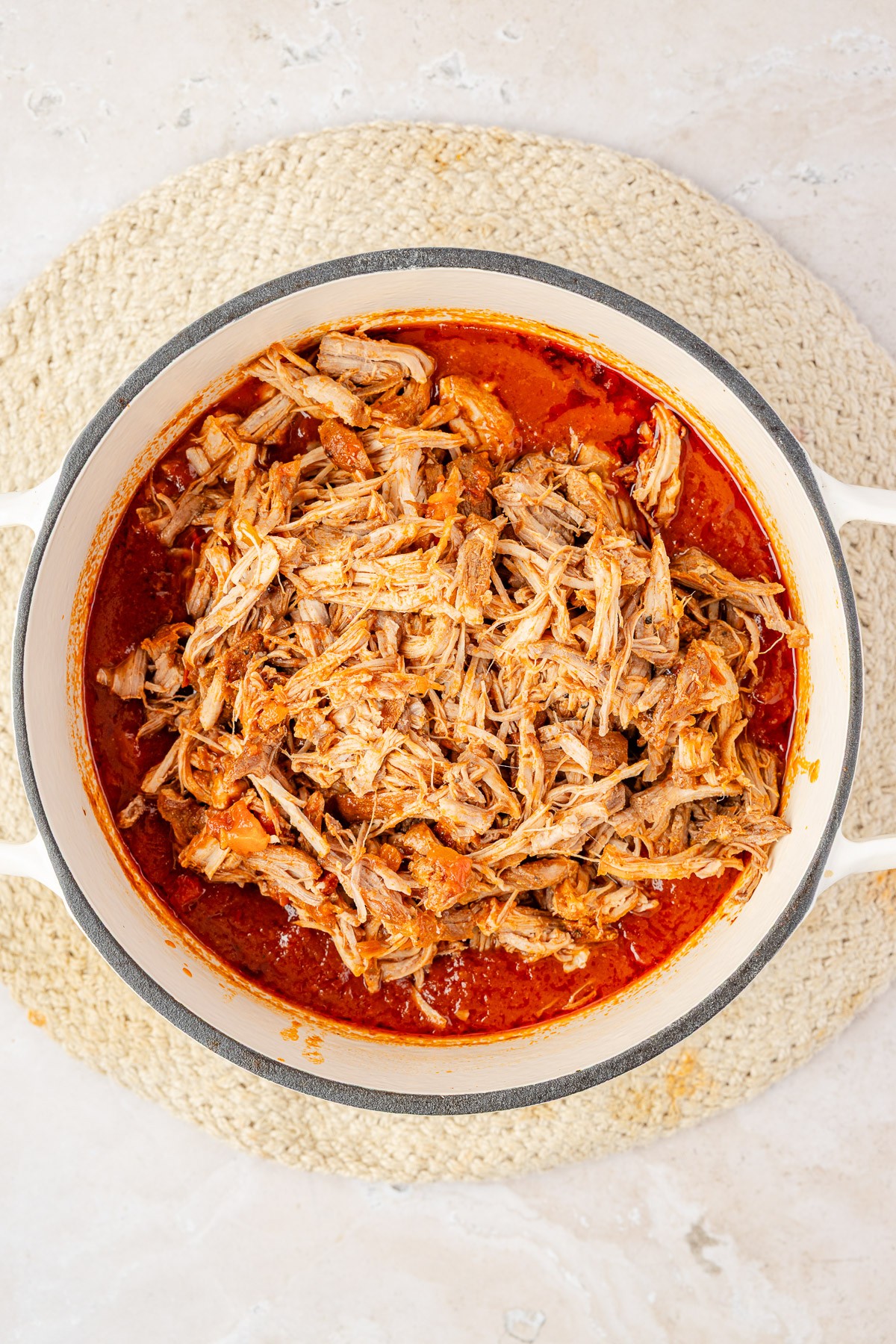
- Step 6: Shred and finish the sauce. Remove the bay leaves, then shred the pork directly into the sauce. If the sauce seems thick, add a splash of pasta water to loosen it. Serve with your choice of noodles and a side of skillet-roasted asparagus for a simple, complete meal.
Expert Tips
- Perfect Sear: Don’t rush the pork sear. Browning in batches builds deep, rich flavor that forms the base of your sauce.
- Lid Matters: A tight-fitting Dutch oven lid keeps moisture in while braising. If your lid is loose, place a layer of foil underneath to trap steam.
- Rest Before Serving: Let the ragu rest for 10 minutes after cooking. The sauce will thicken slightly, and the flavors will settle, making every bite more flavorful.
- Storage: Store leftovers in an airtight container in the refrigerator for 3–4 days. For longer storage, portion into freezer-safe containers and freeze for up to 3 months.
- Reheating: Reheat gently on the stovetop over medium-low heat, adding a splash of broth if the sauce has thickened. Avoid microwaving large batches to maintain texture and flavor.
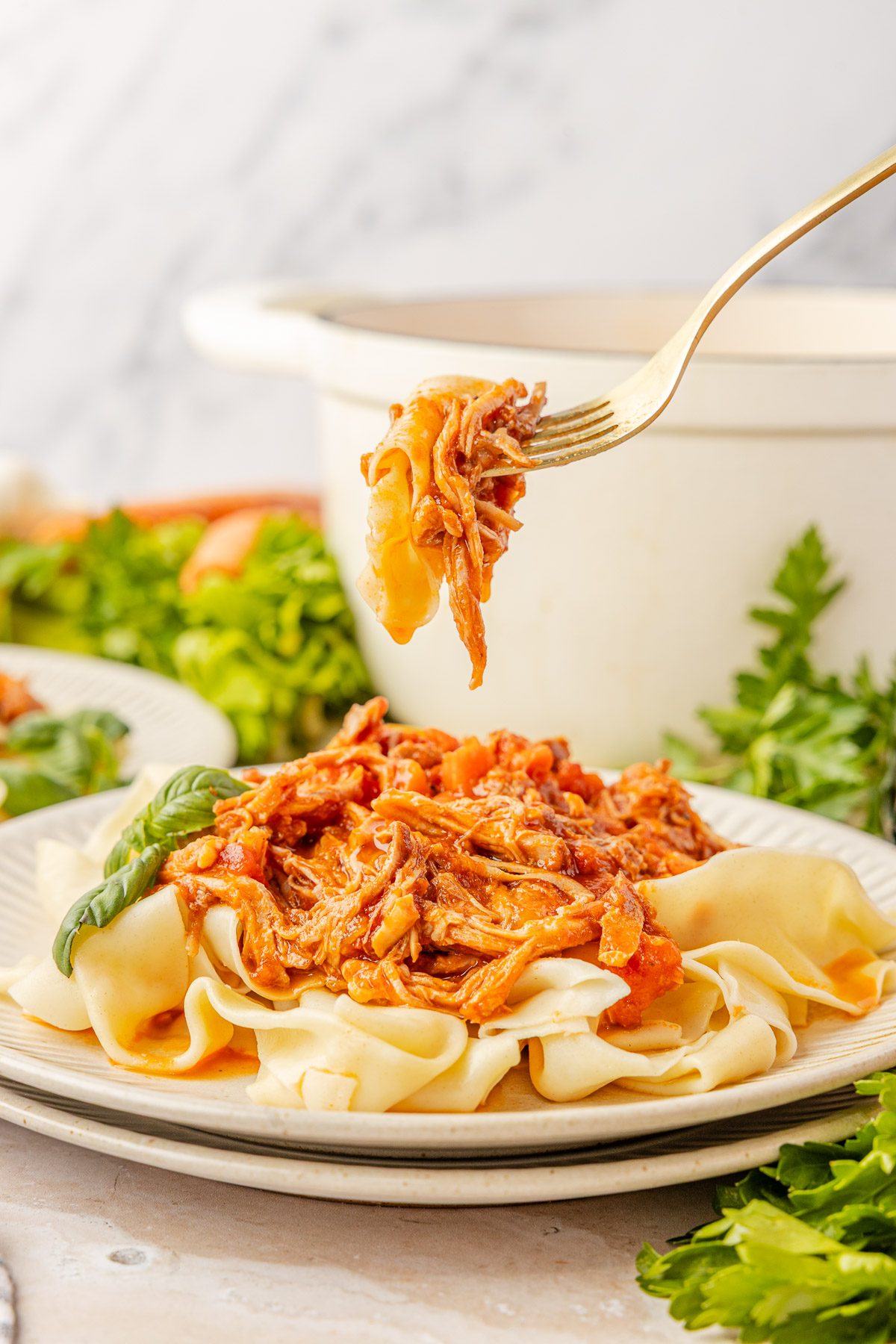
Serving Suggestions
- Weeknight dinners: Serve this pork ragu over pasta or creamy polenta with a side of asparagus with peas for a simple, satisfying dinner.
- Holiday meals: Pair with scalloped potato gratin and rosemary garlic bread for a comforting, crowd-pleasing spread.
- Entertaining or Sunday dinners: Enjoy with a crisp green salad and garlic parmesan pull-apart bread for a hearty, slow-cooked meal that feels special without the stress.
Pork Ragu Recipe FAQs
Pork ragu is a slow-cooked Italian-style meat sauce made with tender pork, tomatoes, aromatics, and seasonings. This pork ragu recipe creates a rich, hearty sauce perfect for tossing with pasta or serving over polenta.
The pork is ready when it’s fall-apart tender and easily shredded with a fork. If it still feels firm, give it another 30 minutes in the oven or on the stove until it yields easily.
Yes! This ragu tastes even better the next day as the flavors meld. Store in an airtight container in the refrigerator for up to 4 days or freeze in portions for up to 3 months.
More Delicious Pork Recipes


If you tried this Pork Ragu Recipe or any other recipe on my blog, please leave a 🌟 star rating and let me know how it went in the 📝 comments below. Thanks for visiting!
Get the Recipe

Pork Ragu
Ingredients
- 2 pounds pork shoulder cut into 3-inch chunks
- salt and pepper to taste
- 2 tablespoons olive oil
- 1 carrot peeled and diced
- 1 celery stalk diced
- 1 medium onion diced
- 2 garlic cloves minced
- 2 tablespoons tomato paste
- ½ cup dry red wine
- 2 cups chicken broth
- 28 ounce crushed tomatoes can
- 2 bay leaves

Instructions
- Preheat oven to 350°F.
- Season your pork shoulder with salt and pepper.
- Heat your olive oil in a large Dutch oven over medium heat. Add your pork and sear until browned, about 2 to 3 minutes per side. Working in batches if needed. Transfer the pork to a plate and set aside.
- Add the carrot, celery, and onion to the pan and cook for 4 to 5 minutes, until the onions have softened. Add the garlic and cook for an additional 30 seconds. Mix in the tomato paste and cook for another minute. Deglaze the pan with red wine. Stir in the chicken broth, crushed tomatoes, and bay leaves. Season your sauce with more salt and pepper. Return the pork to the pan and cover.
- Place the pan in the oven and cook for 3-4 hours until the pork is tender.
- Remove the bay leaves, and shred the pork into bite-sized pieces. Serve over pasta and enjoy.
Notes
- Don’t rush the sear. Brown the pork in batches to develop deep flavor.
- Cook the tomato paste for a full minute until it darkens to boost the sauce.
- Deglaze the Dutch oven with wine, scraping up all browned bits for extra richness.
- Let the sauce simmer slowly so the pork becomes fall-apart tender.
Nutrition
Dutch Oven Daddy is not a dietician or nutritionist, and any nutritional information shared is only an estimate. We recommend running the ingredients through an online nutritional calculator if you need to verify any information.


Callum says
Using the Dutch oven really allowed the sauce to thicken into a beautiful, savory glaze. My whole family raved about it, and it has officially replaced our standard meat sauce recipe for special occasions.
Sloane says
I was impressed by how foolproof the instructions were; the meat came out fall-apart tender exactly as described. It's a great "set it and forget it" meal that tastes even better as leftovers the next day.
Orion says
This is a fantastic, hearty alternative to a traditional beef bolognese. The shredded pork has such a unique texture that clings to the pasta perfectly, and the hint of wine in the sauce adds a sophisticated touch.
Tom says
I loved how the herbs and aromatics infused the meat during the long braise. This recipe is the definition of comfort food, perfect for a Sunday dinner when you want the house to smell amazing all afternoon.
Thatcher says
The depth of flavor in this pork ragu is incredible, especially considering how little hands-on time it requires. Slow-cooking it in the Dutch oven made the pork so tender it practically melted into the tomato sauce, creating a rich, restaurant-quality meal.