
Every Dutch oven on this list has cooked dinner at my house or at a campsite, and a few of them have done both in the same week. If you are hunting for the Best Dutch Oven, the honest answer depends on what you cook and what you want to spend, so I have broken it down by budget. Buy the right pot once and it will outlive you.
I cook in bare cast iron and enameled cast iron, in the kitchen and over coals, which is why this list covers the best cast iron Dutch oven for campfire cooking too, not just the pretty pots. If you already own one and want ideas, start with what to cook in a Dutch oven or my full list of Dutch oven recipes.
Heads up: this post contains affiliate links. If you buy through them I may earn a small commission at no extra cost to you. I only list pots I actually cook in.
Quick Look at this Guide
- ✅ Budget Pick: Lodge Enameled 4.5 qt
- 💰 Splurge Pick: Le Creuset Signature 5.5 qt
- 🔥 Bare Cast Iron Pick: Smithey 5.5 qt
- 🏕 Camping Pick: Lodge Camp Dutch Oven, 12 inch
- 📏 Size to Buy: 5.5 to 6 quarts for most families
- ⭐ Why Trust This List: All seven pots live in my kitchen or my camp box
Summarize and Save the Recipe
Jump to:
- Quick Look at this Guide
- Why You'll Love This Guide
- The Short Answer: My Picks By Budget
- Dutch Oven Comparison Table
- Best Budget Dutch Ovens (Under $100)
- Best Mid-Range Dutch Oven ($100 to $250)
- Best Premium Dutch Ovens ($300 and Up)
- Enameled vs Bare Cast Iron: Which Should You Buy
- What Size Dutch Oven Should You Buy
- What To Look For Before You Buy
- First Things To Cook In Your New Dutch Oven
- Best Dutch Oven FAQs
- More Dutch Oven Guides
Why You'll Love This Guide
- Owned, not borrowed. These are my pots, used for real meals over years, not a one-week test batch in a lab.
- Bare and enameled, side by side. Most lists skip bare cast iron entirely. It deserves a seat at the table.
- Camp ovens included. If you cook over coals, a kitchen pot is the wrong tool, and I will tell you which one is right.
- A straight answer by budget. Budget, mid-range and premium, with the weak spot of every pick called out.
The Short Answer: My Picks By Budget
There is no single best Dutch oven for everyone. The right one depends on what you cook, where you cook it and what you want to spend, so here are my picks by job and budget. Everything below explains why.
- Budget pick: Lodge Enameled 4.5 qt. Enameled cast iron that handles everyday cooking at an easy price.
- Splurge pick: Le Creuset Signature 5.5 qt. Big handles, a light interior and a 500F knob, if the price fits your budget.
- Bare cast iron pick: Smithey 5.5 qt. A polished interior that turns genuinely non-stick.
- Lightweight pick: Lodge Blacklock 5.5 qt. Bare cast iron you can actually lift one-handed to the sink.
- Browning pick: Staub 5.5 qt Round Cocotte. A dark matte interior built for a hard sear.
- Camping pick: Lodge Camp Dutch Oven, 12 inch. Legs, a flanged lid and the size every camp recipe assumes.
- Camp extras pick: Camp Chef Deluxe 12 inch. A lid that doubles as a griddle and a notch for a thermometer.
Dutch Oven Comparison Table
Next, here is how the seven stack up on price, material, capacity and real-world performance. If you are choosing the best Dutch oven for your kitchen, the material column matters more than the price column.
| Dutch Oven | Price | Material | Capacity | Performance |
|---|---|---|---|---|
| Lodge Enameled Budget | $70 to $80 | Enameled | 4.5 qt | Even heat, good browning. Treat the enamel rim gently. |
| Lodge Camp Budget | $75 to $90 | Bare, legs | 6 qt | Built for coals, with legs and a flanged lid. |
| Camp Chef Deluxe Budget | $80 to $85 | Bare, legs | 12 in | Lid doubles as a griddle. Thermometer notch. |
| Lodge Blacklock Mid-range | About $150 | Bare, thin wall | 5.5 qt | Light, heats fast, great for searing and frying. |
| Smithey Premium | About $300 | Bare, polished | 5.5 qt | Polished, non-stick surface. About 14.5 lb with lid. |
| Staub Premium | $300 to $600 | Enameled, black matte | 5.5 qt | Matte interior made for searing and braising. |
| Le Creuset Premium | $400 and up | Enameled, light | 5.5 qt | Light interior makes fond easy to see. |
Best Budget Dutch Ovens (Under $100)
First, you do not need to spend a fortune. After all, cast iron is cast iron, and the pots below cook dinner well for most jobs. Instead, price differences usually come down to finish, features and warranty.
Lodge Enameled 4.5 Qt: Budget Pick
If a friend asked me for one pot under $100, this is it. The Lodge Enameled 4.5 quart browns well, holds a steady simmer, and is big enough for a small whole chicken or a pot of chili for four. Feeding a bigger crew? Lodge also makes it in a 6 quart size. Plus, it handles tomato sauce and wine without a second thought, which bare cast iron cannot always say.
However, like any enamel, it can chip at the rim if you bang a metal spoon on it, and the phenolic knob has a lower heat limit than a stainless one. Even so, treat it gently and it will serve you for years.
Marquette Castings 6 Qt: Also Worth a Look
If you are shopping in the budget enameled range, take a look at Marquette Castings too. Their 6 quart enameled Dutch oven has a bright white interior, so you can see your browning, and a lifetime warranty that, by their own description, covers replacements even when the damage is your fault. It sits in the same price range as the Lodge, so it is worth a look before you buy. Just note that stock comes and goes, so check availability.
Full disclosure: I have a relationship with Marquette Castings, so weigh my mention accordingly.
Lodge Camp Dutch Oven 12 Inch: Camping Pick
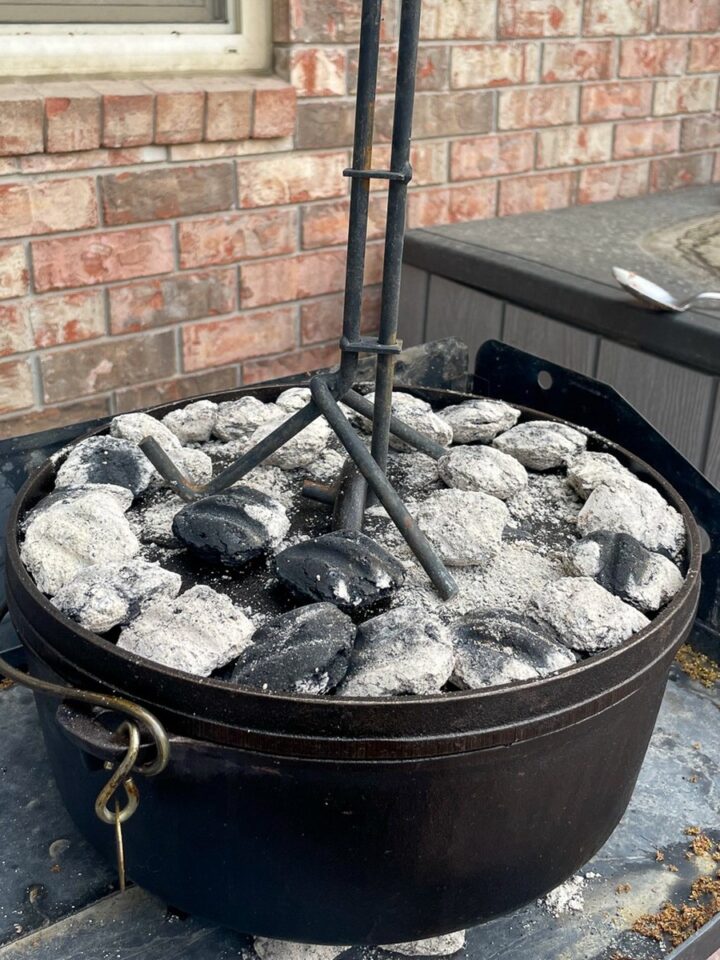
This is the pot I would tell any scout troop to buy. The Lodge 12 inch, 6 quart camp oven has three legs to stand over coals and a flanged lid with a rim that holds briquettes on top. Also, every recipe in my Dutch oven camping recipes is written for this size.
Those three legs and the flanged lid are exactly what make it a great camp oven. At home, though, a flat-bottomed pot like the Lodge Enameled above is the better fit for the stovetop.
Once you have the 12 inch, the next camp oven worth buying is the 10 inch, 4 quart version of the same pot. It is really good for side dishes, so the main cooks in the 12 inch while the side cooks right next to it on the same bed of coals.
Camp Chef Deluxe 12 Inch: Camp Extras Pick
The Camp Chef Deluxe is a 12 inch camp oven with two useful extras. First, the lid flips over and sits on its own legs as a small griddle for bacon and pancakes, and there is a notch in the rim so you can run a probe thermometer in without lifting the lid. So if you cook at camp often, those two details earn their keep.
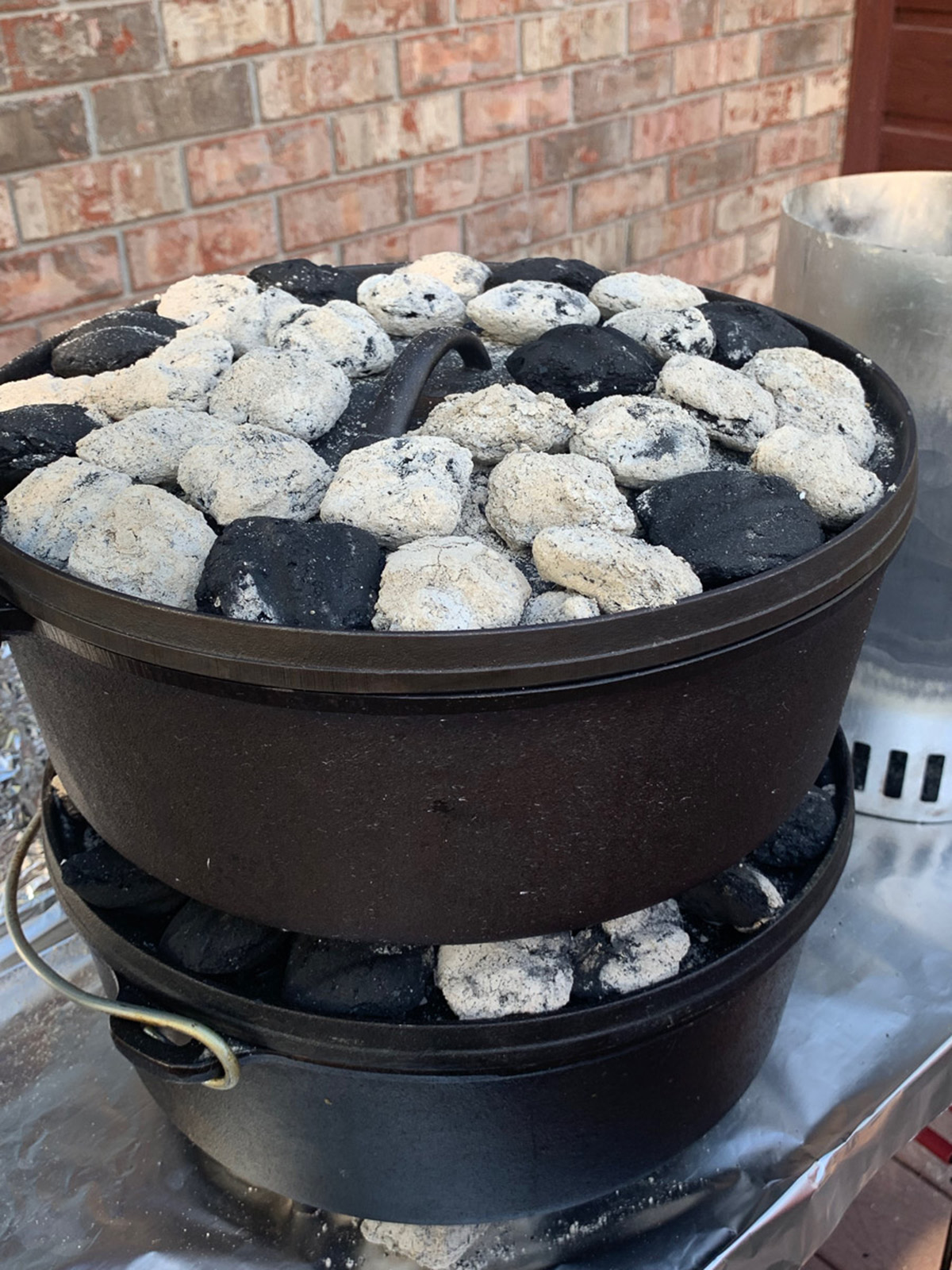
Either way, one rule applies to both camp ovens: they are bare cast iron for a reason. Never put an enameled pot on coals. The enamel is glass, and the uneven heat will crack it.
Best Mid-Range Dutch Oven ($100 to $250)
Here is something most roundups will not tell you: the middle of the Dutch oven market is thin. In fact, most pots land in either the budget range or the premium range, and fewer sit in between. Still, there is one I recommend without hesitation.
Lodge Blacklock 5.5 Qt: Lightweight Pick
The Lodge Blacklock 5.5 quart is thinner and lighter than regular Lodge, and it comes triple seasoned out of the box. As a bonus, that thinner wall means it heats faster and responds faster when you turn the burner down, so it behaves a little more like a skillet with high walls.
As a result, it is my pick for searing and deep frying, and for anyone who has ever put off making soup because the pot was too heavy to haul out. Still, the catch is the same as all bare cast iron: go easy on long, acidic simmers until the seasoning is well built.
Best Premium Dutch Ovens ($300 and Up)
To be clear, a higher price does not mean better food. Rather, premium pots differ mainly in finish, handles, lids and warranty, and in a look you may want to hand down to your kids.
Le Creuset Signature 5.5 Qt: Splurge Pick
If the price fits your budget, the Le Creuset Signature 5.5 quart is an easy pot to live with every day. Plus, the oversized handles are easy to grab with thick oven mitts, and the stainless knob is rated to 500F, so it goes straight into a hot oven for bread.
Even better, the light sand interior is the quiet advantage. That way, you can see your fond building on the bottom of the pot, so you know exactly when to deglaze. On the other hand, that same light enamel stains over the years, and the price stings.
Staub 5.5 Qt Round Cocotte: Browning Pick
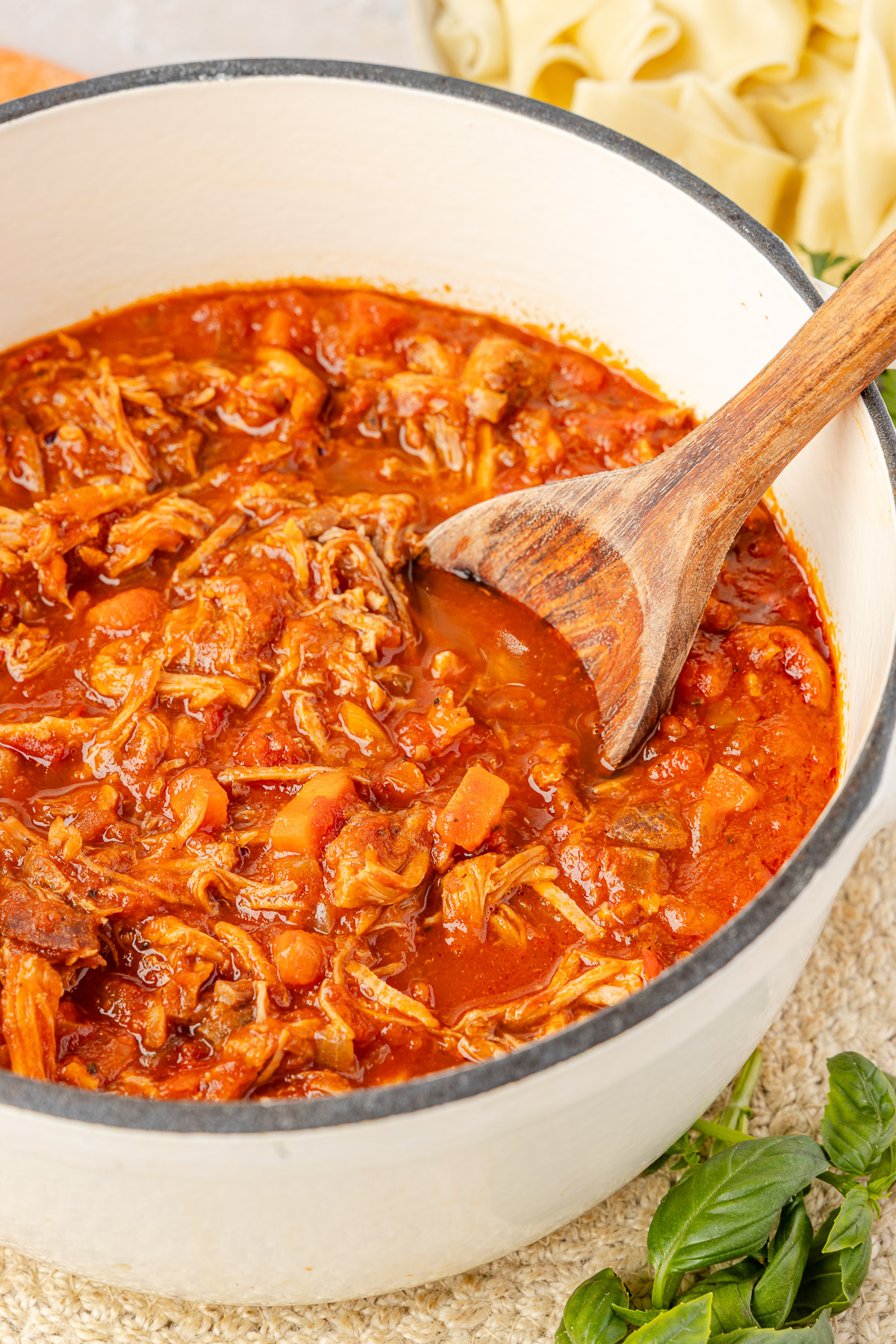
The Staub 5.5 quart cocotte has a matte black enamel interior with a slightly rough texture that is made for a good, hard sear. Also, the lid is heavy and studded with little spikes on the underside that drip condensation back down onto the food as it braises.
However, it is a heavy pot, and that black interior makes it harder to judge your fond. For short ribs, pot roast and anything that lives on a hard sear, it is the one I would pick.
Smithey No. 5.5: Bare Cast Iron Pick
The Smithey 5.5 quart is bare cast iron with a fully polished interior, so the cooking surface is smooth and turns genuinely non-stick once the seasoning builds up. Better yet, it is made in Charleston, it has a stainless knob, and the lid also fits Smithey's No. 10 skillet.
Keep in mind it is heavy, about 14.5 pounds with the lid, so this is not a pot for anyone with sore wrists. Smithey also makes a 3.5 quart for two people and a 7.25 quart for a crowd.
Le Creuset vs Staub: Which Should You Buy
This is the question I get most, so here is my take. Both are excellent pots, and the choice comes down to how you cook. For example, Le Creuset has a light interior that lets you see what is happening and big, easy handles. Meanwhile, Staub has a matte black interior and a spiked, self-basting lid built for browning and braising. Ultimately, both will outlast you. In the Le Creuset vs Staub debate, there is no wrong answer, only a better fit for how you cook.
Enameled vs Bare Cast Iron: Which Should You Buy
In short, it comes down to one thing. Bare cast iron has a seasoning layer, which is oil that has polymerized onto the iron. That layer is what makes it non-stick, and it gets better every time you cook, but long acidic simmers can wear it down. Enameled cast iron, on the other hand, has a coating of glass. Acid cannot touch it, but glass chips, never becomes non-stick, and cracks over a fire.
- Buy enameled if you cook a lot of tomato sauce, chili, wine braises and beans, and you want a pot that never needs seasoning.
- Buy bare if you want the hardest sear, a surface that improves with age, and a pot you can take camping.
- Own both if you cook a lot. That is honestly where most serious home cooks end up.
If you go bare, my guide to cast iron seasoning walks you through building up that non-stick layer. For a deeper look at which foods suit which pot, see what to cook in a Dutch oven. Full disclosure: I co-own BuzzyWaxx, a cast iron seasoning wax, and I use it on every bare pot on this list.
What Size Dutch Oven Should You Buy
In general, if you are only buying one, buy a 5.5 to 6 quart round. It holds a whole chicken, a four pound chuck roast or a double batch of soup, and it is the size nearly every recipe is written for.
- 3.5 quart: one or two people, side dishes, small loaves of bread.
- 5.5 to 6 quart: the default for a family of four to six. Start here.
- 7 quart and up: big families, batch cooking and holiday crowds. The weight becomes a real reason not to reach for it.
- Camp ovens: the 12 inch, 6 quart is the one to own first, and a 10 inch, 4 quart is the perfect second oven for side dishes. A 12 inch deep, 8 quart is better for chili and stew for a crowd.
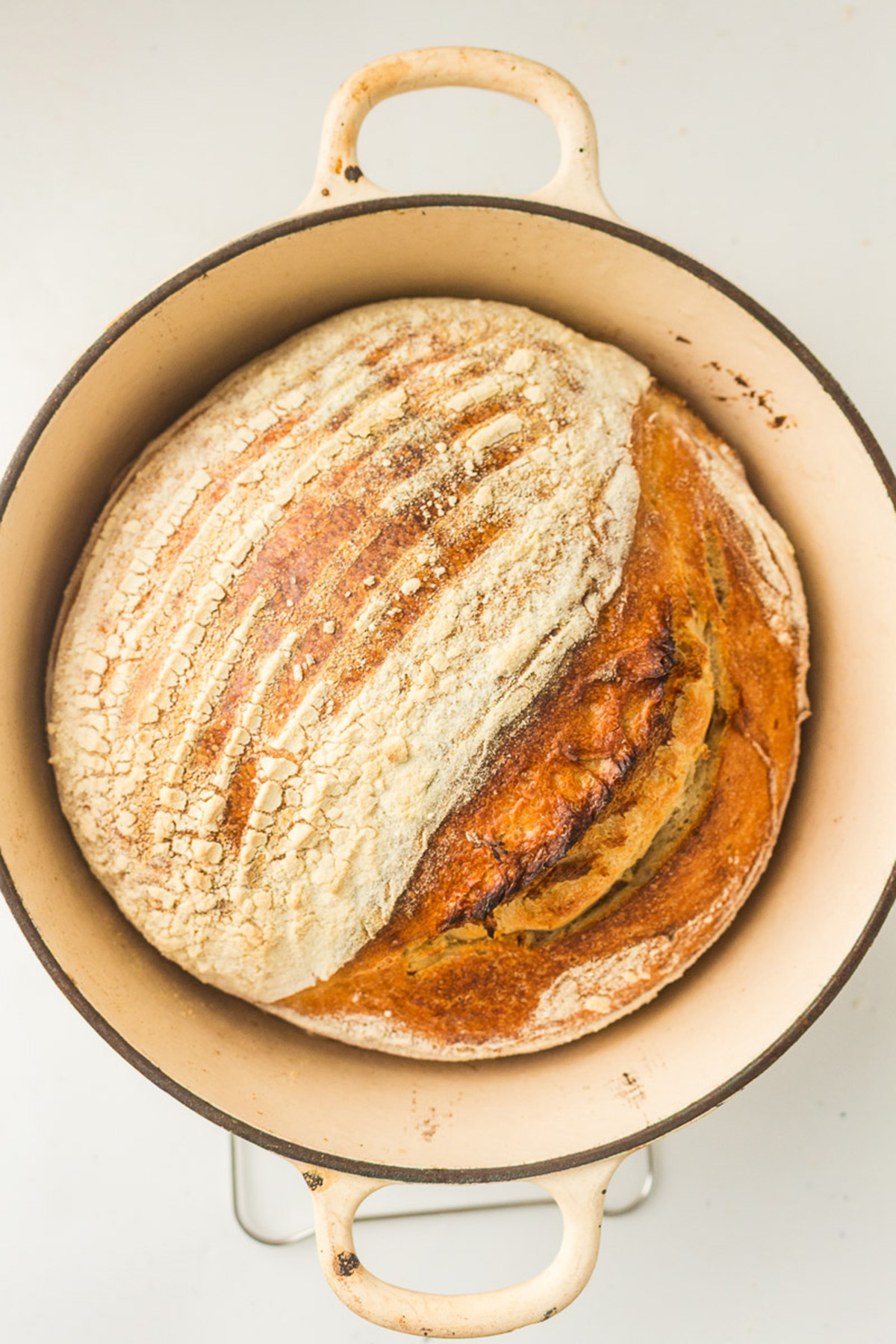
Baking bread? Match the pot to your dough. A two pound loaf wants 5.5 to 6 quarts, and my Dutch oven bread recipes guide has a full size chart.
What To Look For Before You Buy
These are the details that make a Dutch oven a joy or a chore once you get it home.
- Knob temperature limit. For example, metal knobs go anywhere. Phenolic and plastic knobs often top out around 400F to 450F, which matters for bread baked at 450F or more.
- Handle size. First, try it with oven mitts on. Small loop handles on a heavy, hot pot are how accidents happen.
- Lid fit. A heavy, snug lid is what keeps a braise from drying out over three hours.
- Interior color. In other words, light enamel shows you the fond. Black enamel and bare iron brown harder but hide it.
- Weight. A 5.5 quart pot runs roughly 10 to 15 pounds empty. Be honest about what you want to lift full of stew.
- Flat bottom or legs. Legs are designed for cooking over coals. For a stovetop or induction burner, choose a flat bottom.
- Warranty. Check the terms before you buy. Also, many cast iron makers back their pots for life, and the details vary.
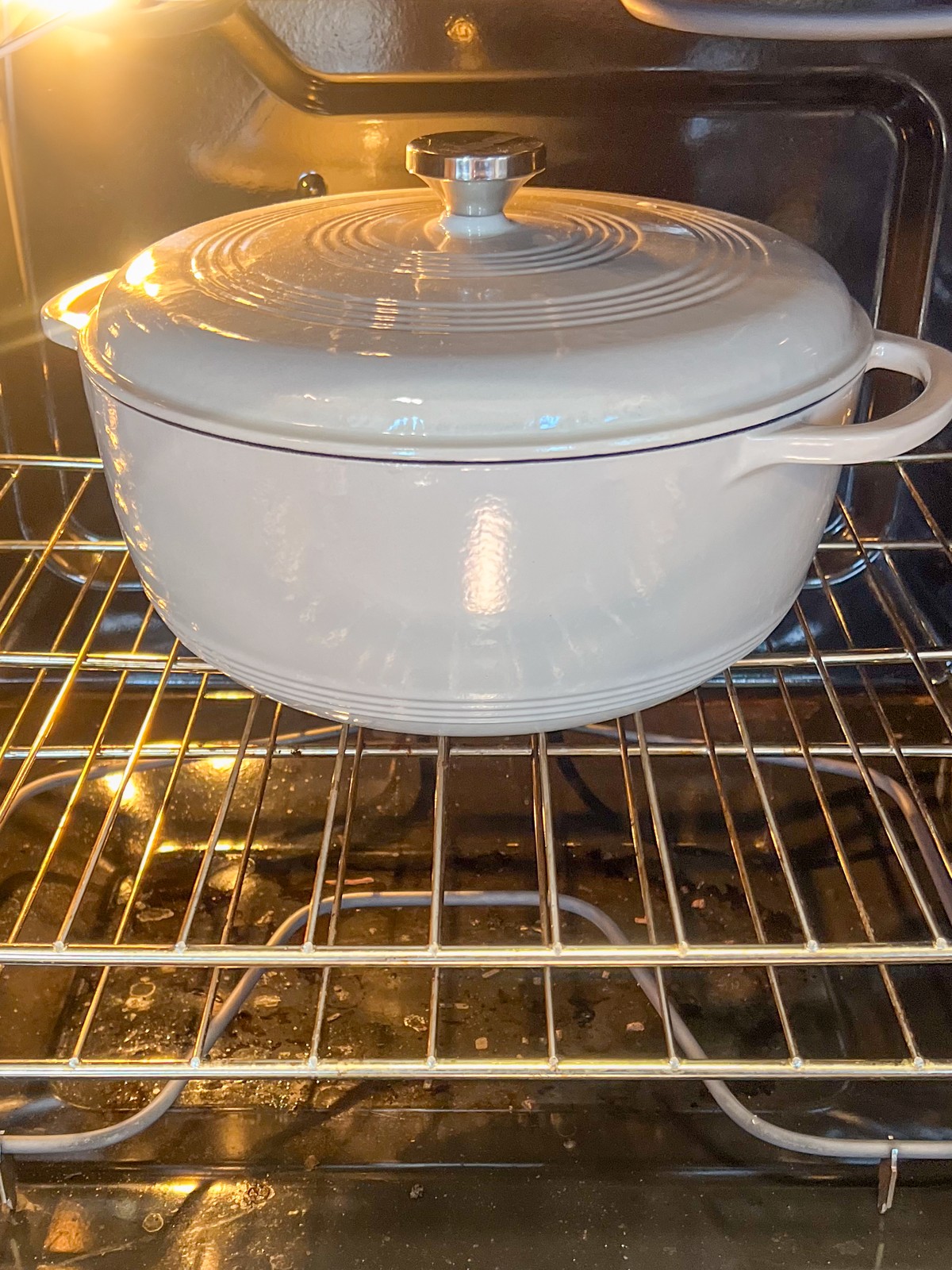
Cooking over coals instead of a burner? My Dutch oven temperature chart shows how many briquettes to use for each size.
First Things To Cook In Your New Dutch Oven
Finally, a new pot deserves a good first meal. These are the recipes I point people to first, and all of them work in any pot on this list.
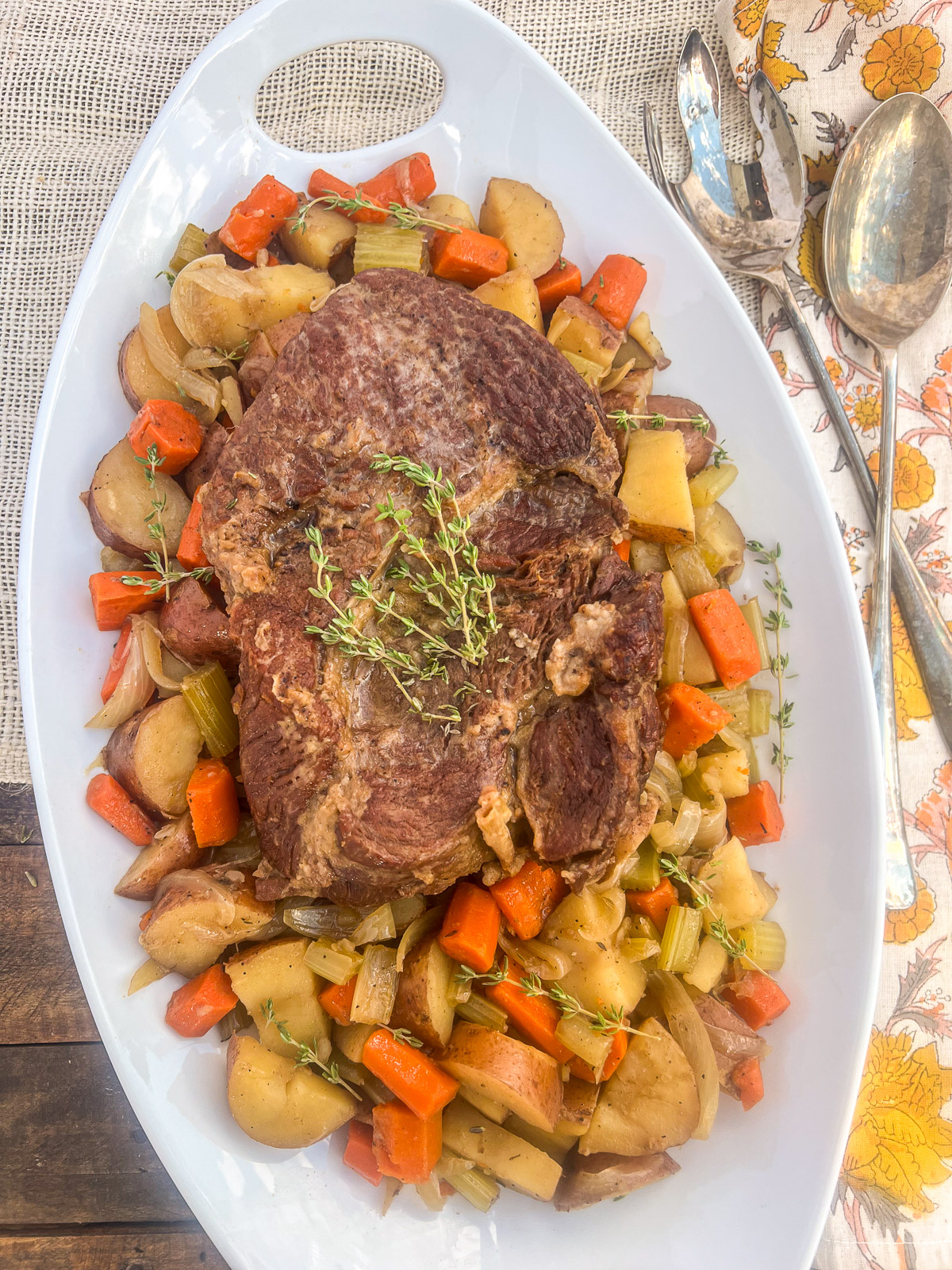
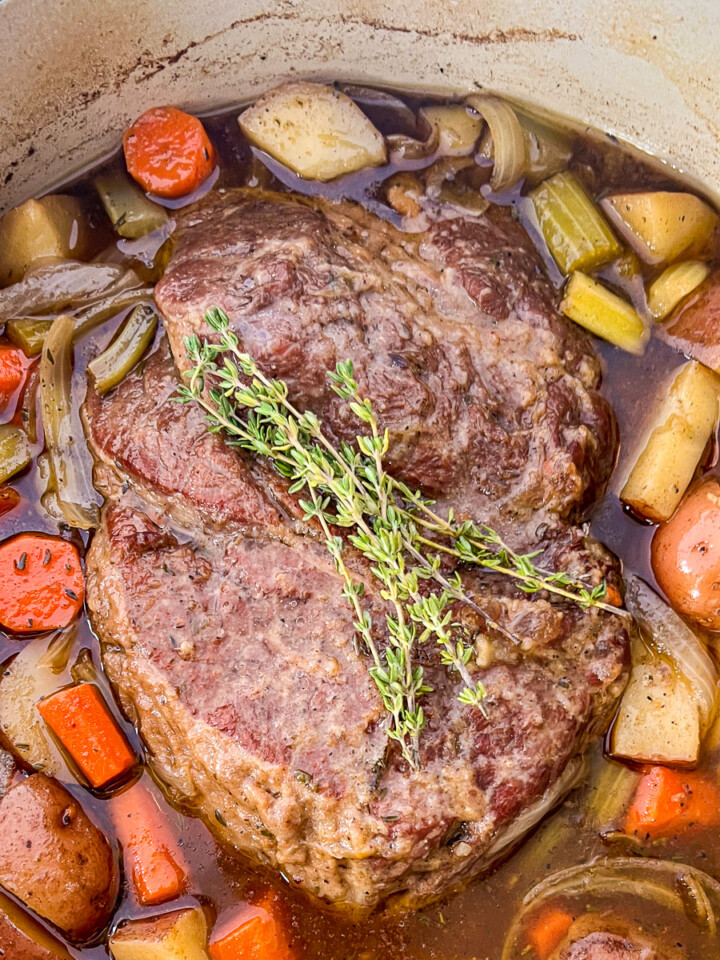
- Dutch Oven Pot Roast is the one to learn first. Chuck roast, root vegetables and a gravy that builds itself.
- Dutch Oven Bread proves why everyone wants one of these pots. Crackly crust, no stand mixer needed.
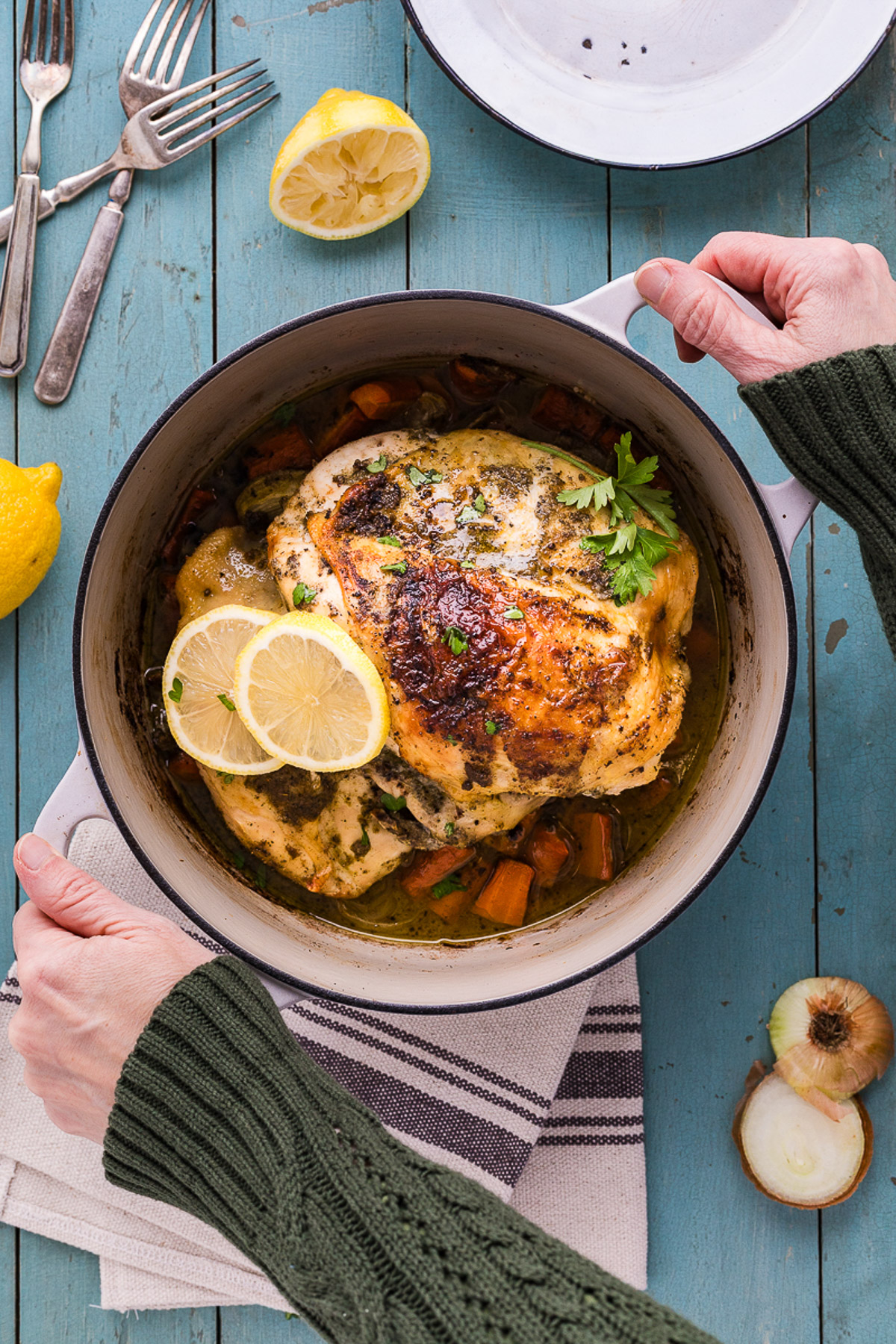
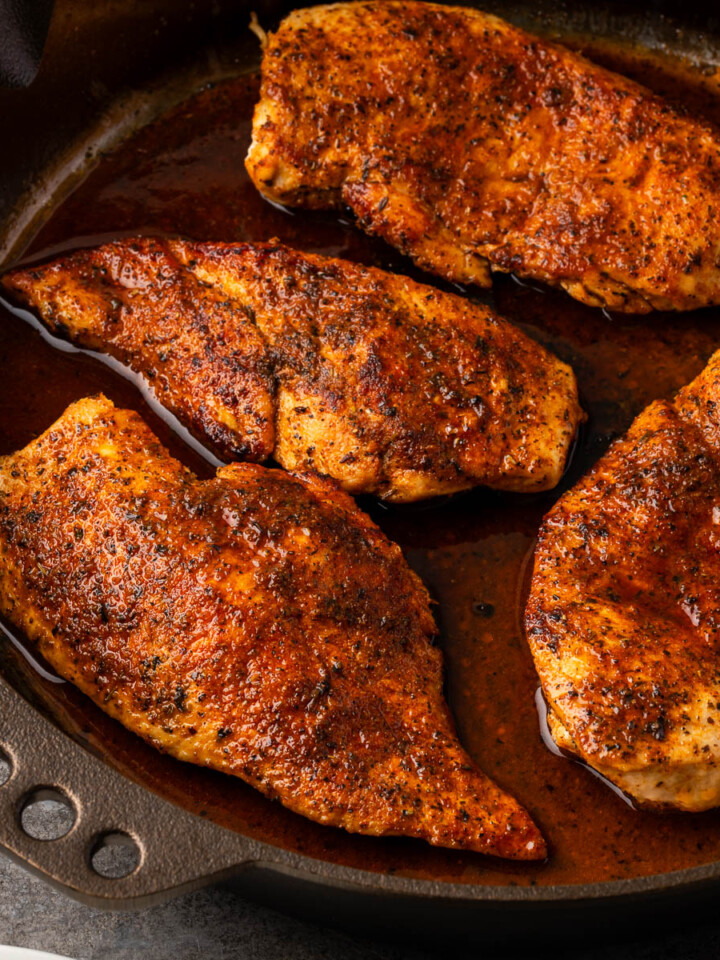
- Dutch Oven Chicken is a weeknight dinner with golden skin and tender meat.
- Dutch Oven Peach Cobbler is the first thing to bake in a new camp oven.
When you are ready for more, the Dutch oven soup recipes are a great second stop.
Best Dutch Oven FAQs
For most home cooks, a 5.5 to 6 quart enameled cast iron Dutch oven is the best Dutch oven to start with. There is no single winner for everyone. My budget pick is the Lodge Enameled 4.5 quart for smaller households, and my splurge pick is the Le Creuset Signature 5.5 quart.
It is worth it if you cook in a Dutch oven every week and want one pot for life. You are paying for the finish, the big handles, a 500F knob and a lifetime warranty. If you cook in one a few times a month, a Lodge enameled Dutch oven will also serve you well for much less.
Neither is better. Instead, they are simply different. Le Creuset has a light interior that makes it easy to see your browning and big, easy handles. Staub has a matte black interior and a spiked, self-basting lid. Pick Le Creuset if you like to watch your fond, and Staub if braising and searing are your main jobs.
Buy enameled if you cook lots of acidic food like tomato sauce and wine braises and want a pot that never needs seasoning. Buy bare cast iron if you want a harder sear, a naturally non-stick surface that improves with use, and a pot you can take camping. Many home cooks eventually own one of each.
A 5.5 to 6 quart round Dutch oven is the right size for most households. It fits a whole chicken, a four pound roast or a double batch of soup. Choose 3.5 quarts for one or two people and 7 quarts or more for large families. For camping, start with a 12 inch, 6 quart camp oven.
No. Enamel is a glass coating, and the uneven, direct heat of coals or a fire can crack or chip it. Use a bare cast iron camp Dutch oven with legs and a flanged lid over coals, and keep enameled pots for the stovetop and oven.
More Dutch Oven Guides

If this guide helped you pick the Best Dutch Oven for your kitchen, I would love to hear which one you went with. Leave a 🌟 star rating and tell me in the 📝 comments what you cooked in it first.
Leave a Reply