


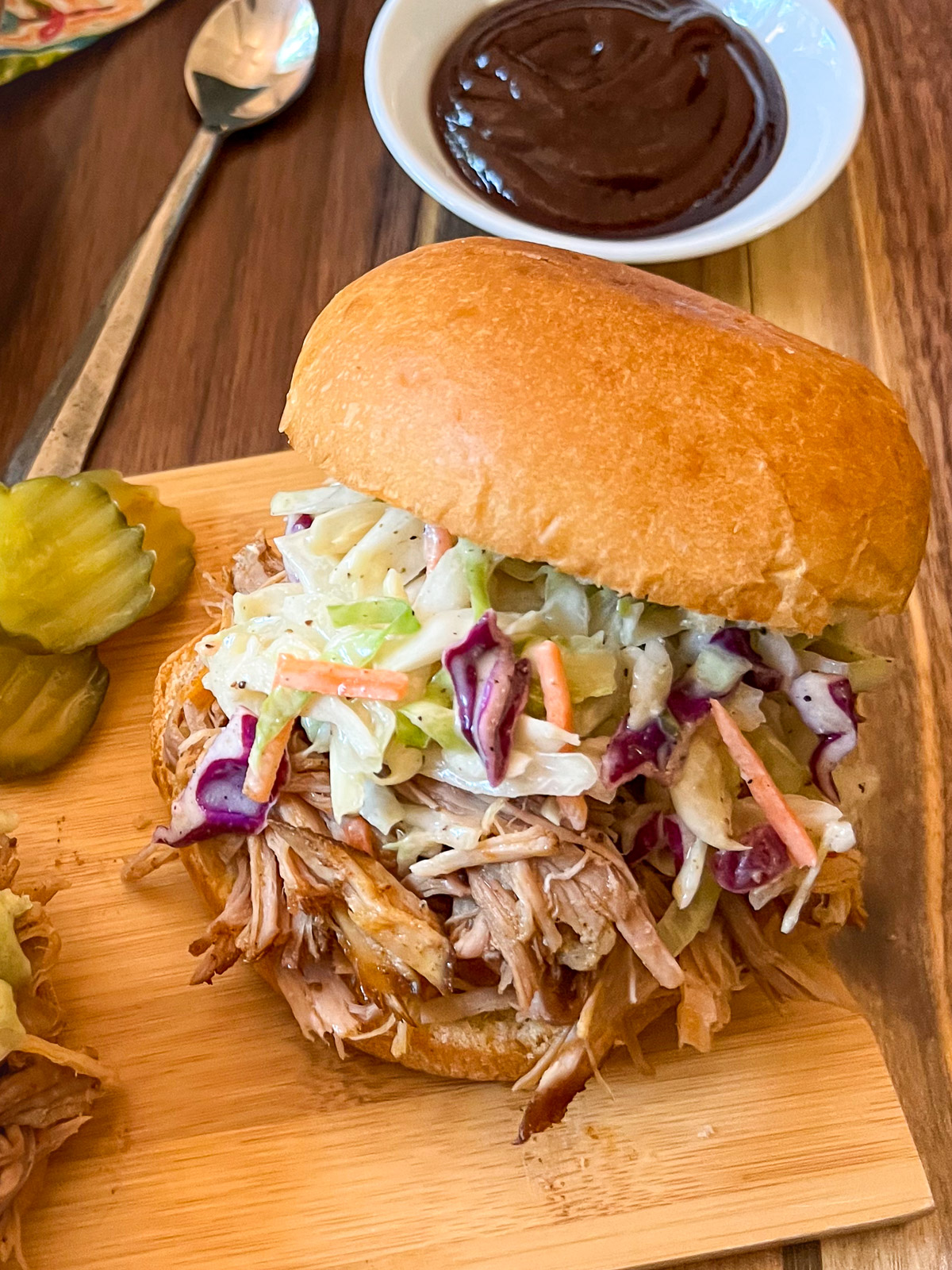
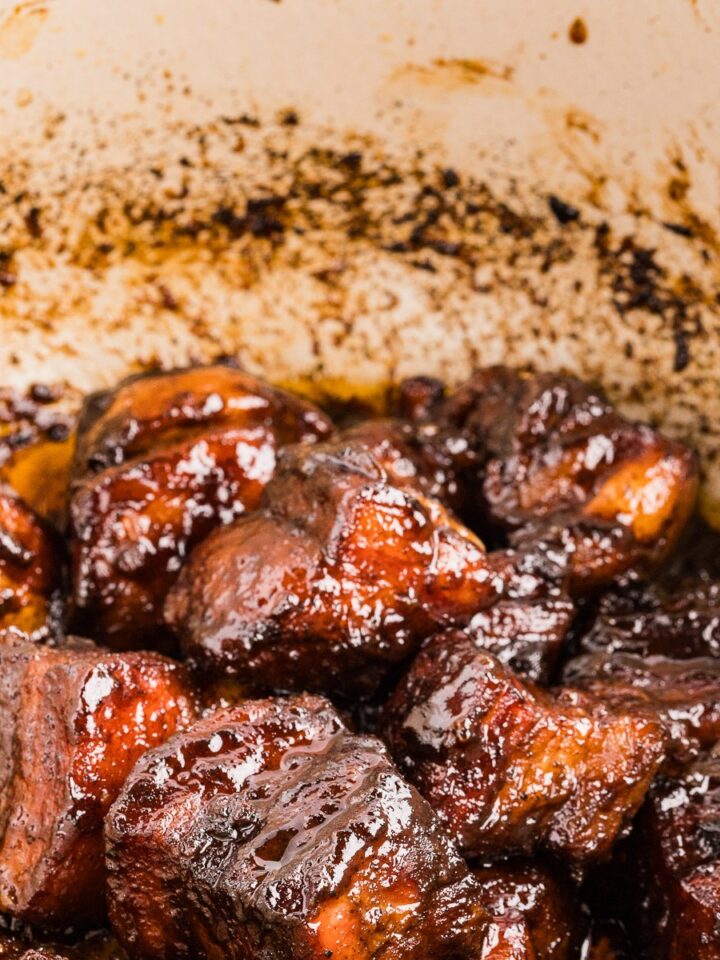
Smoked Pork Butt delivers tender, fall-apart pulled pork with a deep mahogany bark and layers of smoky flavor. The cast iron skillet finish is what sets this recipe apart, catching every drop of rendered juice so the meat stays rich and moist.
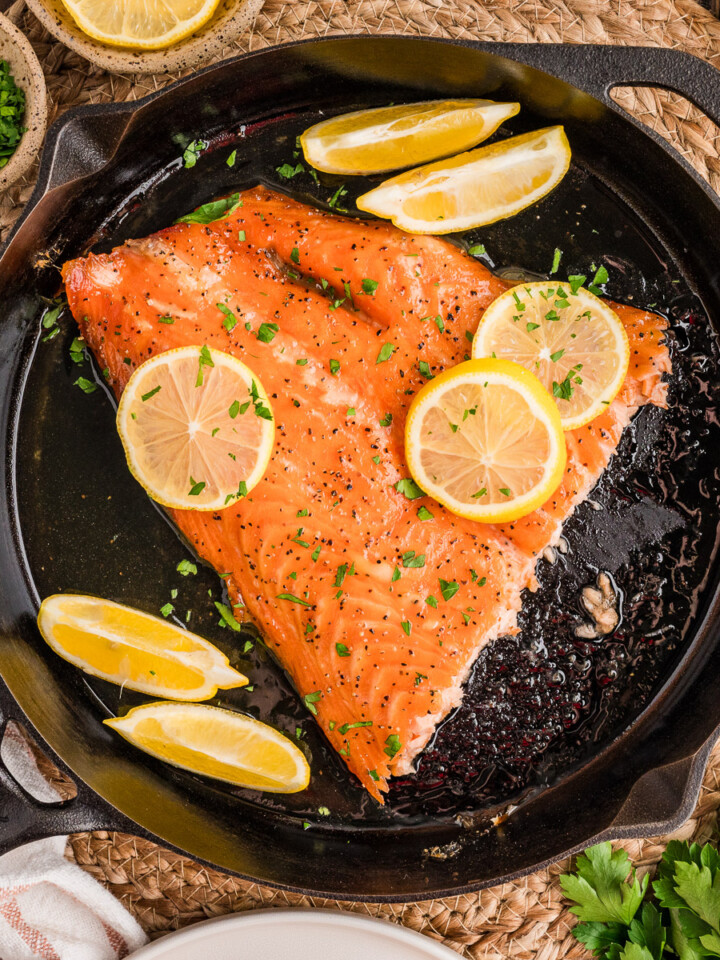
Whether you call it pork shoulder, Boston butt, or pork butt, this cut was made for the smoker. In fact, one pork butt feeds 10-12 people with minimal hands-on time, making it the perfect cookout centerpiece. If you love easy outdoor cooking, you will also love our hot smoked salmon and pulled pork nachos.
Quick Look at this Recipe
- ✅ Recipe Name: Smoked Pork Butt
- 🕒 Ready In: 8-9 hours (15 min prep, 7-8 hours smoke + rest)
- 👪 Serves: 10-12 people
- 🥣 Main Ingredients: bone-in pork butt, olive oil, dry rub, BBQ sauce
- 📖 Dietary Info: Gluten-free (check rub ingredients)
- ⭐ Why You'll Love It: Low-effort, crowd-feeding smoked meat with a cast iron finish that keeps it juicy.
Summarize and Save the Recipe
Jump to:
- Quick Look at this Recipe
- Why You'll Love Smoked Pork Butt
- What Makes This Smoked Pork Butt Different
- Pork Shoulder vs. Boston Butt: Same Cut, Different Names
- Ingredients and Substitutions
- How to Smoke a Pork Butt
- Variations and Flavor Twists
- Expert Tips for the Best Smoked Pork Butt
- What to Serve with Pulled Pork
- Storing and Reheating Pulled Pork
- Leftover Pulled Pork Ideas
- Recipe FAQs
- More Delicious Recipes
- Get the Recipe
Why You'll Love Smoked Pork Butt
- Feeds a crowd with minimal effort. One pork butt serves 10-12 people. Just season it, put it on the smoker, and let time do the heavy lifting while you handle everything else.
- The cast iron finish keeps it juicy. When you transfer the pork to a cast iron skillet for the wrapped phase catches every drop of rendered fat and juice. When you shred, all that flavor stays in the meat instead of dripping through the grates.
- Forgiving for beginners. In fact, pork butt is one of the most forgiving cuts to smoke. The high fat content and connective tissue mean it is hard to dry out, even if your timing is off by an hour.
- Leftovers are a meal starter. Pulled pork tacos, nachos, quesadillas, loaded baked potatoes. Essentially, one smoke session sets you up for the whole week.
What Makes This Smoked Pork Butt Different
Most smoked pork butt recipes have you wrap the meat in foil or butcher paper and set it right back on the grates. That works, but you lose all the rendered juices that drip through. This recipe takes a different approach: at 160°F internal, you transfer the pork to a cast iron skillet, cover it tightly with foil, and let the skillet collect every drop of liquid gold as the meat finishes cooking.
When it is time to shred, you do it right in the skillet. As a result, the pulled pork reabsorbs those concentrated juices, and the difference in flavor and moisture is night and day compared to shredding on a dry cutting board.
The two-stage temperature approach also saves time without sacrificing quality. You start at 225°F to build smoke flavor and bark, then bump to 300°F after wrapping. Meanwhile, the higher temp powers through the stall (that frustrating plateau around 150-170°F where evaporative cooling stalls the cook) without drying the meat, because the foil wrap traps moisture. The science is simple: low temp lets smoke penetrate and bark form, and the higher wrapped temp finishes the job faster.
Pork Shoulder vs. Boston Butt: Same Cut, Different Names
If you have ever been confused by the labels at the meat counter, you are not alone. According to the Pork Council, pork shoulder and Boston butt refer to the same cut: the upper portion of the front shoulder. You may also see it labeled as picnic roast, pork butt, or blade roast. For this smoked Boston butt recipe, bone-in is the way to go. The bone adds flavor during the long cook and helps the roast hold its shape until it is time to shred.
Ingredients and Substitutions
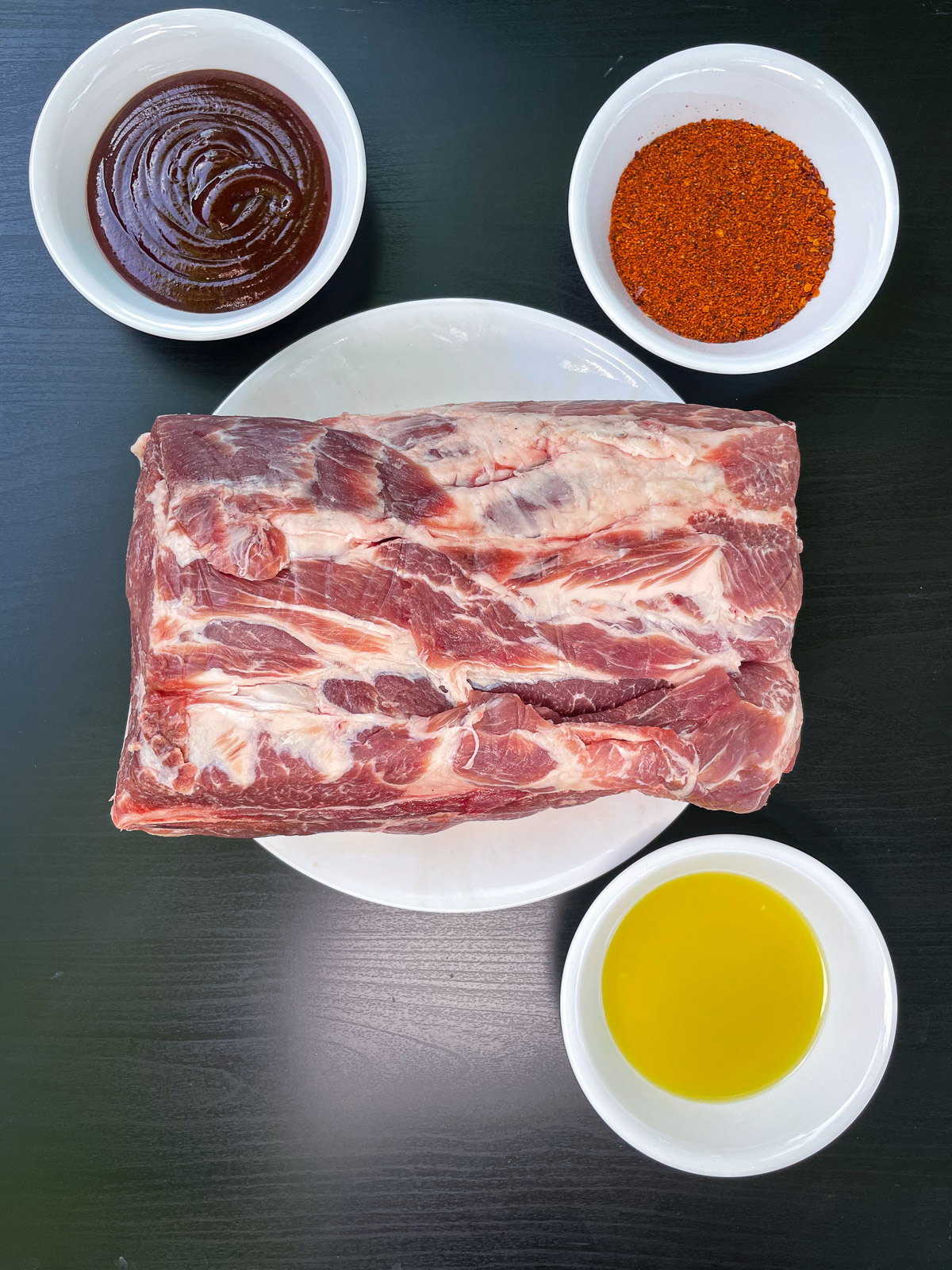
- Bone-in pork butt (8-10 lbs): Also labeled pork shoulder, Boston butt, or blade roast. Bone-in holds together better and adds flavor. Boneless works but may cook 30-60 minutes faster.
- Olive oil (or yellow mustard): A binder to help the rub stick. Olive oil gives a clean flavor. Yellow mustard is the classic BBQ binder and cooks off completely, leaving no mustard taste. Either works.
- Dry rub: A good all-purpose BBQ rub with paprika, brown sugar, garlic powder, onion powder, black pepper, and cayenne. Store-bought or homemade both work well.
- BBQ sauce (optional): For finishing after shredding. Sweet, tangy, vinegar-based, or Carolina mustard style all pair well. Let the smoked meat be the star.
- Wood pellets or chips: Hickory gives the strongest, most traditional BBQ smoke flavor. Apple and cherry are milder with a hint of sweetness. A hickory-apple blend is a great middle ground.
See the recipe card below for complete measurements and step-by-step instructions.
How to Smoke a Pork Butt
Here is a visual walkthrough of the process. Full step-by-step instructions with exact measurements and times are in the recipe card at the bottom of this post.
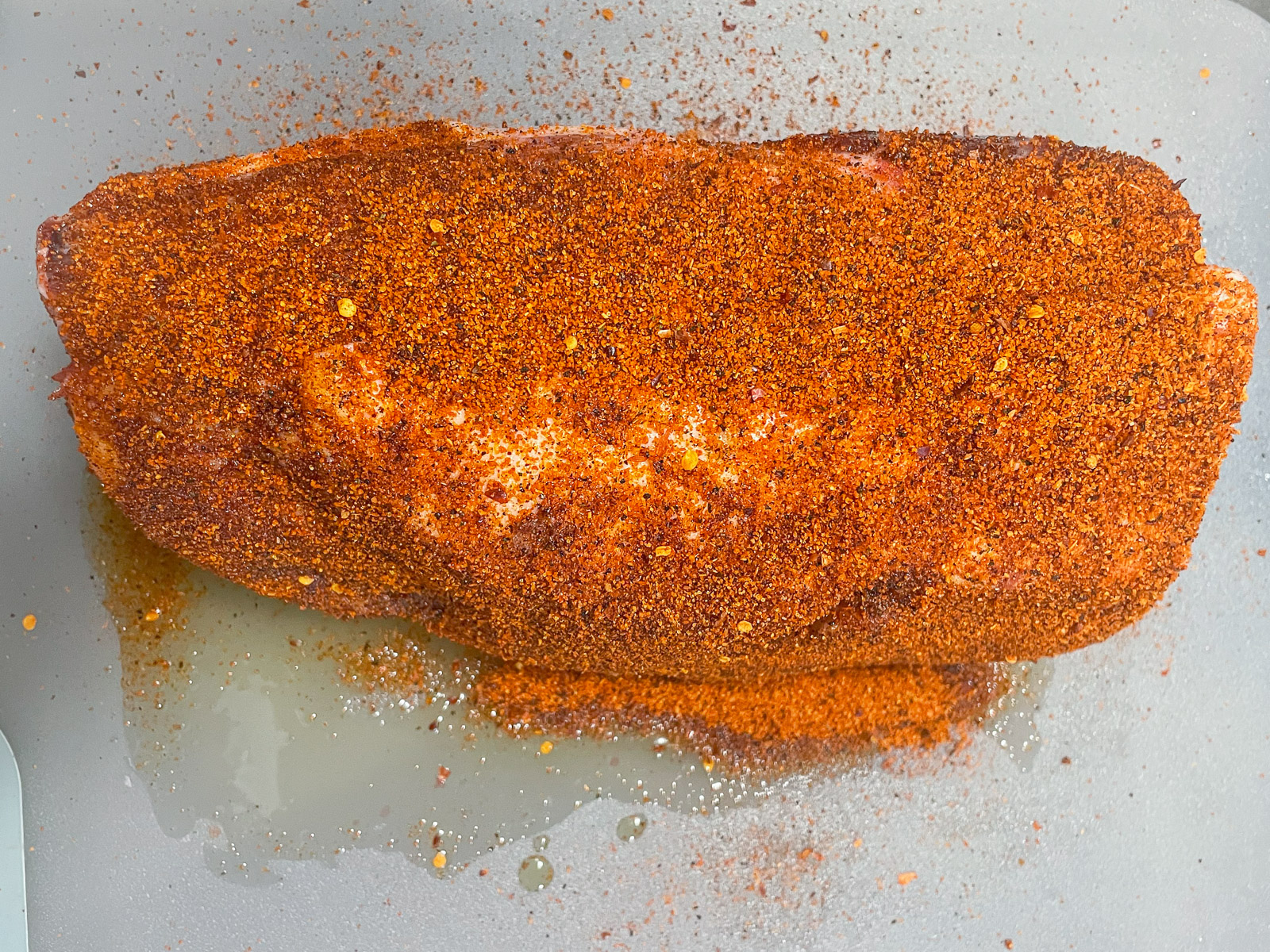
- Step 1: Season. Coat the pork butt in olive oil on all sides, then apply the dry rub generously. The bark should look thick and opaque.
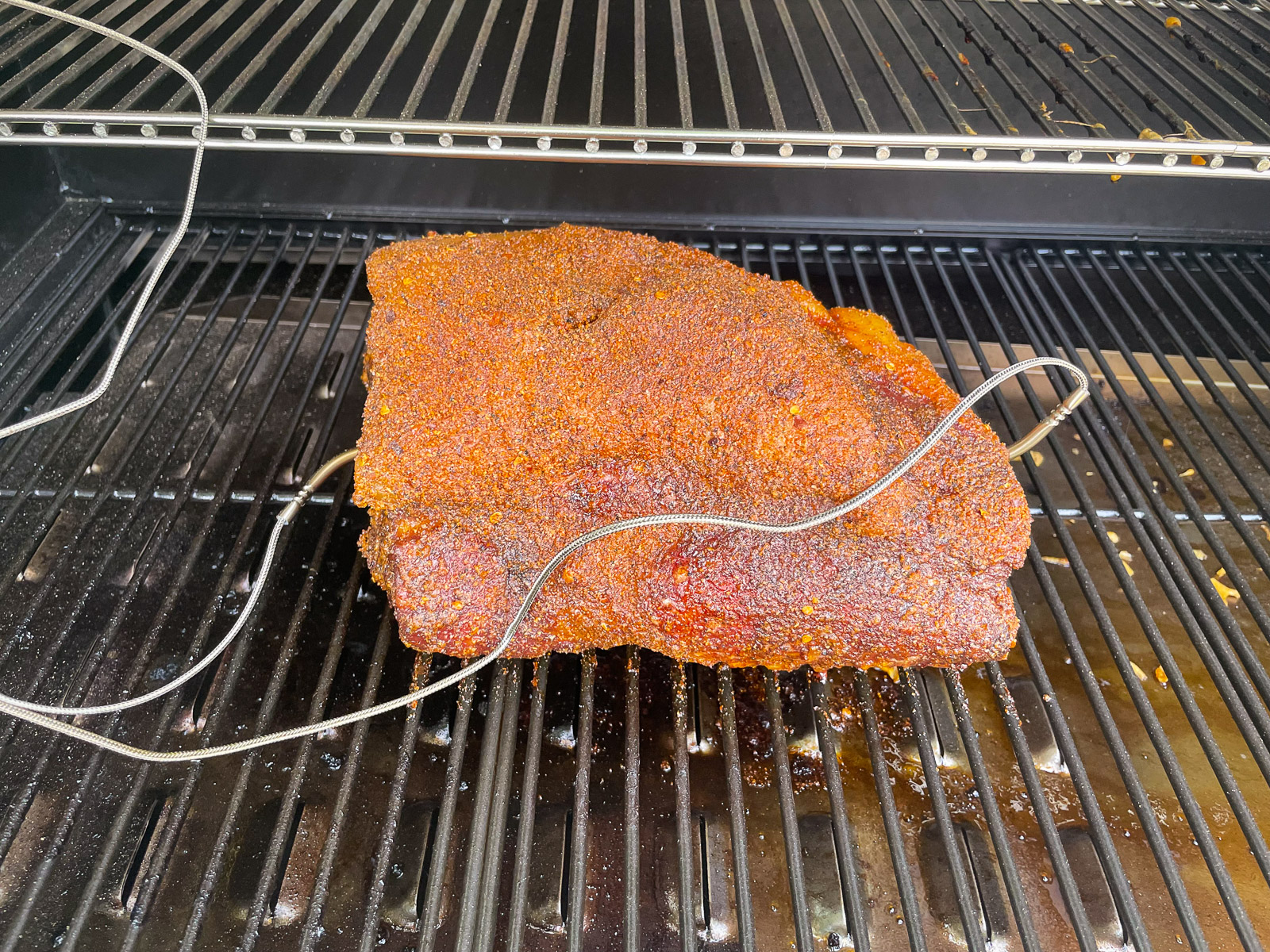
- Step 2: Smoke low. Place on the smoker at 225°F with a meat thermometer inserted. Smoke until the internal temperature reaches 160°F (about 6-7 hours).
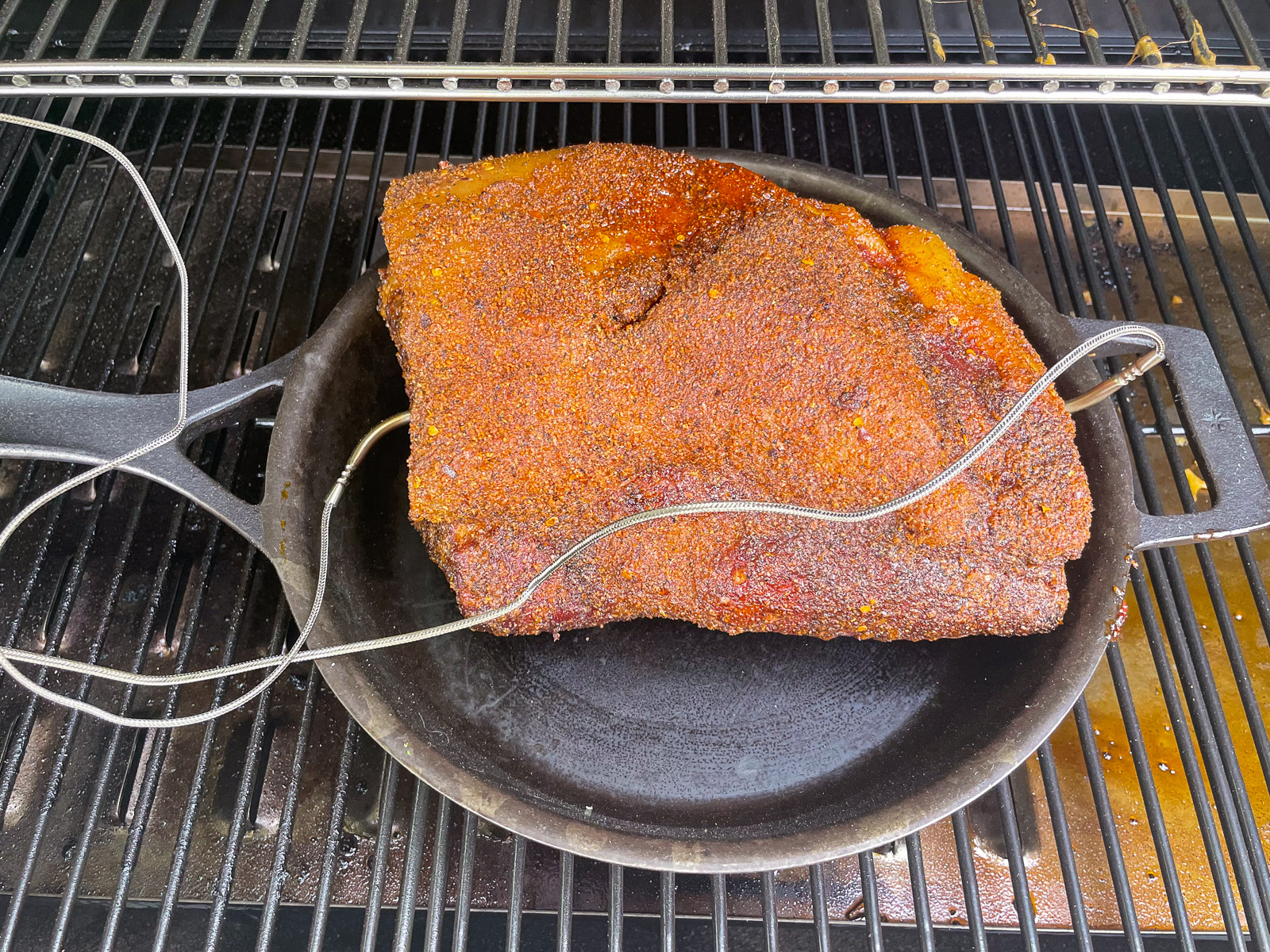
- Step 3: Transfer to cast iron. Move the pork to a cast iron skillet and cover tightly with aluminum foil. Bump the smoker to 300°F.
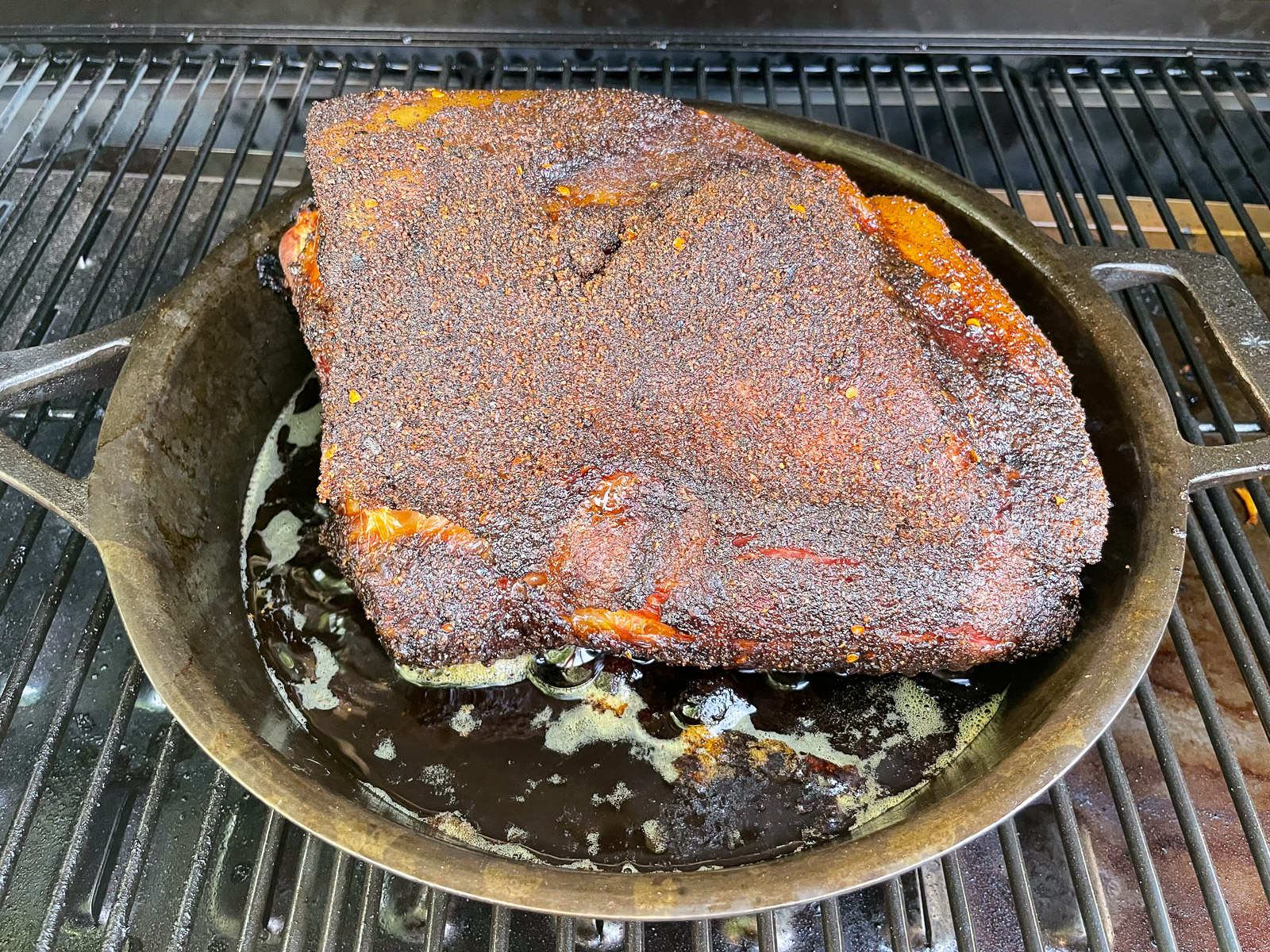
- Step 4: Finish. Continue cooking until internal temp reaches 200-210°F and a probe slides in with no resistance.
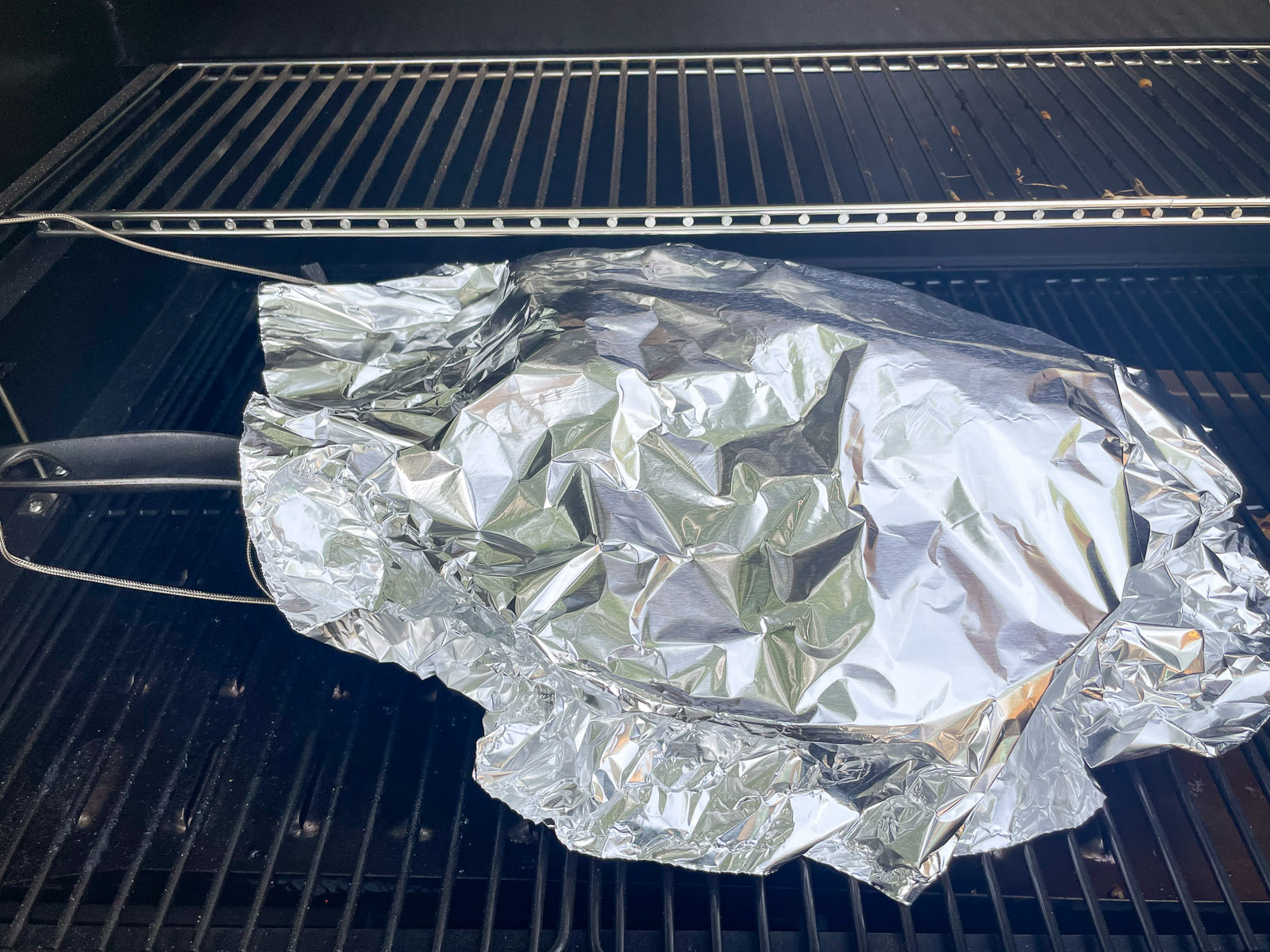
- Step 5: Rest. Remove from the smoker and place the covered skillet in a cold oven. Rest for at least 45 minutes, up to 2 hours.
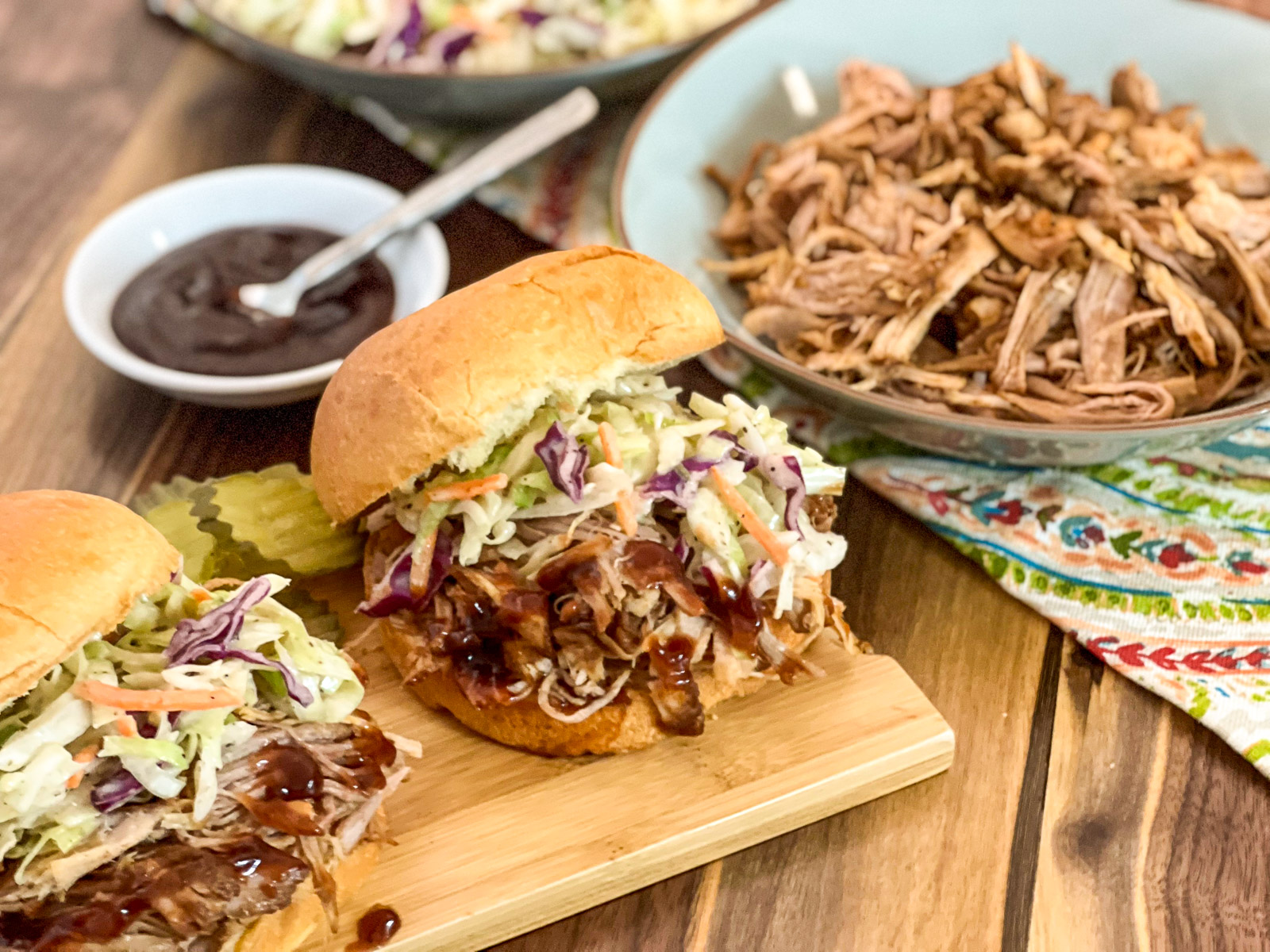
- Step 6: Shred and serve. Use two forks to shred the meat right in the cast iron skillet. Toss with BBQ sauce if desired and serve.
Variations and Flavor Twists
- Carolina-style (vinegar sauce): Skip the sweet BBQ sauce. Toss the shredded pork in a vinegar-pepper sauce for tangy, traditional Carolina pulled pork.
- Spicy chipotle: Add chipotle powder to the rub and finish with a chipotle-adobo BBQ sauce for smoky heat.
- Sweet and smoky (competition style): Use cherry or apple wood, a sweeter rub with more brown sugar, and a thick Kansas City-style sauce.
- Low and slow all the way: Skip the 300°F bump. Stay at 225°F the entire cook for maximum smoke flavor. This adds 2-3 hours but deepens the smoke ring.
- Boneless pork butt: Works fine, but expect it to cook faster. Start checking the temperature at the 5-hour mark. The meat may fall apart more during shredding.
Expert Tips for the Best Smoked Pork Butt
- Do not skip the rest. The rest is where good pulled pork becomes great. A 45-minute minimum lets collagen continue breaking down and juices redistribute throughout the meat. Longer is better, up to 2 hours.
- Use a meat thermometer, not a timer. Every pork butt is different. Internal temperature is the only reliable indicator of doneness. The pork is done when it hits 200-210°F AND the probe slides in with almost no resistance.
- The stall is normal. Around 150-170°F, the internal temp will plateau for an hour or more. This is moisture evaporating from the surface cooling the meat. The foil wrap solves it. Do not panic and crank the heat.
- Shred in the skillet, not on a cutting board. All those juices in the bottom of the cast iron are concentrated pork flavor. Shredding right in the pan means the meat reabsorbs them.
- Season heavier than you think. A 10 lb pork butt needs a generous coating of rub. The bark should look thick and opaque before it goes on the smoker. Underseasoning is the most common beginner mistake.
- Plan for 1.5 hours per pound, plus rest. For an 8 lb butt, that is roughly 12 hours of smoke time plus 1-2 hours of rest. Start early. Pulled pork holds well in a cooler wrapped in towels for up to 4 hours.
What to Serve with Pulled Pork
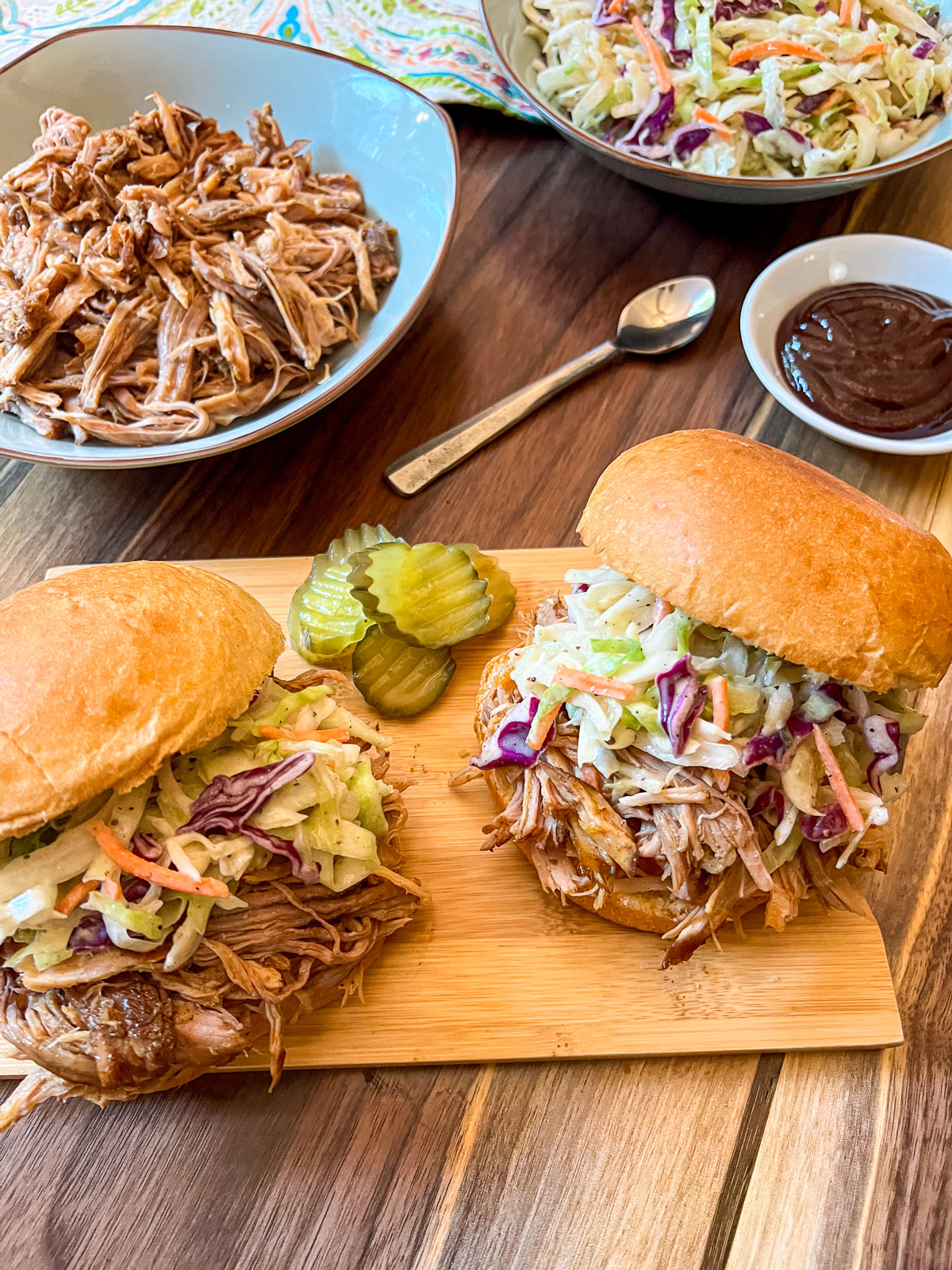
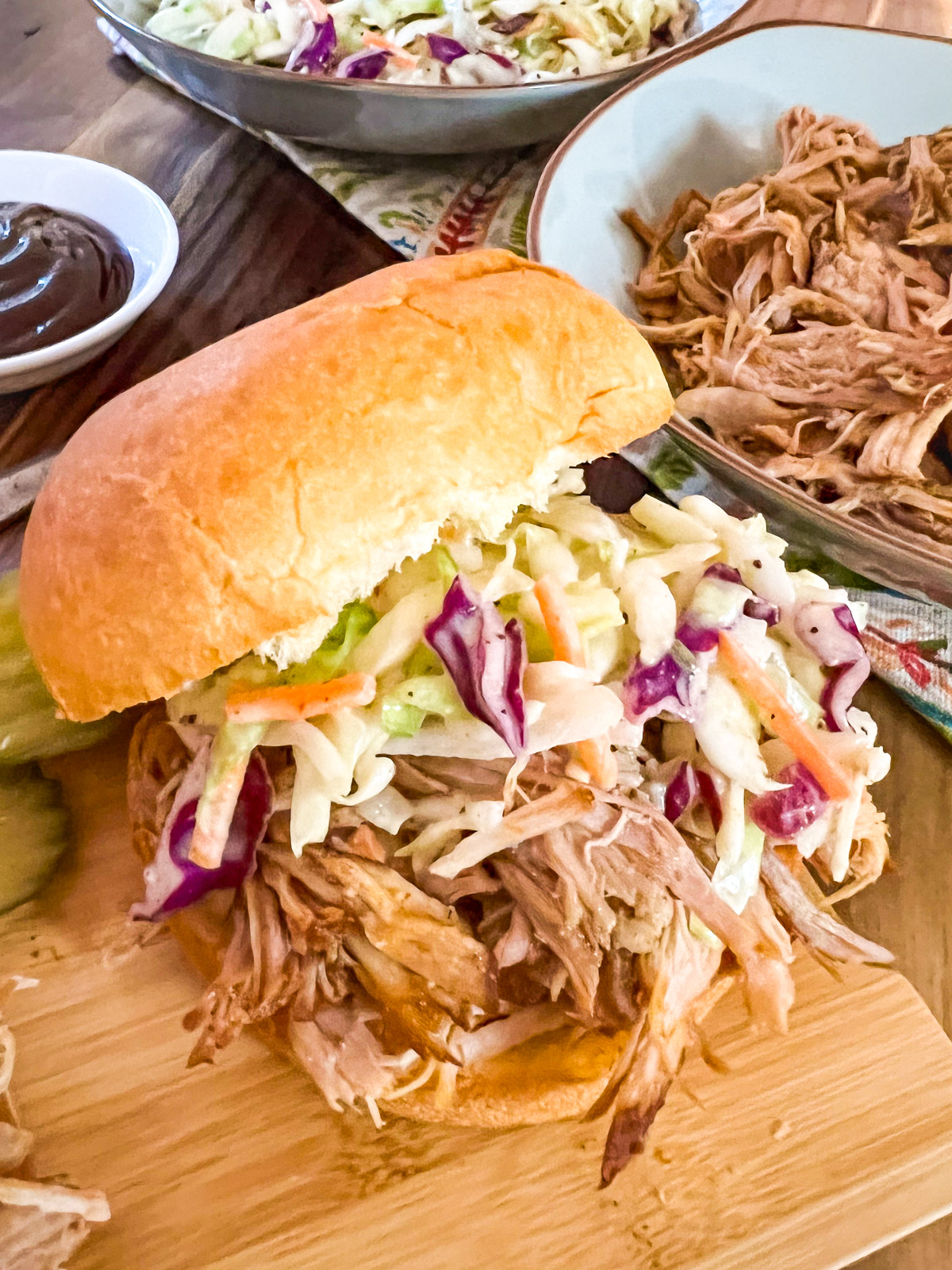
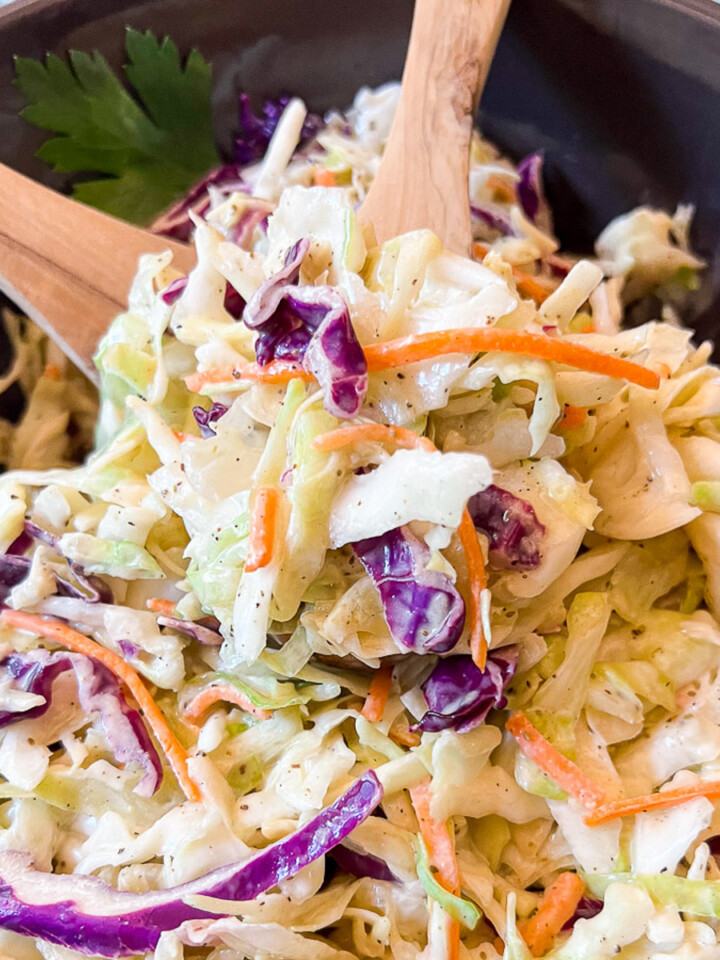
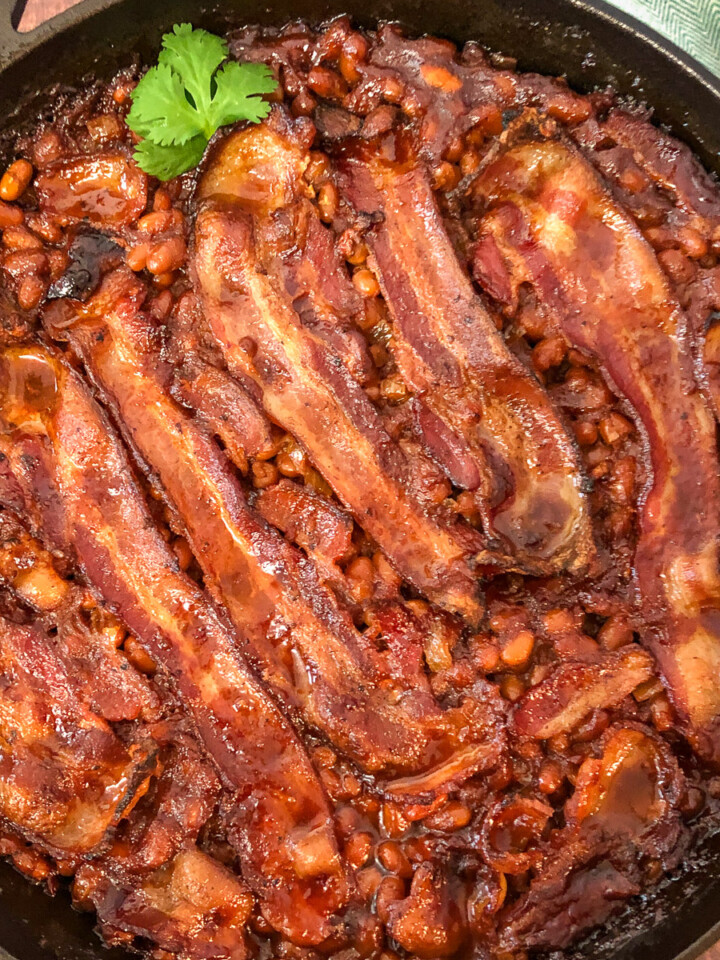
Smoked pulled pork pairs well with just about any BBQ side you can think of. Pile our simple coleslaw right on top of the sandwich for crunch and tang. On the side, our skillet baked beans with bacon are the perfect plate partner, and warm cast iron sweet cornbread rounds it out. For a full spread, add steamed corn on the cob, potato salad, or mac and cheese.
For sandwiches, toasted brioche buns are a crowd favorite. Hawaiian rolls make great sliders for parties. Or skip the bread entirely and just plate the pork with sides like your favorite BBQ joint.
For a picnic-style spread, set out a platter of cream cheese deviled eggs to snack on while the pork rests.
For a picnic-style spread, round out the plate with a big scoop of Country Potato Salad, which holds up beautifully next to the smoky meat.
Storing and Reheating Pulled Pork
- Refrigerator: Store shredded pork in an airtight container for up to 4 days. Keep any leftover juices and pour them over the pork before sealing.
- Freezer: Freeze in portion-sized freezer bags with the air removed. Include a splash of BBQ sauce or pork juices to prevent freezer burn. Good for up to 3 months.
- Reheating: Low and slow in a covered skillet on the stovetop with a splash of apple juice, broth, or BBQ sauce works best. A 300°F oven (covered) for 20-30 minutes is another good option.
- Make-ahead tip: Smoke the pork a day ahead, refrigerate, and reheat before serving. The flavors actually deepen overnight.
Leftover Pulled Pork Ideas
One pork butt gives you enough meat for multiple meals. Use leftovers to make our loaded pulled pork nachos with cheese, roasted corn, and cilantro. Pulled pork tacos with slaw and a drizzle of sauce are another fast option. Try pulled pork quesadillas pressed in a hot cast iron skillet, or pile the meat on split baked potatoes with cheese and sour cream.
Recipe FAQs
Plan for about 1.5 hours per pound at 225°F, plus 1-2 hours of rest time. An 8-10 pound bone-in pork butt typically takes 7-8 hours of active smoking using the two-stage method (225°F then 300°F wrapped), plus at least 45 minutes of rest. If you smoke at 225°F the entire time without wrapping, expect 12-16 hours total.
The target internal temperature is 200-210°F. At this range, the connective tissue and collagen have fully broken down, making the meat easy to shred. Use a probe thermometer and check that it slides in with almost no resistance. Temperature alone is not enough: the probe tender feel is the true test.
Fat side up is the most common recommendation. As the fat cap renders during the cook, it bastes the meat below and helps keep the surface moist. Some pitmasters prefer fat side down to protect the meat from direct heat. Either way works well. Just be consistent so the bark forms evenly on the exposed side.
The stall happens when the internal temperature of the pork butt plateaus around 150-170°F, sometimes for an hour or more. It occurs because moisture evaporating from the meat’s surface cools it at the same rate the smoker heats it. Wrapping the pork in aluminum foil (the Texas crutch) eliminates evaporative cooling and lets the temperature climb again. This recipe wraps at 160°F in a cast iron skillet for the best results.
Yes. Boneless pork butt works well, though it may cook 30-60 minutes faster and can fall apart more during shredding. The bone adds some flavor and helps the roast hold its shape, but the difference in the finished pulled pork is minimal. Start checking the internal temperature about an hour earlier than you would for bone-in.
Hickory is the classic choice and gives the strongest, most traditional BBQ smoke flavor. Apple and cherry wood are milder and add a hint of sweetness. A blend of hickory and apple is a great middle ground. Avoid mesquite for long smokes like pork butt because it can turn bitter over many hours.
More Delicious Recipes

If you tried this Smoked Pork Butt or any other recipe on my blog, please leave a 🌟 star rating and let me know how it went in the 📝 comments below. Thanks for visiting!
Get the Recipe
Smoked Pork Butt
Equipment
- 12" Cast Iron Skillet
- Smoker
Ingredients
- 8-10 lb bone-in pork butt also labeled pork shoulder, Boston butt, or blade roast
- 4 tablespoon olive oil or yellow mustard as a binder
- ½ cup BBQ dry rub store-bought or homemade with paprika, brown sugar, garlic powder, onion powder, black pepper, cayenne
- BBQ sauce for serving, optional
- wood pellets or chips hickory, apple, cherry, or a blend

Instructions
- Coat the pork butt in olive oil (or yellow mustard) on all sides and ends.
- Apply the dry rub generously, pressing it into the meat. The bark should look thick and opaque on all surfaces.
- Preheat the smoker to 225°F using your choice of wood (hickory, apple, cherry, or a blend).
- Place the pork butt on the smoker grates fat side up. Insert a meat thermometer probe into the thickest part of the meat. Smoke at 225°F until the internal temperature reaches 160°F, approximately 6-7 hours.
- Transfer the pork butt to a cast iron skillet and cover tightly with aluminum foil. Return to the smoker and increase the temperature to 300°F.
- Continue cooking until the internal temperature reaches 200-210°F and a probe slides into the meat with almost no resistance. This typically takes 1-2 additional hours.
- Remove the skillet from the smoker and place it (still covered) in a cold oven. Rest for at least 45 minutes, up to 2 hours. Do not remove the foil during this time.
- Uncover and use two forks to shred the meat right in the cast iron skillet, letting it soak up all the collected juices.
- Toss with your favorite BBQ sauce if desired and serve on toasted buns, on a plate with sides, or however you like.
Notes
- Do not skip the rest. A 45-minute minimum lets collagen continue breaking down and juices redistribute. Longer is better, up to 2 hours.
- Use a meat thermometer, not a timer. The pork is done when it hits 200-210°F AND the probe slides in with almost no resistance.
- The stall is normal. Around 150-170°F the internal temp will plateau. The foil wrap solves it.
- Shred in the skillet. All those juices in the cast iron are concentrated flavor. Shredding in the pan means the meat reabsorbs them.
- Season heavier than you think. Underseasoning is the most common beginner mistake with pork butt.
- Plan for 1.5 hours per pound, plus rest. Start early. Pulled pork holds well in a cooler wrapped in towels for up to 4 hours.
Nutrition
Dutch Oven Daddy is not a dietician or nutritionist, and any nutritional information shared is only an estimate. We recommend running the ingredients through an online nutritional calculator if you need to verify any information.
Dannii says
This pulled pork was incredible. So much flavour!
Kushigalu says
So tender and tasty. Thanks for sharing this delicious recipe.
Sandra says
We made this for dinner the family loved it and we enjoyed it even more as leftovers for lunch!! Thanks!!
Dana says
Well, this is a really nice butt! Haha. Perfect for entertaining! We used my husbands homemade rub and it was awesome.
Stephanie says
Smoking the pork really brings out the flavor. I try to cut carbs, so I eat it in a bowl with coleslaw on top instead of on a roll!
Michelle says
Smoking is the only way to make pulled pork! This recipe is so simple and turns out so juicy
Lily says
I have been looking for recipes to make with my smoker, and this smoked pulled pork looks so delicious! I can't wait to make these perfectly tender pulled pork sandwiches- thanks for the step-by-step instructions!
Amy says
So happy to have come across this. I pulled pork butt out of the freezer today and totally am following along but with just 3lbs size!
Beth says
We love using butt for pulled pork and absolutely loved the spices on this. Delicious!
Tara says
Oh wow!! This pulled pork looks fantastic. I especially love the flavors when paired with the coleslaw.
MJ says
This turned out better than I could have imagined! So tender and tasty.
Sisley White - Sew White says
This is one epic sandwich and was loved by the whole family. Pulled pork always gets my vote!
Alison says
Can't wait to try this one for my next big family gathering.