
The sizzle hits the second the beef touches the hot cast iron, and that is when you know this Cast Iron Philly Cheesesteak Pasta is going to be good. Tender seared beef, sautéed peppers, onions, and a silky provolone cream sauce that coats every piece of penne.
If you love the flavor of a classic cheesesteak pasta but want something the whole family will love at the dinner table, this is your recipe. It is ready in just 35 minutes, and the cast iron skillet does the heavy lifting with a hard sear you cannot get from a regular pan. If you are more of a sandwich-and-skillet person, try my Philly Cheesesteak Skillet for the original version.
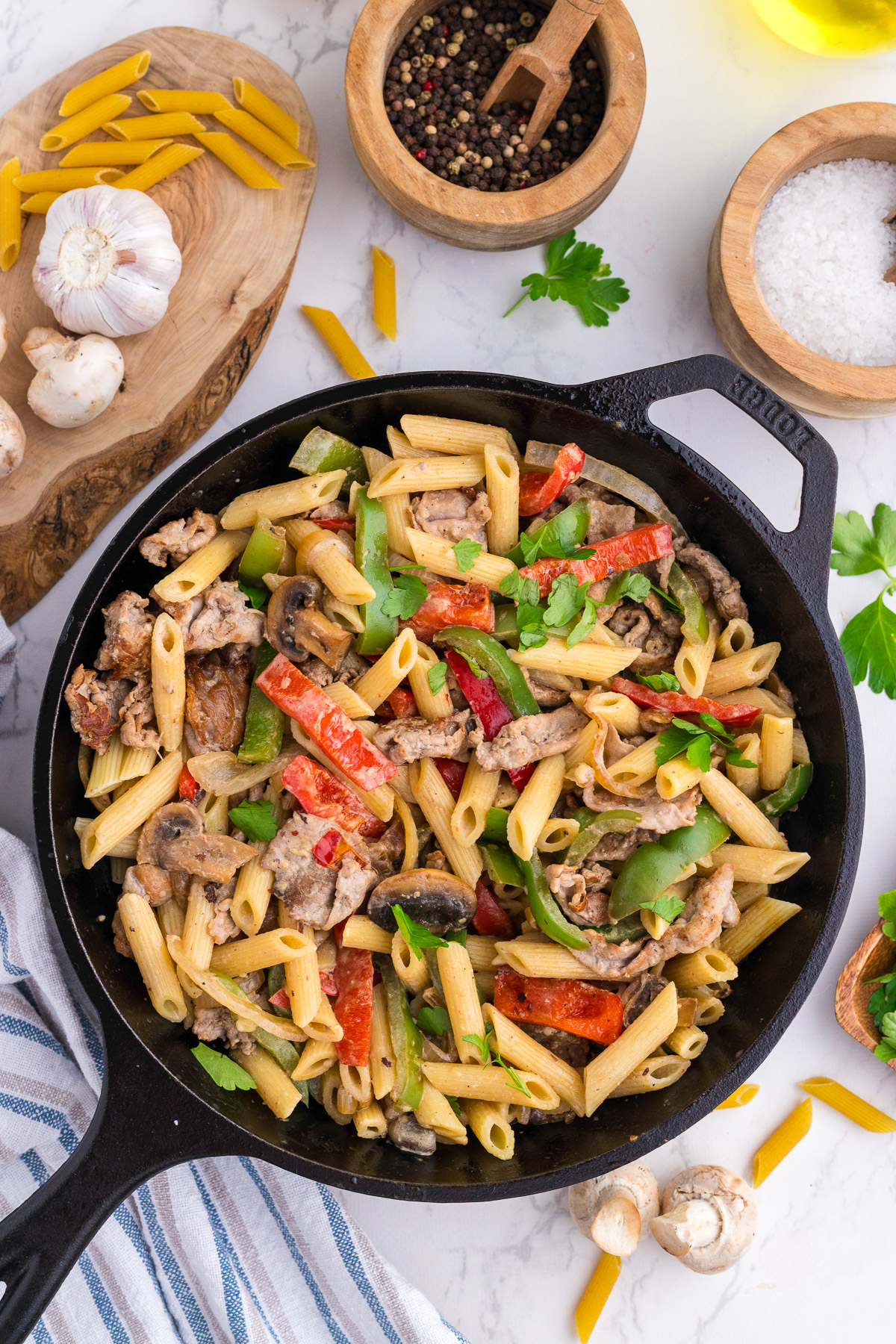
Quick Look at this Recipe
- ✅ Recipe Name: Cast Iron Philly Cheesesteak Pasta
- 🕒 Ready In: 35 minutes (10 prep, 25 cook)
- 👪 Serves: 4-5 people
- 🥣 Main Ingredients: penne pasta, thinly sliced beef, provolone cheese, bell peppers, onion, heavy cream
- 📖 Dietary Info: Contains dairy
- ⭐ Why You'll Love It: Creamy, cheesy comfort food with the classic Philly cheesesteak flavor, ready in about 35 minutes using your cast iron skillet.
Summarize and Save the Recipe
Jump to:
- Quick Look at this Recipe
- Why You'll Love This Philly Cheesesteak Pasta
- What Makes This Philly Cheesesteak Pasta Different
- Ingredients and Process Overview
- Variations
- Expert Tips for the Best Results
- What to Serve with Philly Cheesesteak Pasta
- Storing and Reheating Leftovers
- Frequently Asked Questions
- More Delicious Recipes
- Get the Recipe
Why You'll Love This Philly Cheesesteak Pasta
- All the Cheesesteak Flavor, None of the Rolls: Tender seared beef, sautéed peppers, onions, mushrooms, and melted provolone. The classic Philly cheesesteak combination, now coating every piece of pasta in a creamy sauce.
- Cast Iron Sear: A ripping-hot cast iron skillet gives you deep, golden browning on the beef that a nonstick pan simply cannot match. That sear is where all the rich, savory flavor starts.
- Weeknight Fast: 35 minutes, start to finish. The pasta boils while you sear and sauté. Simple pantry ingredients plus one trip to the meat counter.
- Creamy Without Being Heavy: The sauce is beef broth, heavy cream, and melted provolone. Rich enough to coat the pasta, light enough that you will not feel weighed down after dinner.
What Makes This Philly Cheesesteak Pasta Different
Every Philly cheesesteak pasta recipe you will find online tells you to grab a "large skillet." This one tells you to grab your cast iron. There is a reason: cast iron holds heat like nothing else, and that means when you lay thin slices of beef into the pan, they sear instead of steam. You get deep golden browning in seconds, and those browned bits stuck to the bottom of the skillet become the foundation of your sauce.
That browning is called the Maillard reaction, and it creates hundreds of flavor compounds that make the difference between a good cheesesteak pasta and a great one. It is the same reason a Philly cheesesteak from a flat-top griddle tastes so much better than one cooked in a cold pan. Cast iron gives you that same intense, direct heat at home.
The other move that sets this apart: freshly shredded provolone. Pre-shredded cheese from the bag is coated with anti-caking agents like cellulose and potato starch. Those additives interfere with melting, so your sauce ends up grainy instead of silky. Take 30 seconds to shred your own provolone and you will taste the difference immediately.
Ingredients and Process Overview
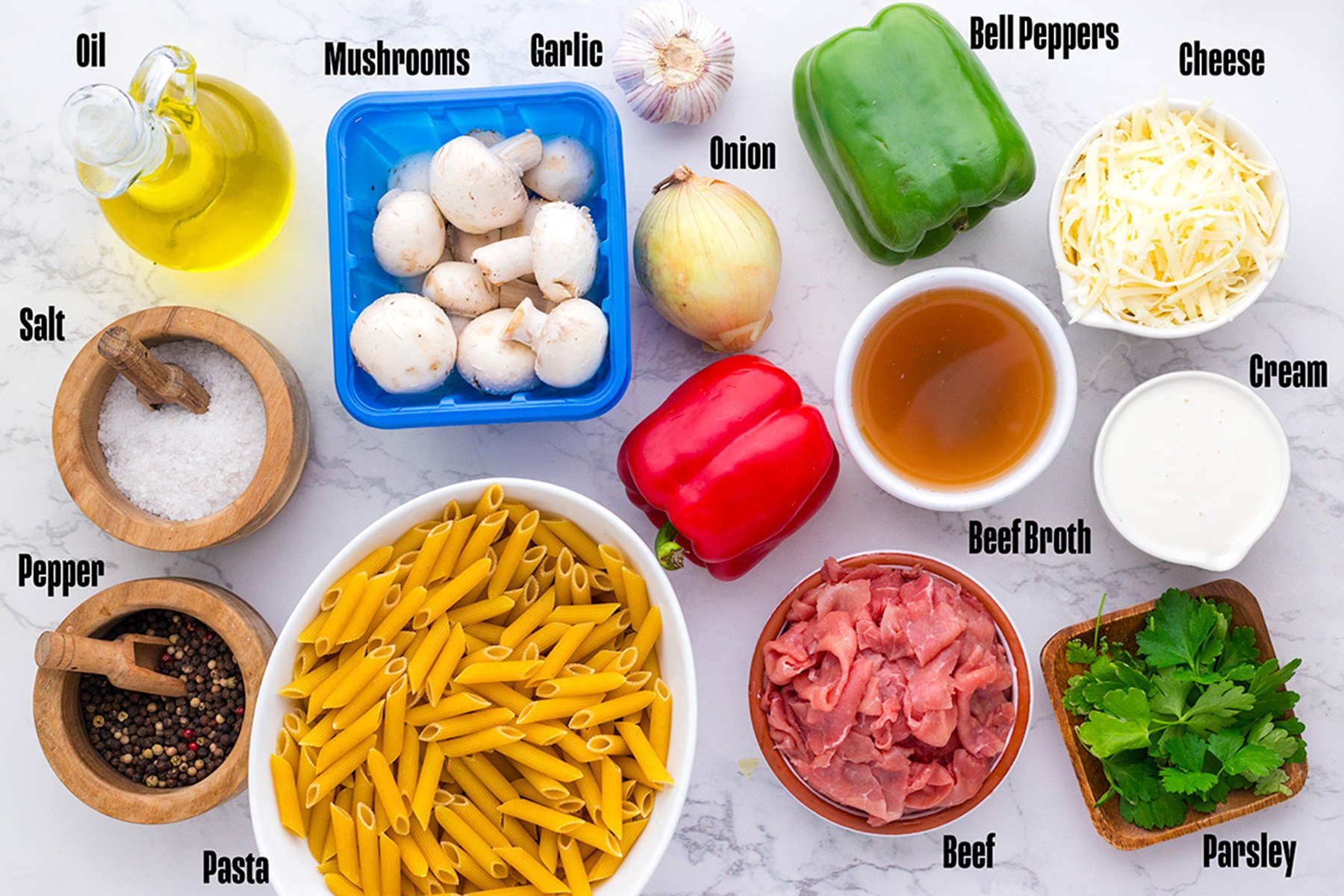
Here is what you are working with and a few notes on getting the best results from each ingredient:
- Thinly sliced beef (1 pound): Look for "minute steak," "shaved steak," or "sandwich steak" at the grocery store. Sirloin or ribeye both work if slicing yourself. Freeze the steak for about 20 minutes first so the knife glides through cleanly.
- Penne pasta (11 oz): The tubes hold the creamy sauce inside every bite. Rigatoni and rotini are solid swaps if that is what you have on hand.
- Provolone cheese (1 cup, freshly shredded): Shred it yourself for the smoothest melt. Deli-sliced provolone also works; just tear it into pieces before adding to the sauce.
- Heavy cream (½ cup) + beef broth (1 cup): This combination gives you a silky sauce without needing a roux. The broth adds savory depth, the cream adds body.
- Bell peppers (1 green, 1 red): The two-color combination looks great in the dish. One color works fine if that is all you have.
- Mushrooms (1 cup, sliced): Cremini or white button. Skip them entirely if your family is not a mushroom crowd.
- Garlic (2 cloves, minced): Goes in after the vegetables soften so it does not burn.
For the complete step-by-step cooking instructions, scroll down to the recipe card below.
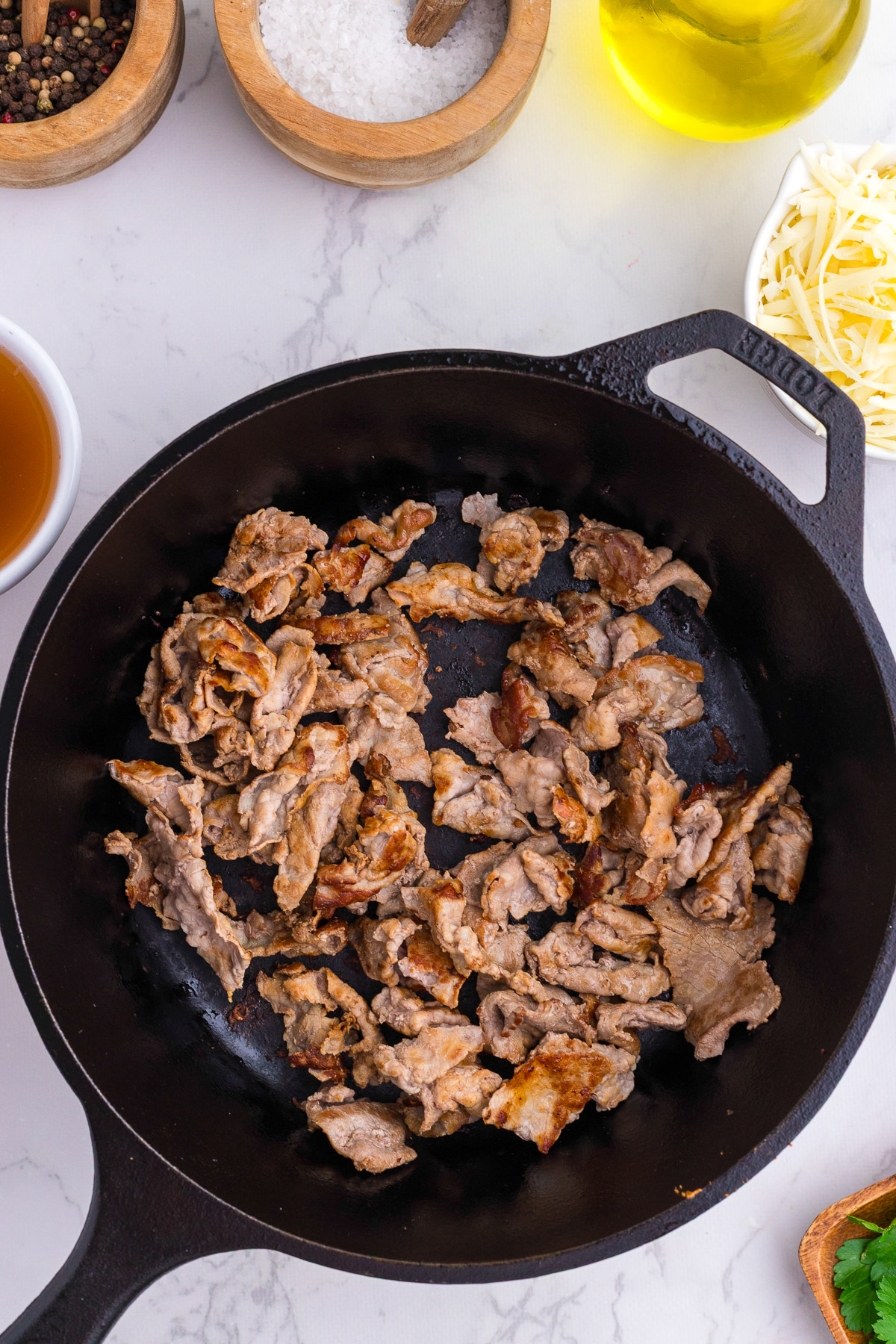
- Step 1: Sear the Beef. Heat the cast iron skillet over medium-high heat with olive oil. Lay the sliced beef in a single layer and let it sear without moving for 2 to 3 minutes per side. Work in batches if needed. Set the browned beef aside.
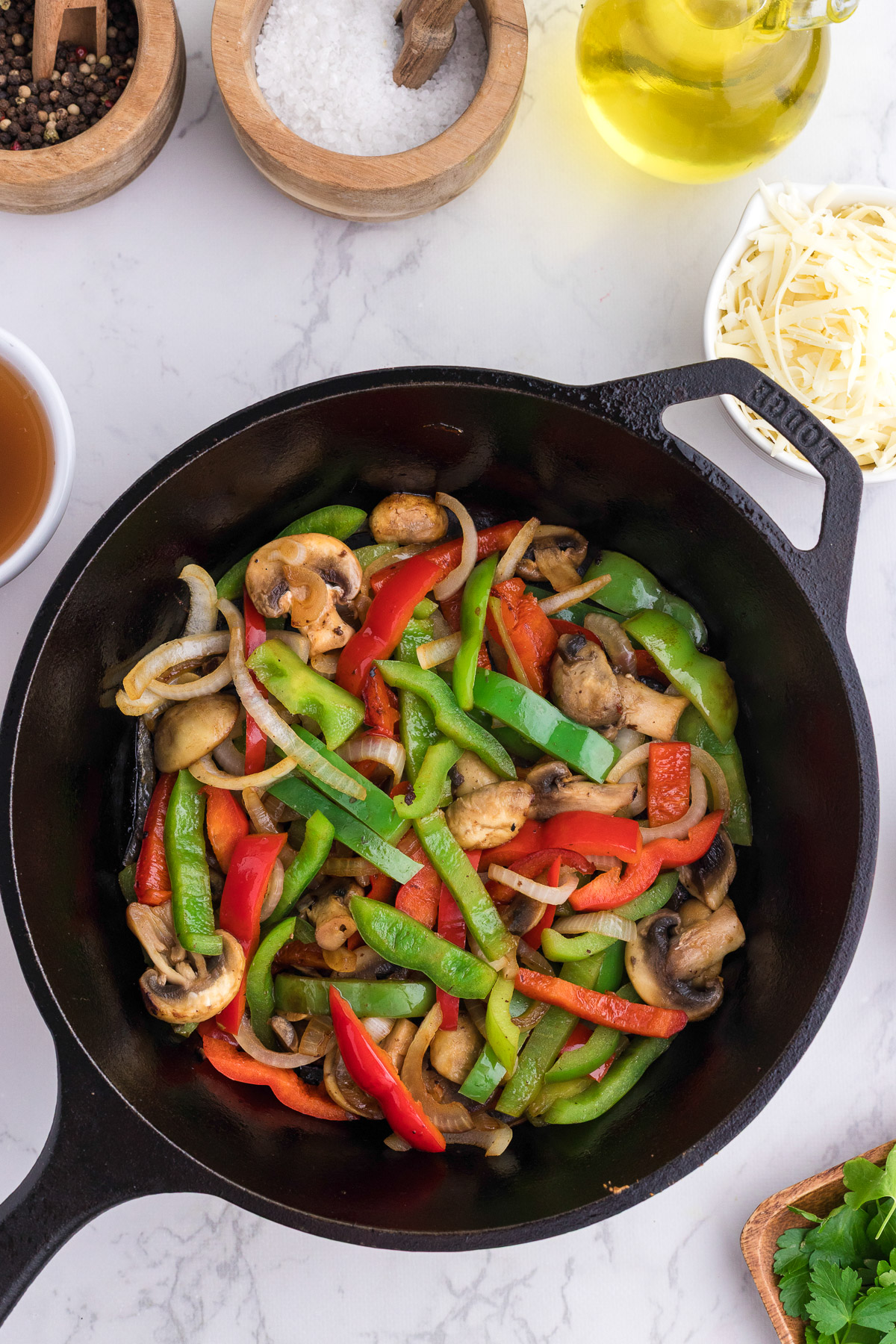
- Step 2: Sauté the Vegetables. Add the sliced peppers, onions, and mushrooms to the same skillet. Cook for 5 to 6 minutes until they soften and pick up the fond from the beef. Add the garlic in the last minute.
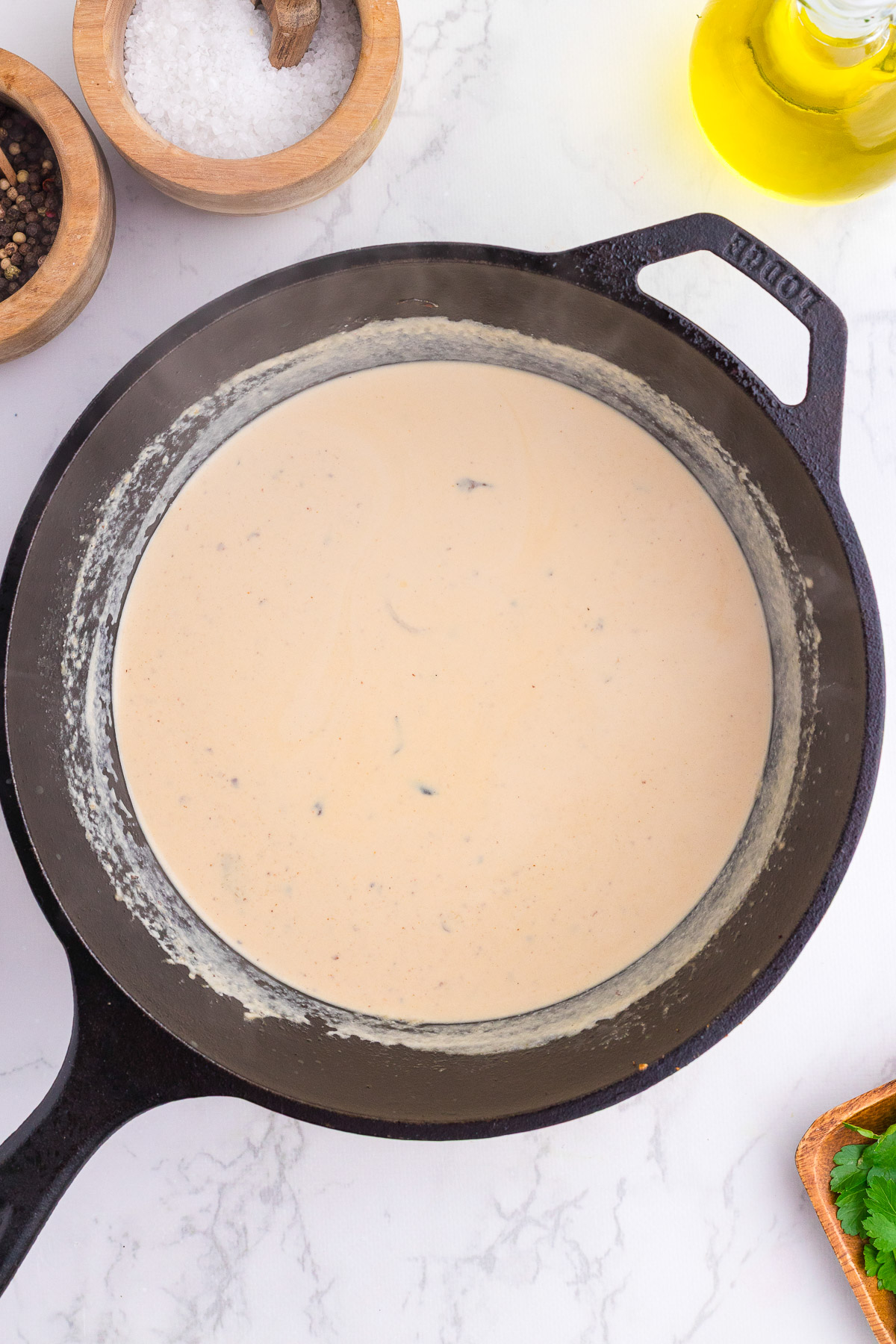
- Step 3: Build the Sauce. Pour in the beef broth to deglaze, scraping up all the browned bits. Add the heavy cream and bring to a simmer. Stir in the shredded provolone until melted and smooth.
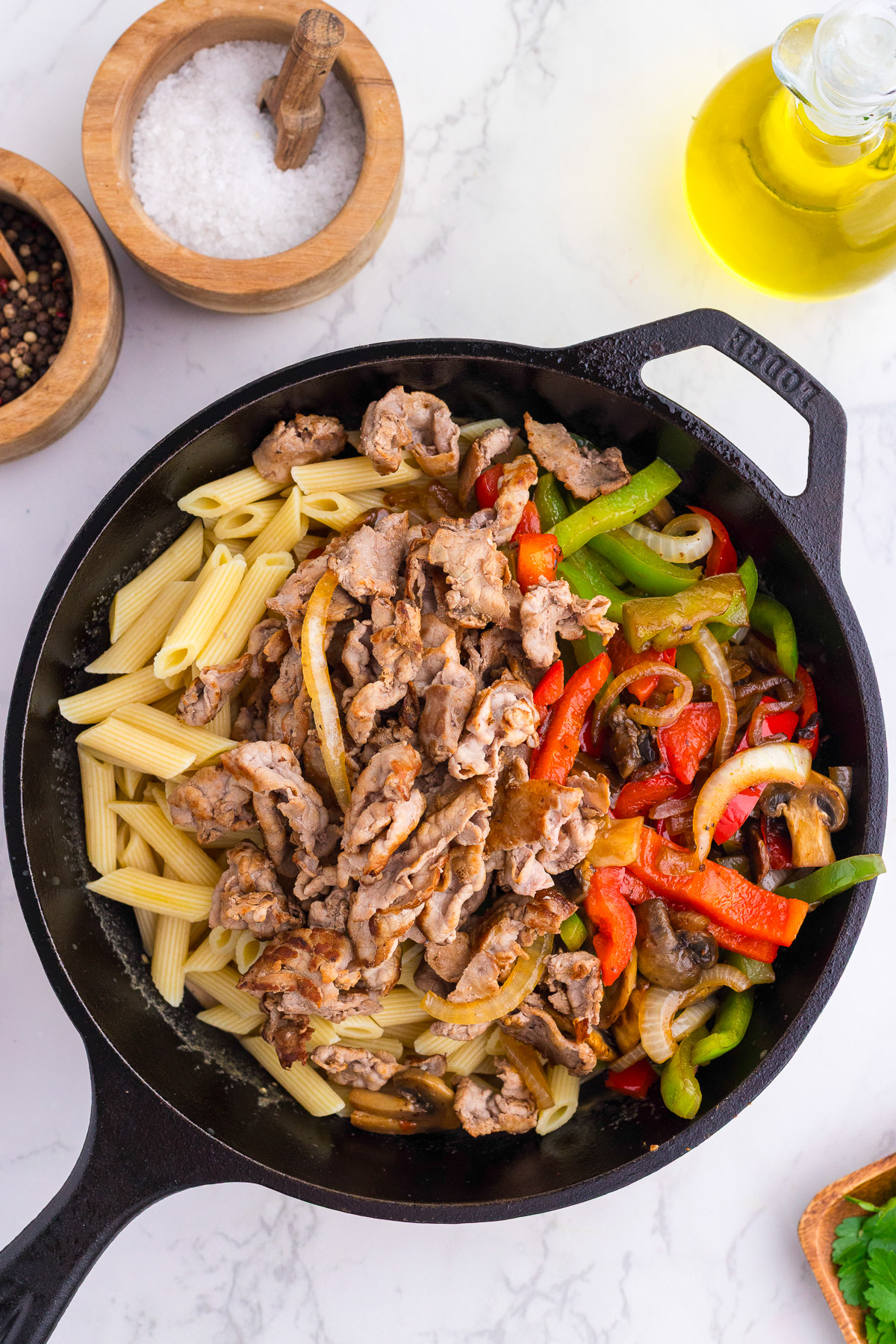
- Step 4: Combine Everything. Add the cooked penne, seared beef, and sautéed vegetables back into the skillet with the sauce. Stir gently to combine.
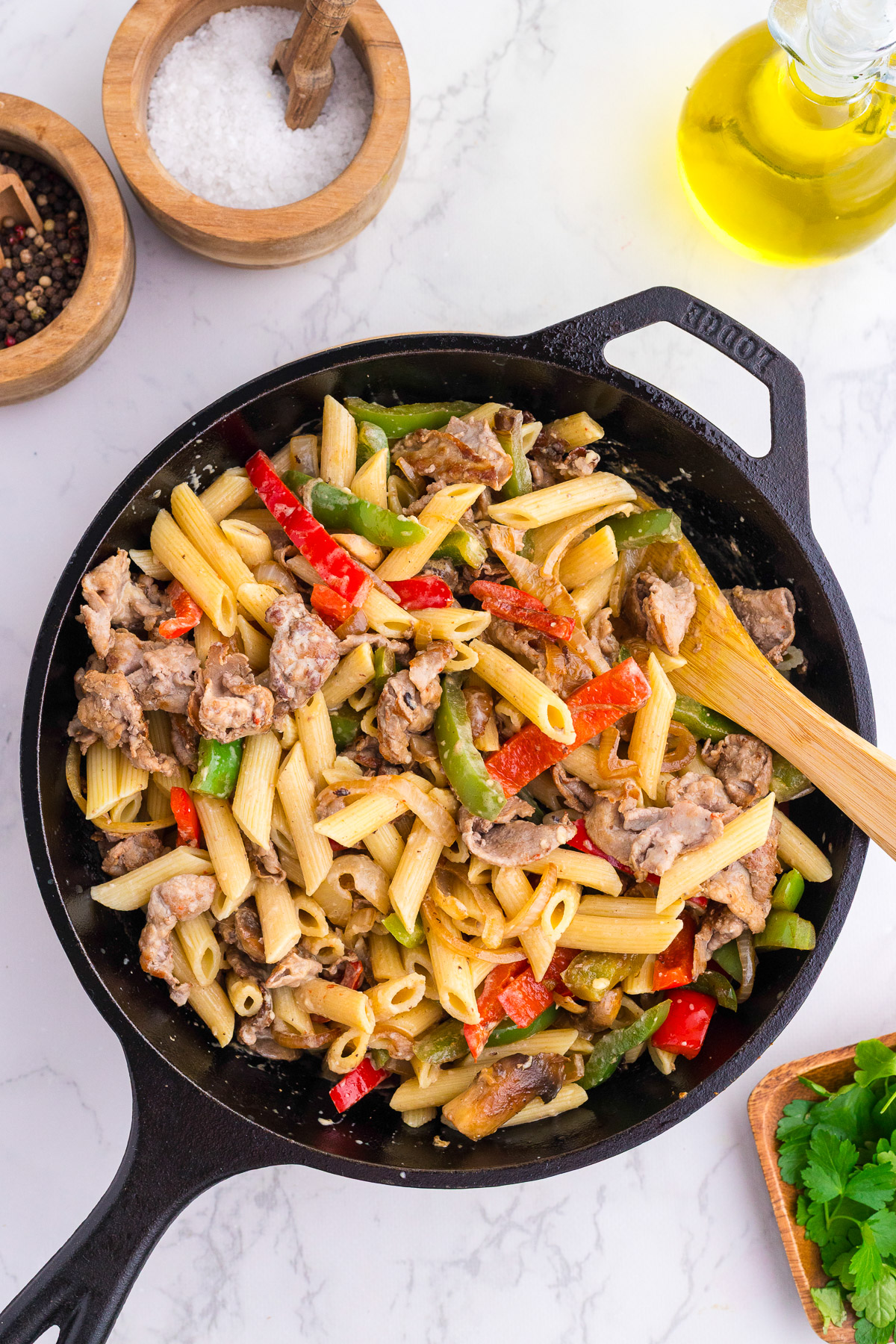
- Step 5: Toss and Coat. Fold everything together until every piece of penne is coated in the creamy provolone sauce. Add a splash of pasta water if the sauce needs loosening.
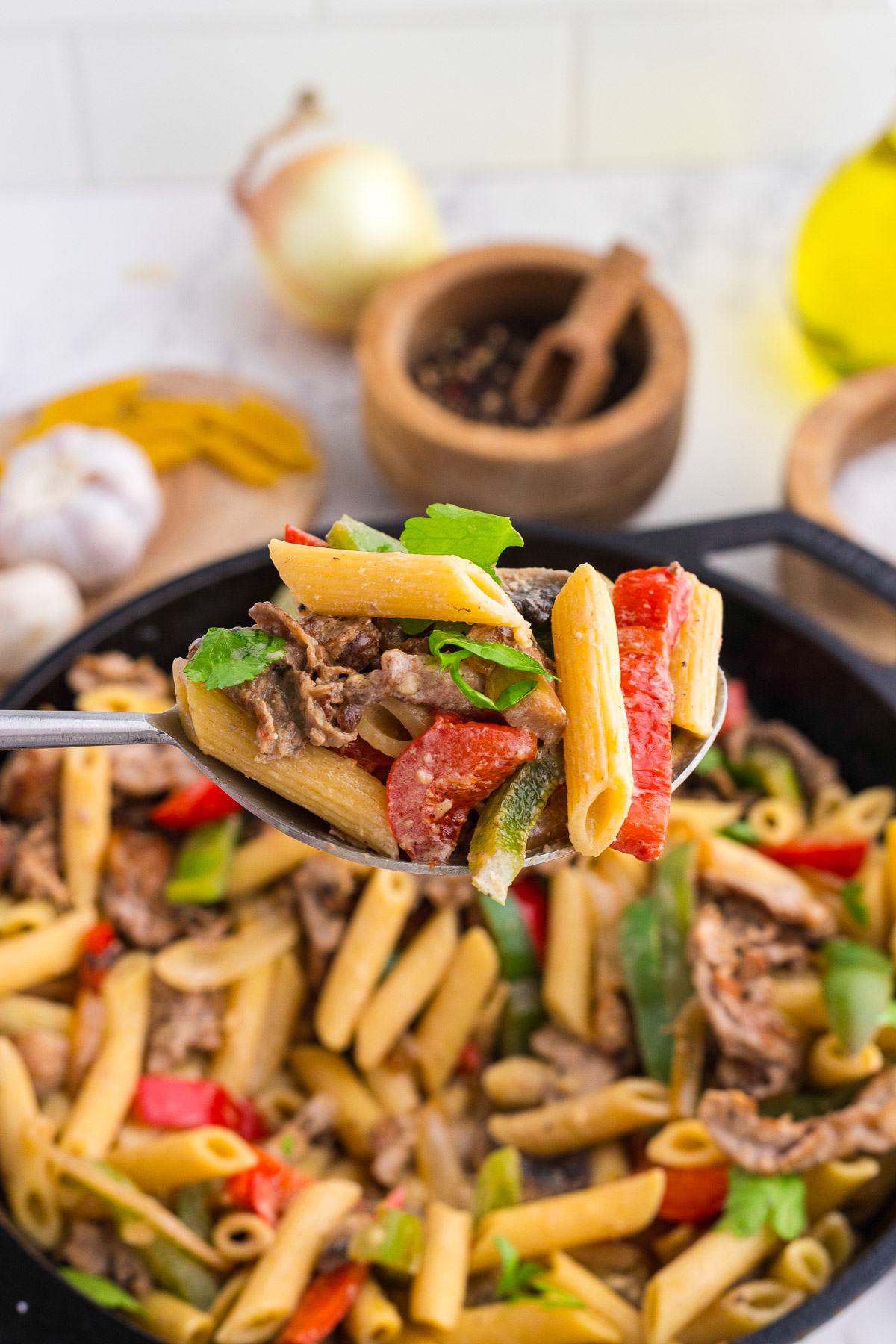
- Step 6: Serve. Taste and adjust salt and pepper. Let rest for 2 minutes so the sauce thickens slightly. Sprinkle fresh chopped parsley on top and serve warm directly from the cast iron skillet.
Variations
This cheesesteak pasta is easy to customize. Here are a few ways to make it your own:
- Use steak strips: Ribeye or sirloin, sliced thin against the grain. Freeze for 20 minutes first so the knife glides through.
- Make it spicy: Add a pinch of red pepper flakes to the sauce, or toss sliced jalapeños in with the peppers and onions.
- Swap the cheese: Mozzarella for a milder melt, white cheddar for a sharper bite, or a mix of provolone and American for that classic Philly shop flavor.
- Different pasta shapes: Rotini catches sauce in its spirals. Rigatoni holds up to hearty chunks. Shells cup the sauce. Use what you have.
- Ground beef version: Brown 1 pound of ground chuck in the cast iron, drain excess fat, then build the sauce in the same skillet. Different texture, same great flavor.
Expert Tips for the Best Results
- Do not crowd the beef. Sear in a single layer so it browns instead of steaming. Work in two batches if needed. Cast iron holds heat well enough that adding cold beef will not drop the temperature too much.
- Let the peppers and onions get some color. Five minutes of mostly hands-off cooking builds caramelization. That slight char on the edges is flavor you cannot get any other way.
- Deglaze the pan. When you pour in the beef broth, scrape up every browned bit stuck to the cast iron. Those fond bits are concentrated flavor that becomes your sauce base.
- Melt cheese on low heat. High heat breaks provolone into a grainy mess. Drop heat to low, add cheese gradually, and stir constantly until silky.
- Slightly undercook the pasta. Cook it 1 minute less than the box says. It finishes cooking in the sauce, so if you boil it to full al dente, it will be soft by serving time.
- Let it rest 2 minutes before serving. The sauce thickens as it sits and coats the pasta even better.
What to Serve with Philly Cheesesteak Pasta
This is a hearty one-dish meal on its own, but if you want to round out the table, here are a few ideas that work well alongside it.
A simple green salad with Italian vinaigrette cuts right through the richness. Cast iron garlic bread is a natural pairing because creamy pasta and warm, crispy bread just belong together. For something a little different, try my garlic parmesan pull apart bread as an alternative. Roasted broccoli or asparagus works too, and takes about 20 minutes in the oven while the pasta comes together on the stovetop.
Storing and Reheating Leftovers
Store leftovers in an airtight container in the fridge for up to 3 days. Reheat gently on the stovetop over medium-low heat with a splash of beef broth or cream to loosen the sauce. The microwave works in a pinch, but stir halfway through for even heating.
You can freeze this pasta for up to 2 months. Cream-based sauces can separate slightly when thawed, but reheating on the stovetop with a splash of broth brings it back together. Stir well and it will taste just as good.
For the best make-ahead approach, cook the beef and vegetables separately, make the sauce, and cook the pasta. Store all components in separate containers in the fridge. When you are ready to eat, reheat the sauce on the stovetop, toss in the beef, vegetables, and pasta, and stir until heated through. Components hold up much better stored apart than all mixed together.
Troubleshooting
- Sauce is too thick: Add a splash of beef broth or pasta water, one tablespoon at a time, and stir until it loosens up.
- Sauce is too thin: Let it simmer another 2 to 3 minutes. The starch from the pasta will help thicken it as it cooks.
- Cheese is grainy or clumpy: Heat was too high when you added the provolone. Next time, kill the heat to low before adding cheese and stir constantly. If it is already grainy, add a splash of cream and whisk vigorously.
- Beef is tough: Overcooked. Thin-sliced beef only needs 2 to 3 minutes total. Sear fast, remove early, and add back at the very end just to warm through.
- Pasta is mushy: Boiled too long before adding to the sauce. Cook 1 minute less than the box says, since it finishes in the skillet.
Frequently Asked Questions
Thinly sliced sirloin, ribeye, or shaved steak (sometimes labeled "sandwich steak" or "minute steak") all work well. The key is thin slices so the beef cooks fast and stays tender. If slicing yourself, freeze the steak for about 20 minutes first so the knife glides through cleanly. Avoid thick-cut stew meat or stir-fry strips, which need longer cooking and can turn chewy in this dish.
Yes. Brown 1 pound of ground chuck in the cast iron skillet, breaking it into crumbles, and drain any excess fat before building the sauce in the same pan. The texture is different (more like a meaty pasta sauce than distinct beef slices), but the cheesesteak flavor profile stays the same with the peppers, onions, and provolone.
You can prep all the components up to a day ahead: cook the beef and vegetables, make the sauce, boil the pasta. Store each separately in the fridge. When you are ready to eat, reheat the sauce on the stovetop, toss in the beef, vegetables, and pasta, and stir until heated through. Storing components separately prevents the pasta from absorbing all the sauce overnight.
Provolone is the classic Philly cheesesteak cheese, but you have options. Mozzarella gives a milder, stretchy melt. White cheddar adds a sharper bite. American cheese (the deli kind, not singles) melts into an ultra-smooth sauce. You can also mix provolone with American for the most authentic cheesesteak shop flavor.
You can, but the sauce will be noticeably thinner and less rich. Half-and-half is the better substitute if you want to lighten things up. If using whole milk, consider adding 1 tablespoon of cream cheese to the sauce for extra body and creaminess.
It reheats well for 2 to 3 days. Store in airtight containers in the fridge. When reheating, add a splash of beef broth or cream and stir on the stovetop over medium-low heat. The sauce will thicken in the fridge, and the extra liquid brings it back to the right consistency. For best results, slightly undercook the pasta before storing so it does not get mushy on reheat.
More Delicious Recipes
If you enjoy easy cast iron meals the whole family will love, try these next:
If you tried this Cast Iron Philly Cheesesteak Pasta, I would love to hear about it! Give it a 🌟 star rating below and leave a 📝 comment to let me know how it turned out.
Get the Recipe
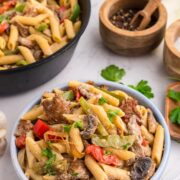
Philly Cheesesteak Pasta
Equipment
- 1 10" cast iron skillet
- Large pot
- Cutting board
- Wooden spoon
- Colander
Ingredients
- 11 oz penne pasta
- 1 pound thinly sliced beef minute steak, shaved steak, or sandwich steak
- 2 tablespoons olive oil
- 1 large white onion sliced
- 1 cup sliced mushrooms cremini or white button
- 1 green bell pepper sliced
- 1 red bell pepper sliced
- 2 cloves garlic minced
- ½ cup heavy cream
- 1 cup beef broth
- 1 cup provolone cheese freshly shredded
- salt and pepper to taste
- fresh parsley chopped, for garnish

Instructions
- Bring a large pot of salted water to a boil. Add penne pasta and cook according to package directions until 1 minute short of al dente. Drain and set aside.
- Heat olive oil in a cast iron skillet over medium-high heat until the oil shimmers. Add thinly sliced beef in a single layer without crowding the pan. Let it sear without stirring for 2 to 3 minutes so it develops deep golden color.
- Season the beef with salt and pepper. Stir and cook another 1 to 2 minutes until just cooked through. Transfer to a plate and set aside. Do not overcook.
- In the same cast iron skillet, add onion, mushrooms, green bell pepper, and red bell pepper. Cook for about 5 minutes, stirring occasionally, until softened and slightly caramelized on the edges.
- Add minced garlic and cook for about 30 seconds until fragrant. Push the vegetables to the side.
- Pour in beef broth and heavy cream. Use a wooden spoon to scrape up all the browned bits (fond) from the bottom of the cast iron skillet. Let the sauce simmer gently for 3 to 4 minutes until slightly reduced.
- Reduce heat to low. Slowly stir in freshly shredded provolone cheese a handful at a time. Stir constantly until melted and the sauce is smooth and creamy.
- Return the seared beef and vegetables to the skillet. Add the drained pasta. Toss gently until everything is coated in the creamy provolone sauce.
- Taste and adjust salt and pepper. Let rest for 2 minutes so the sauce thickens slightly. Sprinkle fresh chopped parsley on top and serve warm directly from the cast iron skillet.
Nutrition
Dutch Oven Daddy is not a dietician or nutritionist, and any nutritional information shared is only an estimate. We recommend running the ingredients through an online nutritional calculator if you need to verify any information.
Spencer Adams says
I recently cooked this recipe and it was absolutely delicious!
Andrew says
Cooking this in the Dutch oven really helped the flavors meld together. The steak stayed tender and the pasta soaked up all the savory juices from the meat and vegetables. It is a creative twist on a traditional sandwich that I will definitely be making again very soon.
Jessica says
I love how easy it is to get that authentic cheesesteak taste in a single pot. The bell peppers and onions add a great texture, and the melted cheese makes it incredibly indulgent. It is a fantastic choice for a weeknight meal when you want something substantial without a lot of complicated steps.
Brian says
This recipe is a brilliant fusion of two of my favorite comfort foods. The flavors of a classic Philly cheesesteak translate perfectly into a pasta dish, and the creamy sauce ties everything together beautifully. It was a huge hit with my family and provided a very hearty and satisfying dinner.