
Skillet Sausage Stuffing starts with a pound of sage sausage browning in cast iron, and the smell alone will pull people into the kitchen. One skillet, no baking dish, ready in 50 minutes. This is my family's sage sausage stuffing, adapted for a 12 inch cast iron skillet so it goes from stovetop to oven to table without dirtying anything else.
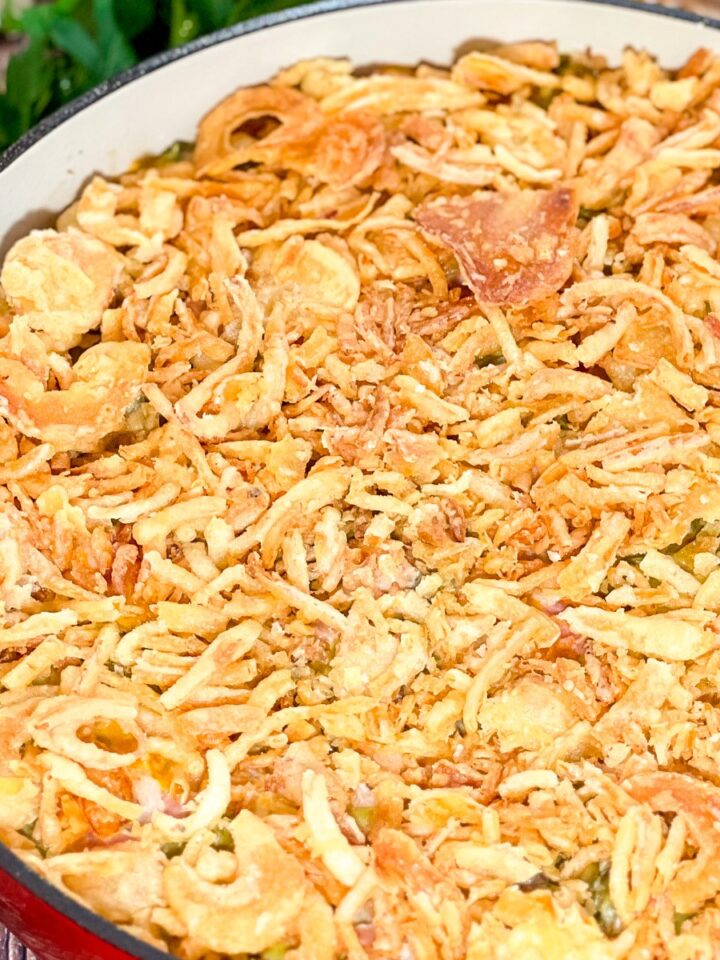
Looking for more Thanksgiving sides? My Cheesy Green Bean Casserole with Bacon and Homemade Cranberry Sauce with Orange are both cast iron friendly and sit right next to this one on our table.
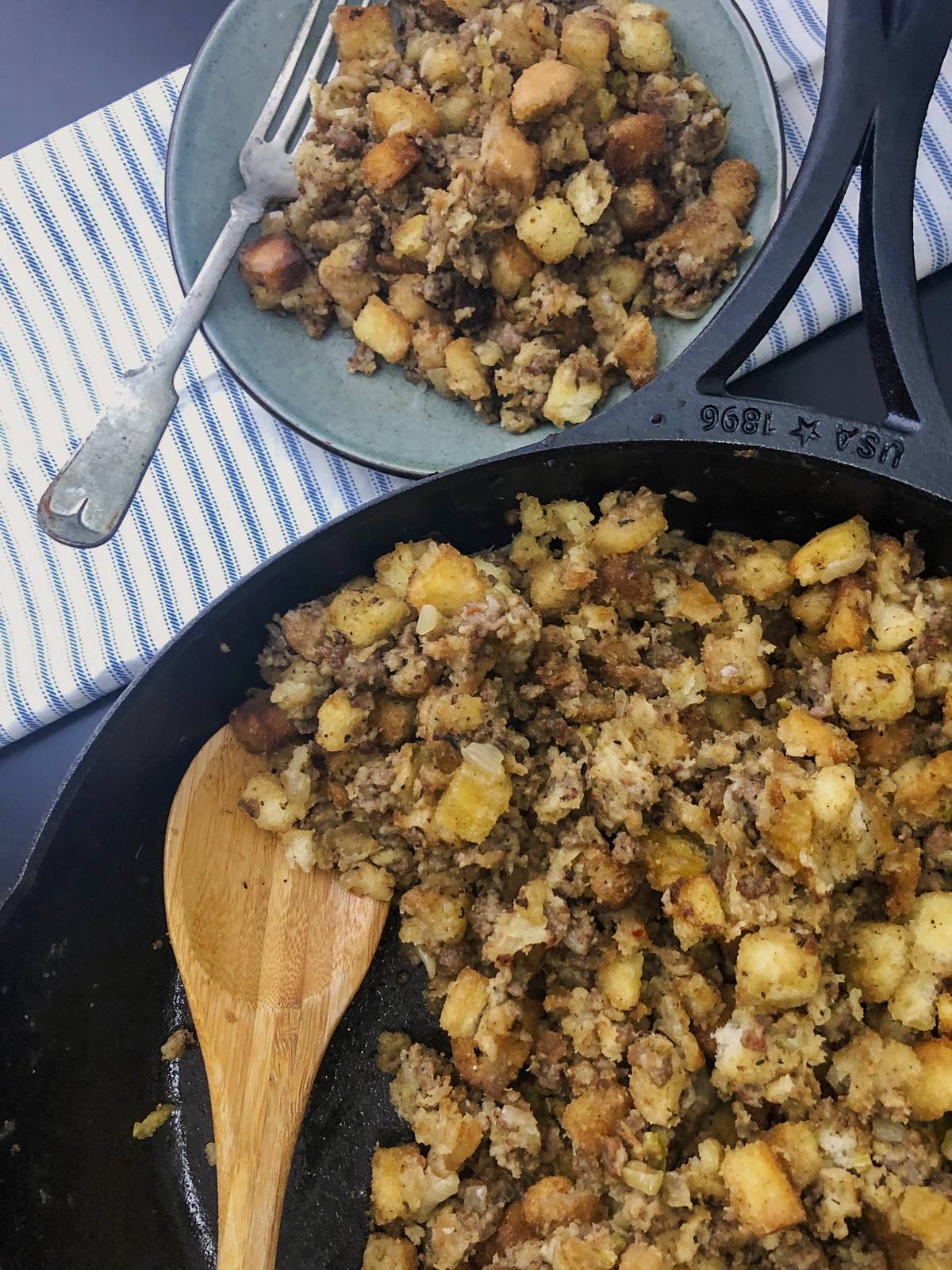
Quick Look at this Recipe
- ✅ Recipe Name: Skillet Sausage Stuffing
- 🕒 Ready In: 50 minutes (10 minutes prep, 40 minutes cook)
- 👪 Serves: 8 people
- 🥣 Main Ingredients: sage pork sausage, butter, celery, onion, dried bread cubes, chicken broth, poultry seasoning
- 📖 Dietary Info: Contains pork, dairy, and gluten. Egg-free. Use gluten-free bread cubes to make it GF.
- ⭐ Why You'll Love It: The whole thing cooks and bakes in one cast iron skillet, so there is no baking dish to wash and the edges come out crisp.
Summarize and Save the Recipe
Jump to:
- Quick Look at this Recipe
- Why You'll Love This Skillet Sausage Stuffing
- What Makes This Sausage Stuffing Different
- Ingredients for Sage Sausage Stuffing
- How to Make Sausage Stuffing in a Cast Iron Skillet
- Variations
- Expert Tips for Sausage Stuffing
- What to Serve with Sausage Stuffing
- Sausage Stuffing FAQs
- More Thanksgiving Recipes
- Get the Recipe
Why You'll Love This Skillet Sausage Stuffing
- One pan, start to finish. Brown the sausage, soften the vegetables, stir in the bread, and bake, all in the same 12 inch skillet. Most sausage stuffing recipes dirty a skillet and a 9x13. This one does not.
- Crisp edges, soft middle. Cast iron holds heat, so the stuffing touching the pan browns while the center stays moist.
- Sage sausage does the seasoning. The sausage is already loaded with sage, so you need less of everything else and it all tastes like one dish instead of five ingredients.
- Make it a day ahead. Assemble, refrigerate, and bake it while the turkey rests. The details are in the Expert Tips below.
What Makes This Sausage Stuffing Different
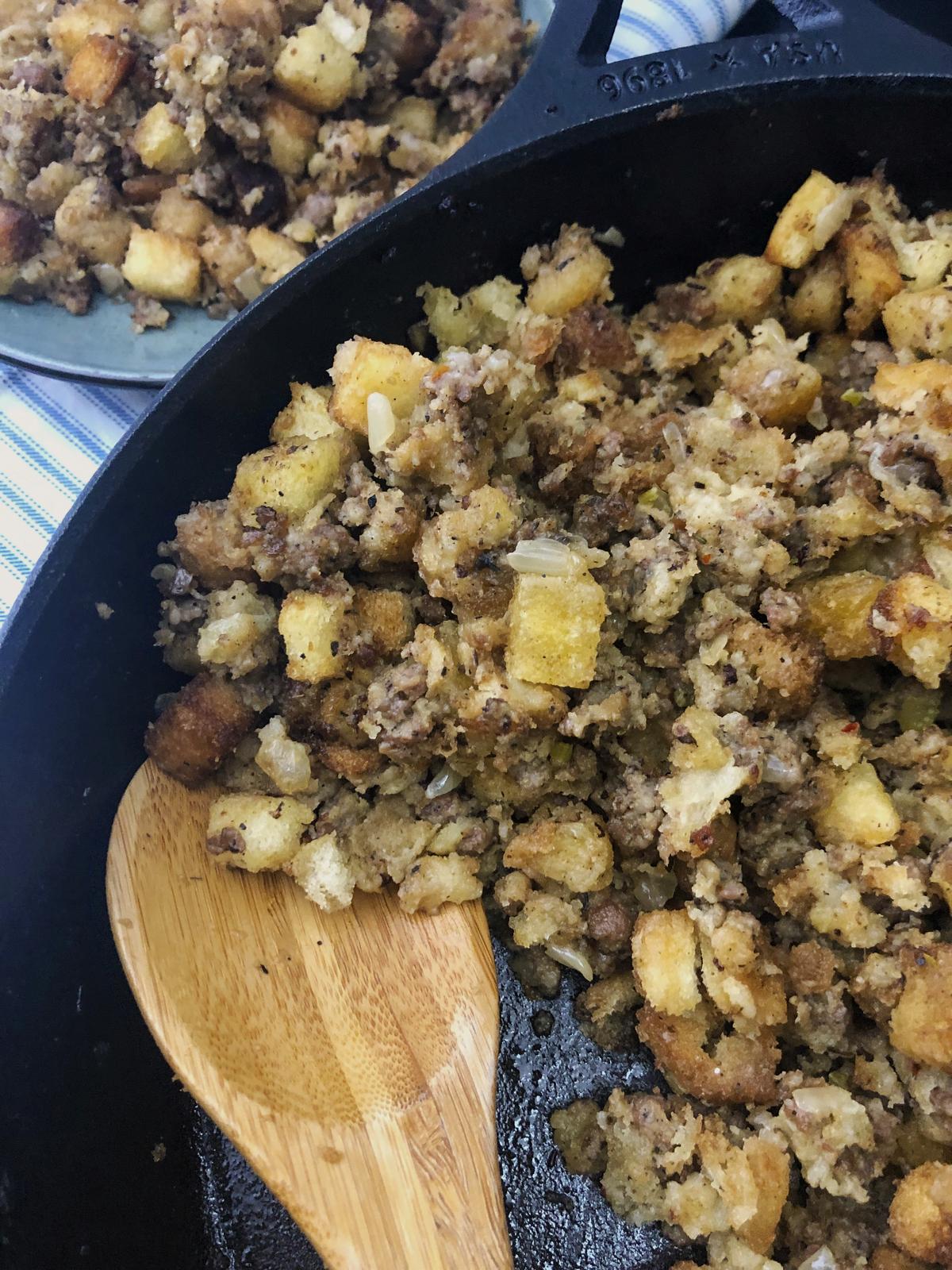
Every sausage stuffing recipe I have ever seen browns the sausage in a skillet, then moves everything to a glass baking dish. This one stays in the skillet. Cast iron holds far more heat than glass or ceramic, so the bread touching the pan toasts instead of steaming. That is where the crisp edges come from, and it is why the last 5 minutes uncovered do so much work.
Now, the name. If it cooks inside the bird, it is stuffing. If it cooks on its own, it is dressing. By that rule this is a sausage dressing, and most of the country calls it stuffing anyway, so I do too. Cooking it outside the turkey is the better move regardless: it gets a crisp top, and the bird does not have to be overcooked to get the middle of the stuffing up to a safe temperature.
This is the sage sausage stuffing my family has made for as long as I can remember. The only change I made was sizing it for a 12 inch skillet. Everything else, including the three sticks of butter, is exactly how it has always been.
Ingredients for Sage Sausage Stuffing
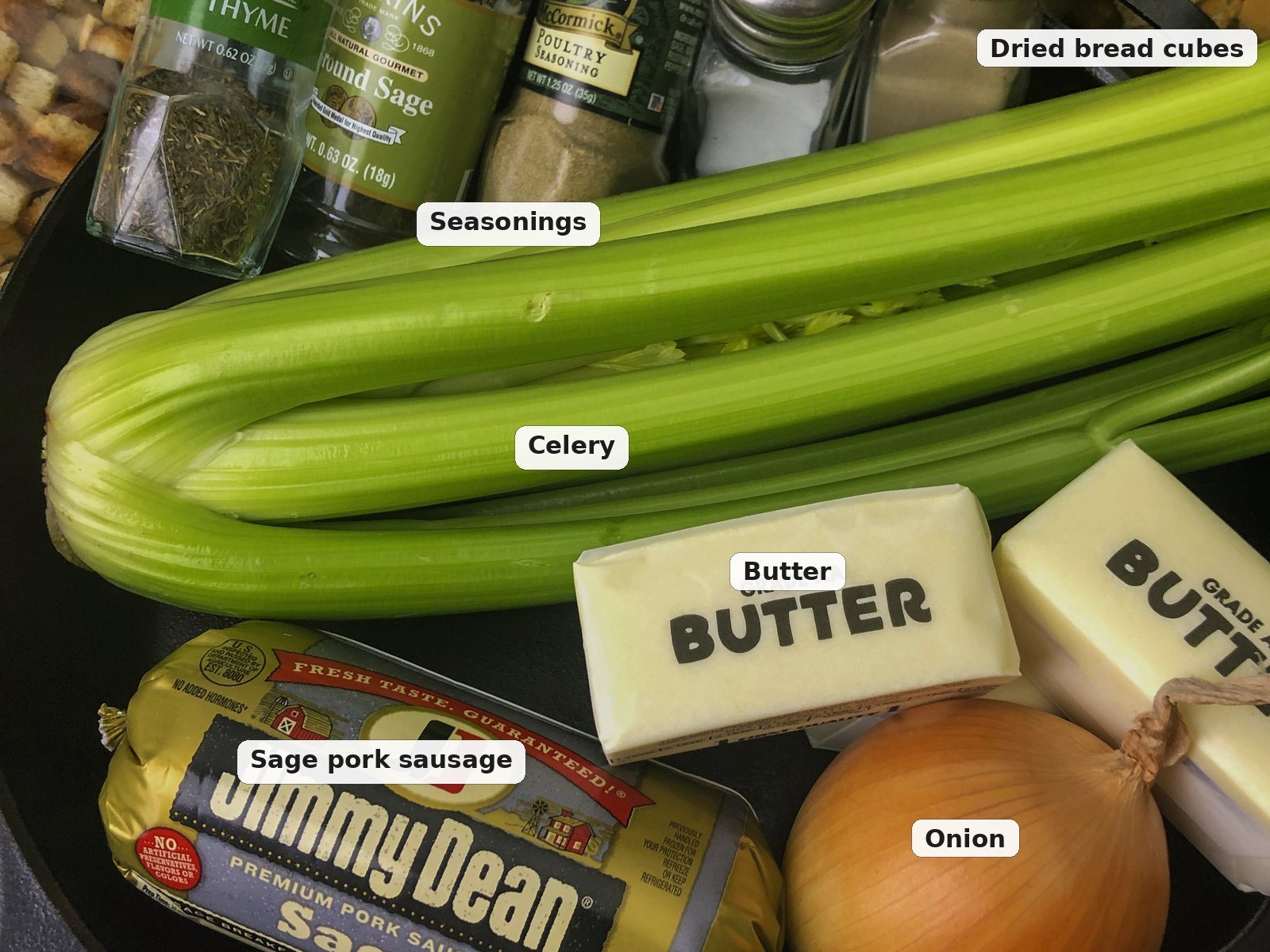
Simple pantry ingredients, and a couple of them matter more than they look.
- Sage pork sausage (1 pound). Jimmy Dean Sage or any bulk breakfast sausage labeled sage. This is the flavor base of the whole dish. If you can only find plain breakfast sausage, double the rubbed sage and poultry seasoning. Skip Italian sausage here; the fennel fights the poultry seasoning.
- Butter (1½ cups, 3 sticks). Yes, three. There are no eggs in this recipe, so butter and broth are what bind and moisten the bread. It is a holiday. Own it.
- Celery and onion. A small dice so they soften in the 4 to 6 minutes you give them in the butter.
- Dried bread cubes (12 ounces). A bag of unseasoned cubes, or a loaf of white or sourdough bread cut into ¾ inch cubes and left out overnight. Dry bread is not optional. Fresh bread turns to paste the second the broth hits it.
- Chicken broth (up to 29 ounces). You will probably use closer to 2½ cups. Start there and add as needed. Water works in a pinch, and white wine can replace up to a cup of it.
- Rubbed sage, dried thyme, poultry seasoning, salt, and pepper. Dried is right here. The sausage is seasoned with dried sage, so everything reads as one flavor instead of two.
Full measurements are in the recipe card at the bottom of this post.
How to Make Sausage Stuffing in a Cast Iron Skillet
Six stages, one pan. The full step-by-step with times and temperatures is in the recipe card; this is what each stage looks like so you know you are on track.
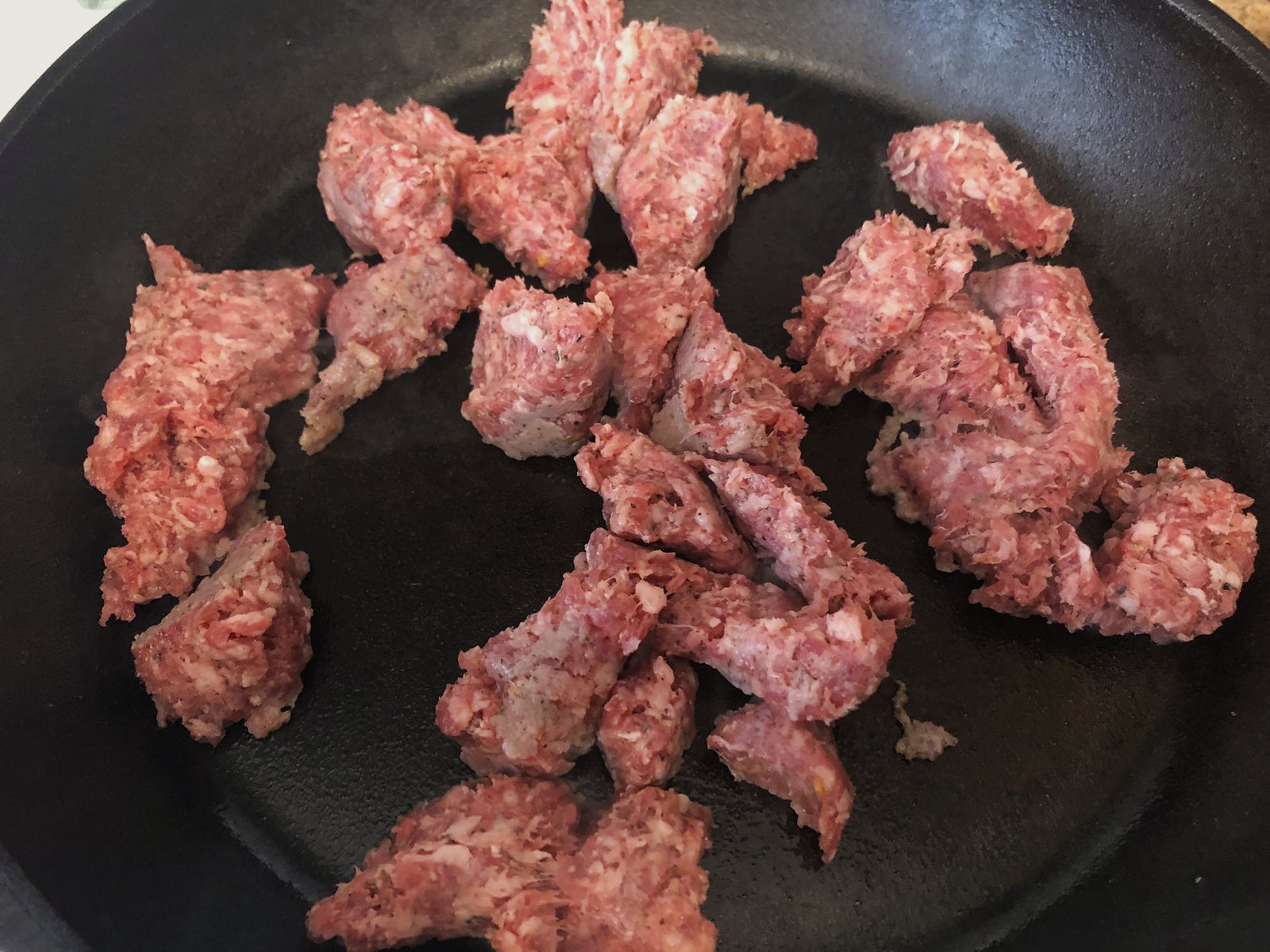
- Step 1: Brown the sausage. Crumble it into the hot skillet and cook it all the way through, then move it to a bowl. Leave the drippings in the pan.
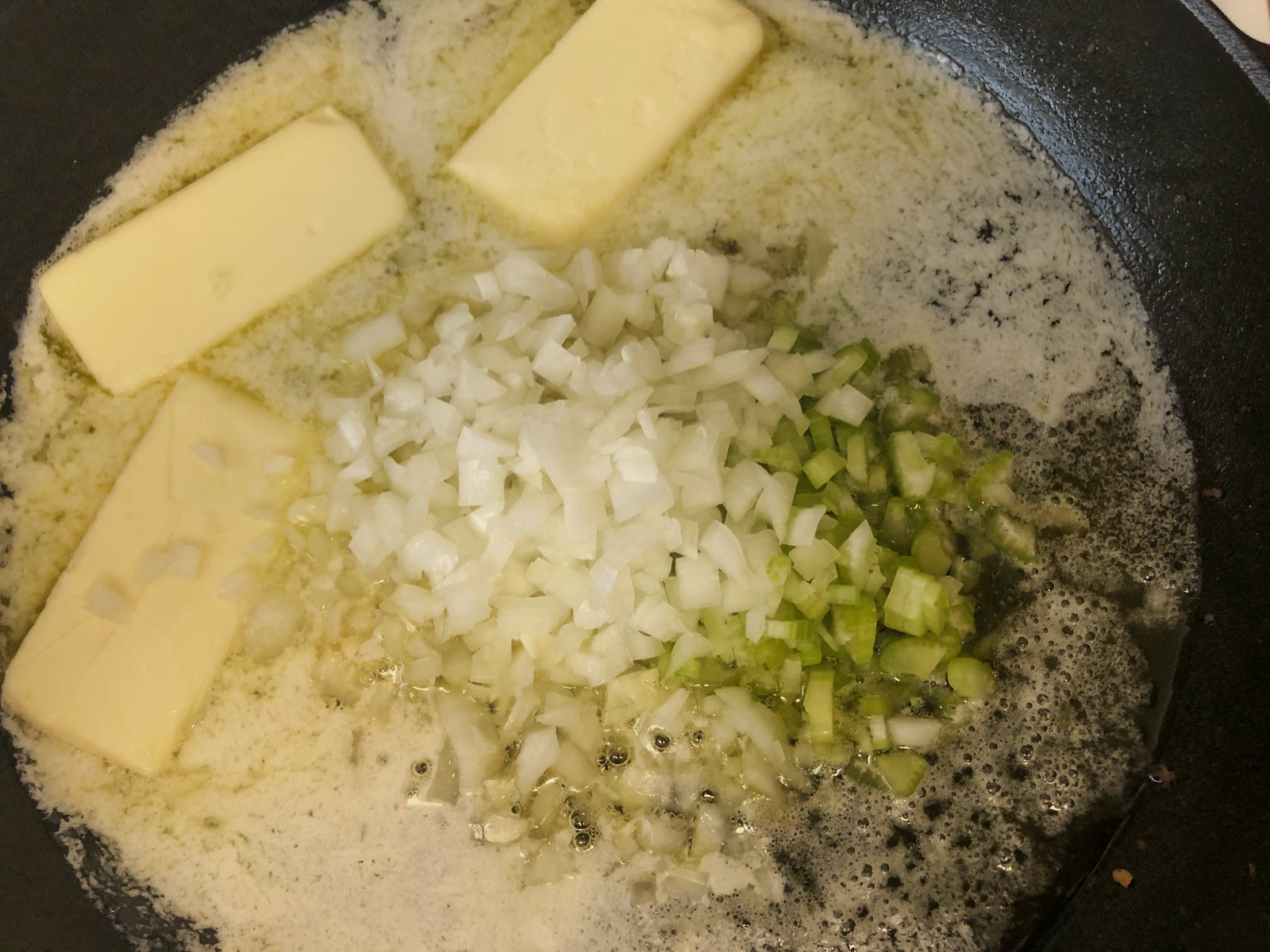
- Step 2: Melt the butter, soften the vegetables. All three sticks go in, then the onion, celery, herbs, and seasonings. Four to six minutes, until the onion turns translucent.
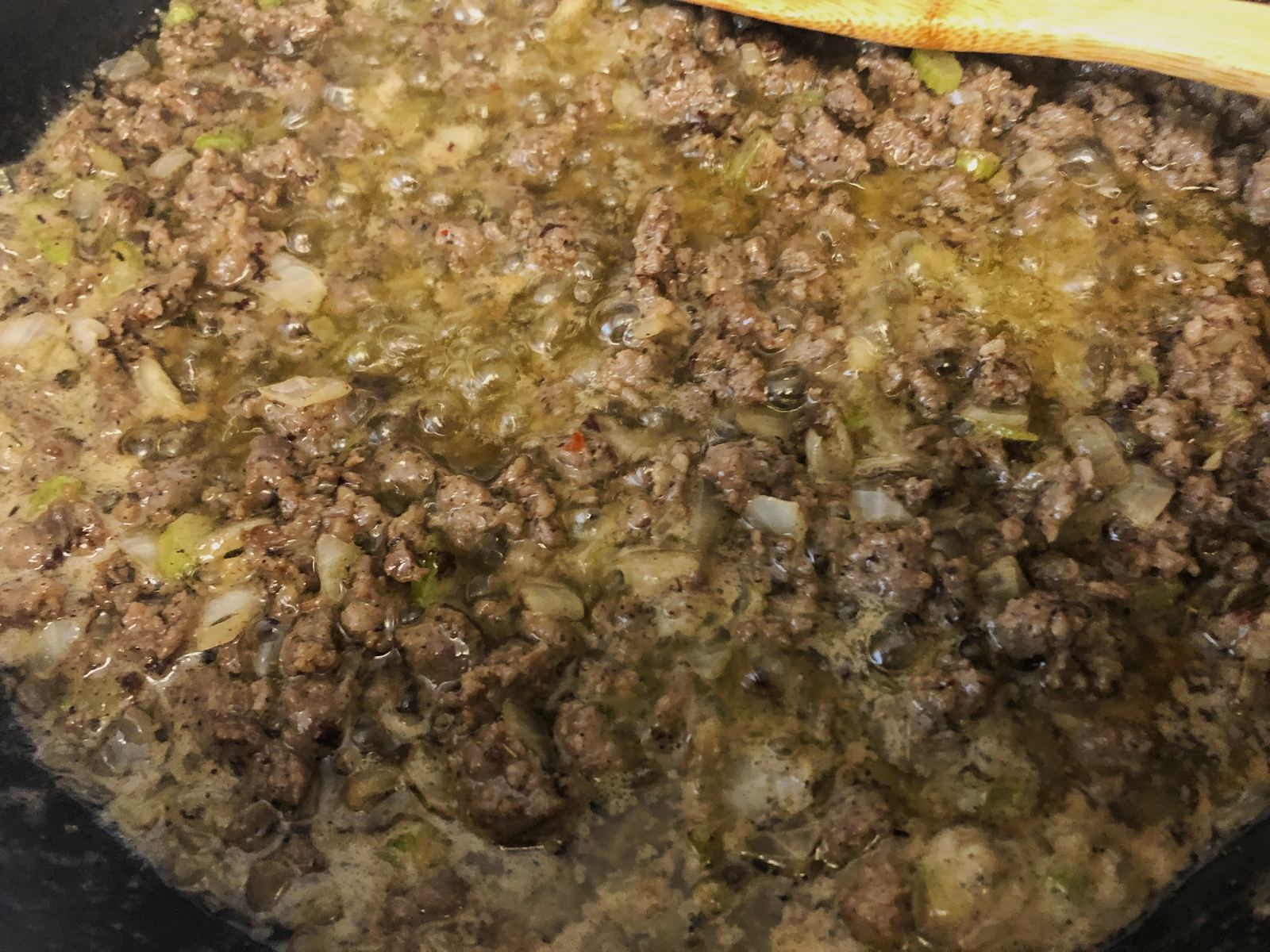
- Step 3: Bring the sausage back. Stir it into the buttery vegetables and let it heat through. Taste it once. Only once.
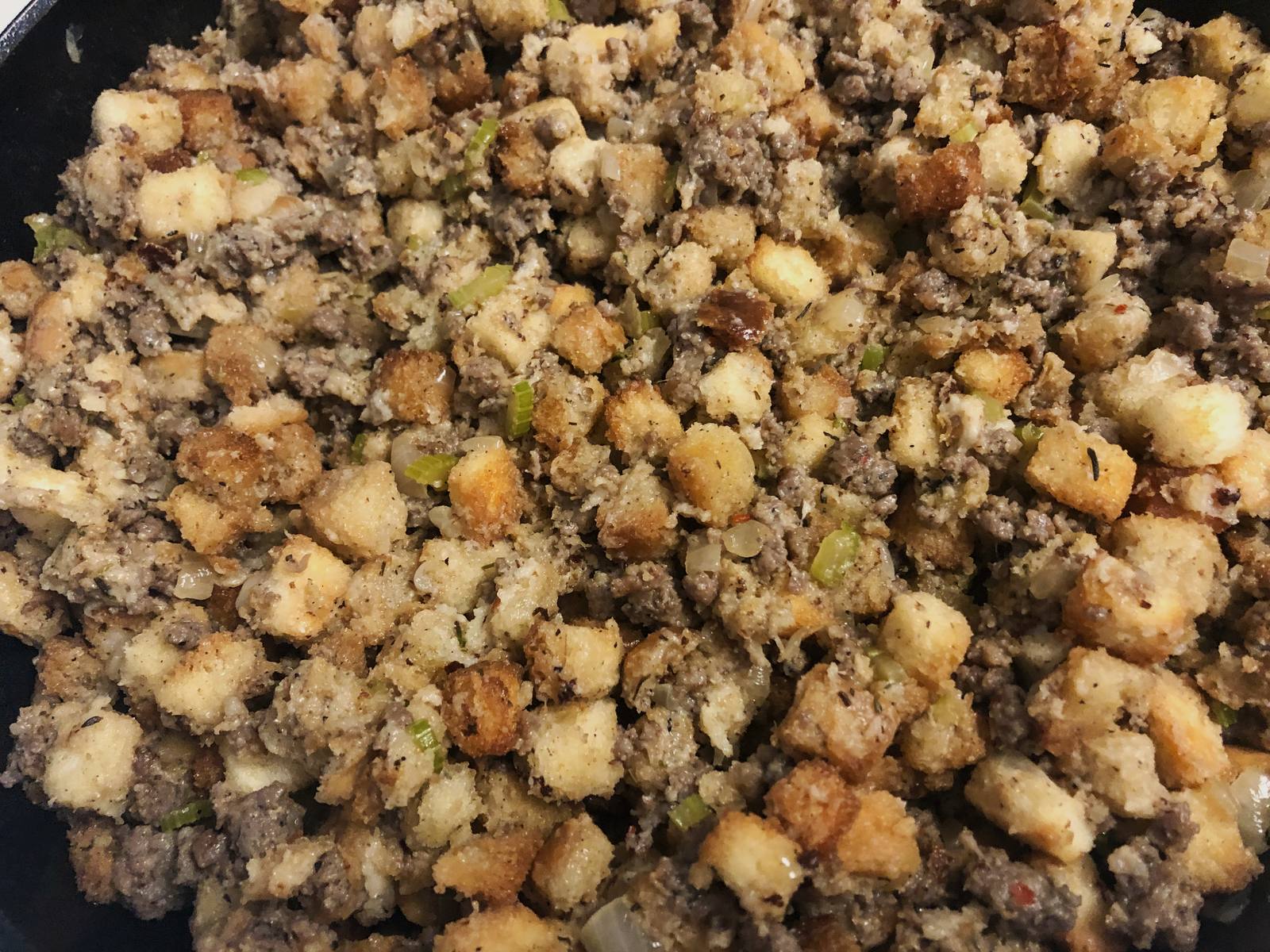
- Step 4: Add bread and broth in turns. Alternate handfuls of bread with splashes of broth until every cube is coated and the mix is moist but not soggy.
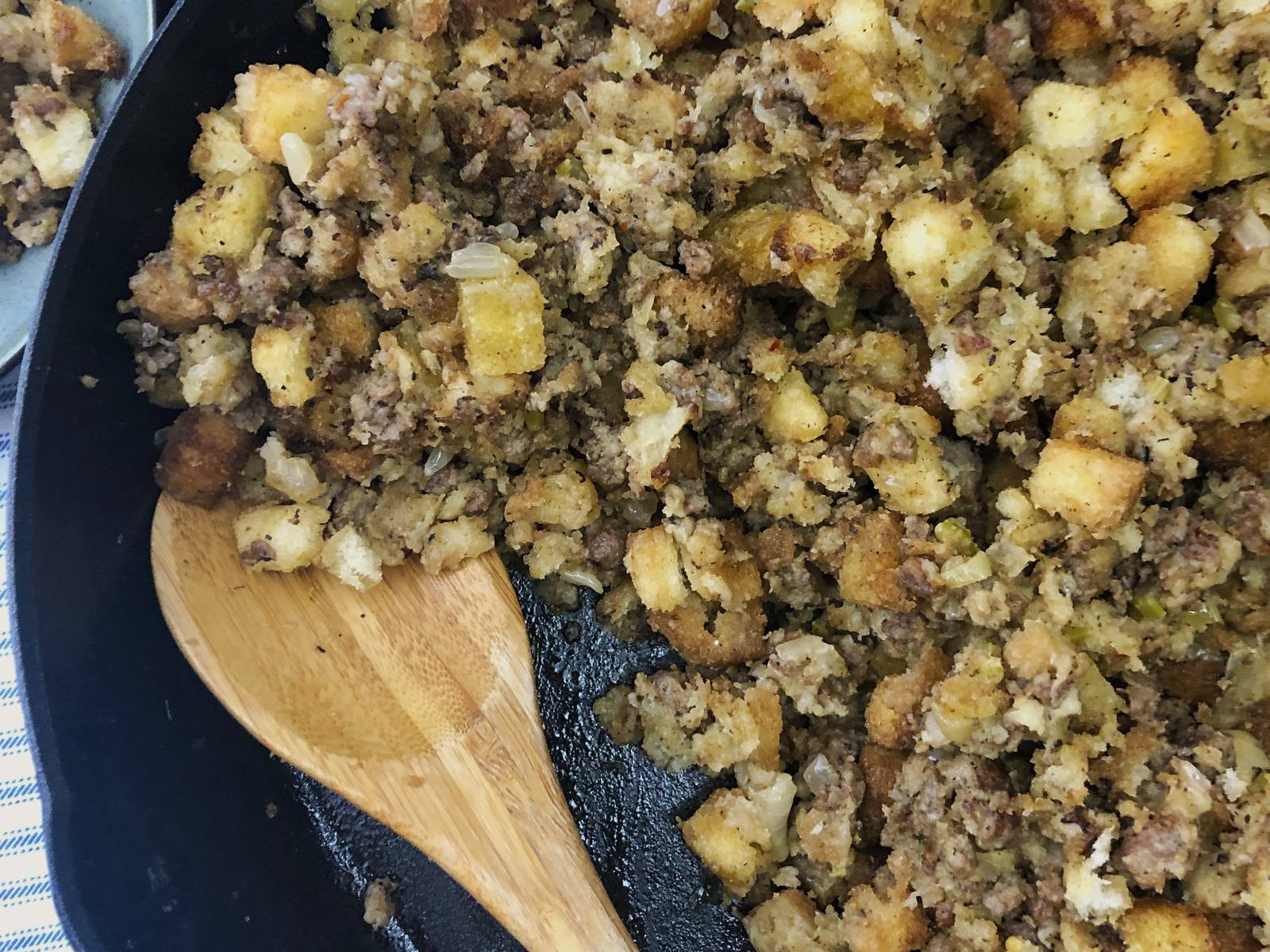
- Step 5: Cover and bake. Foil on tight, 20 minutes at 350°F, then foil off for 5 more until the top is golden and the edges are crisp.
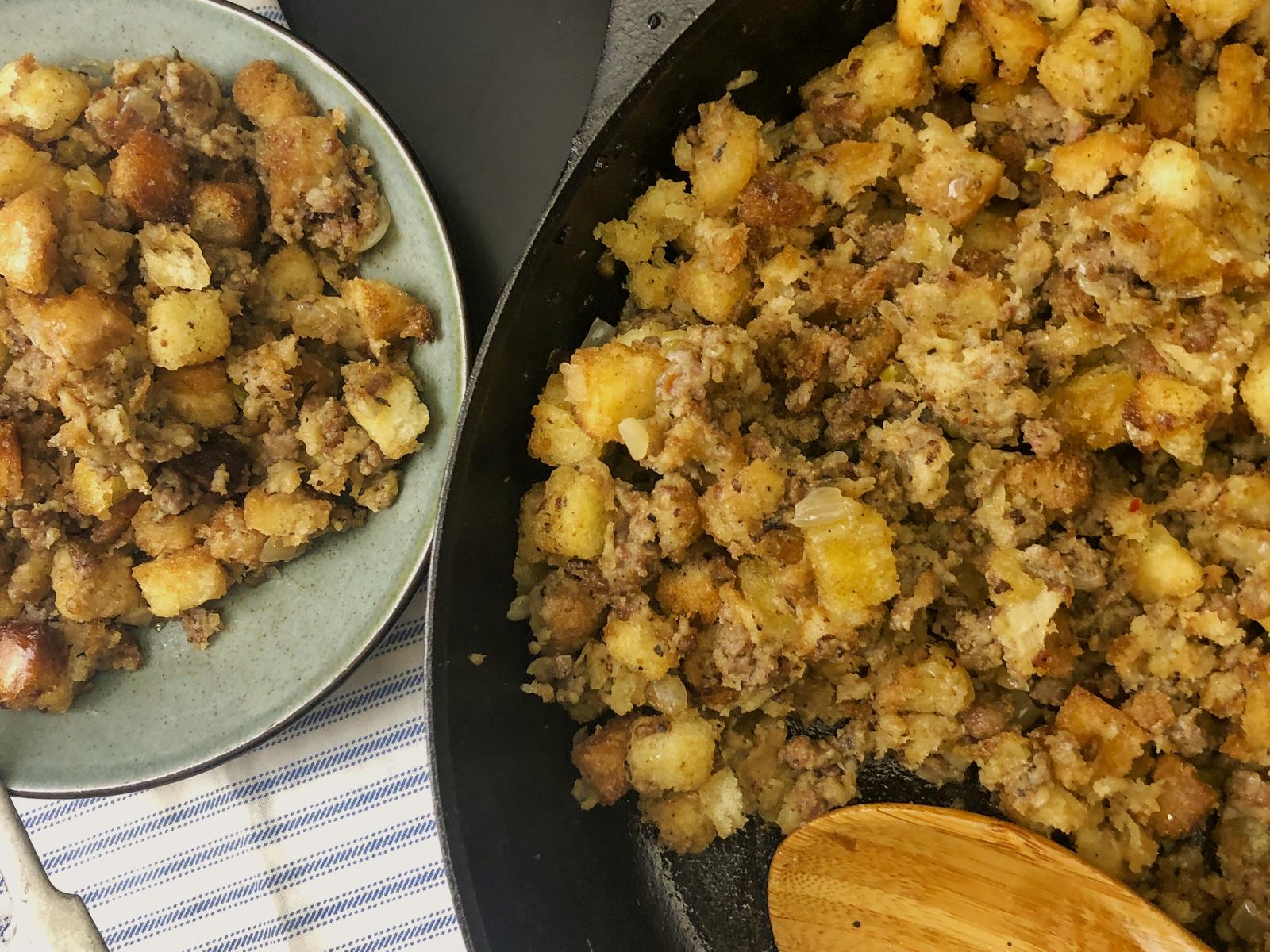
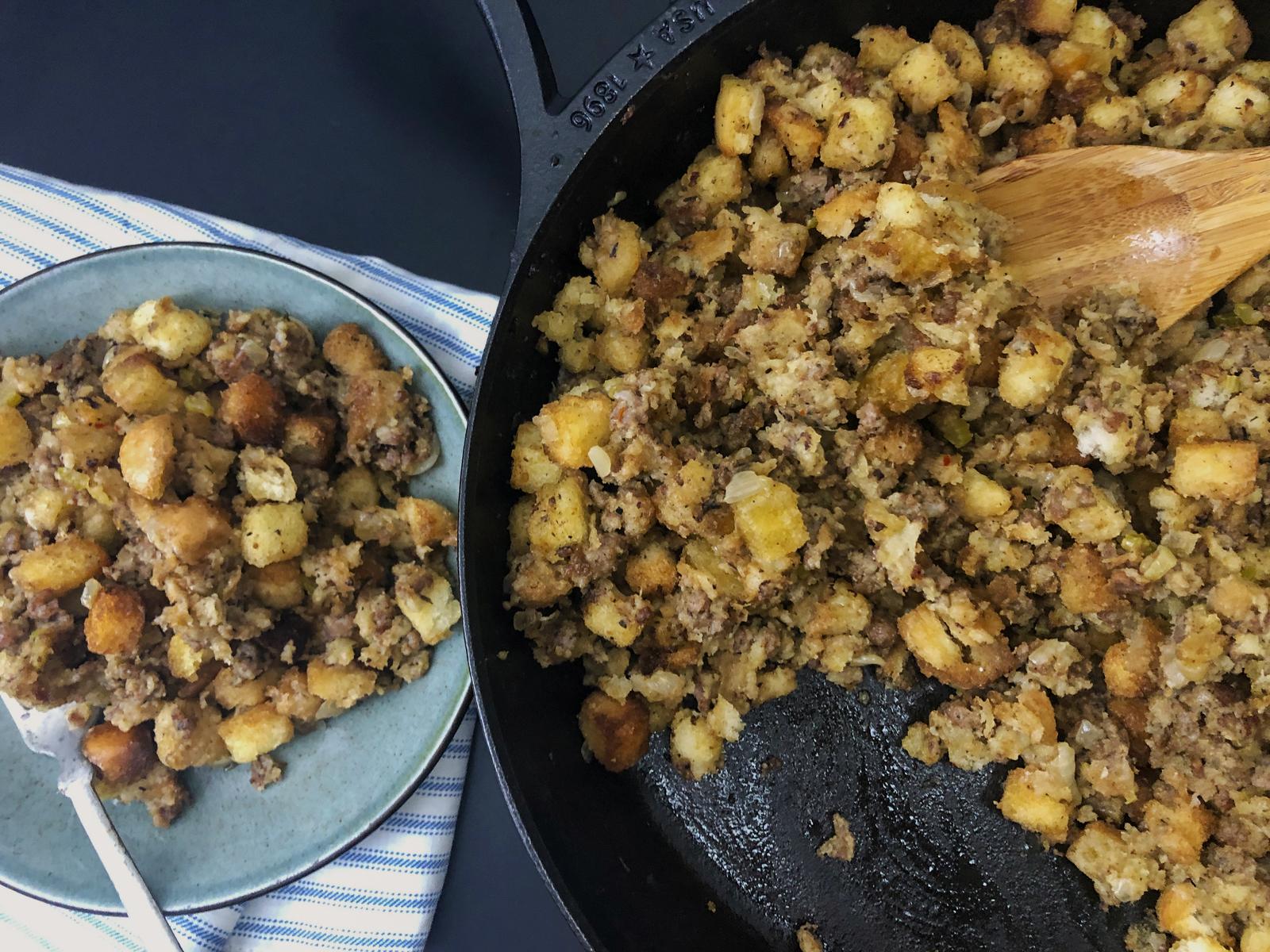
- Step 6: Serve from the skillet. Straight to the table. The cast iron keeps it hot through seconds.
Variations
- Cornbread sausage stuffing. Swap half the bread cubes for crumbled day-old cornbread and cut the broth back by about a half cup, since cornbread drinks less. Bake a pan of my Sweet Potato Cornbread the day before and crumble it in.
- Apple and sausage. One diced Honeycrisp or Granny Smith goes in with the celery and onion.
- Cranberry and pecan. A half cup of dried cranberries and a half cup of toasted pecans stirred in with the bread.
- Mushroom. Eight ounces of sliced cremini cooked in the butter before the onion and celery go in. Let them brown and give up their liquid first or the stuffing goes soggy.
- Hot sausage. Use hot breakfast sausage, or go half sage and half hot.
- Dutch oven or camp oven. Same method in a 12 inch Dutch oven. Over coals, aim for about 8 briquettes underneath and 16 on the lid for a 350°F bake, and give the lid a quarter turn every 10 minutes.
- On the smoker. Assemble in the skillet and run it uncovered at 250°F for about 45 minutes after the turkey comes off. You get a light smoke on the top layer without drying it out.
Expert Tips for Sausage Stuffing
- Dry bread or don't bother. Fresh bread soaks up broth unevenly and collapses. Leave cubes out on a sheet pan overnight, or dry them at 275°F for 30 minutes, stirring once.
- Cook the sausage first, and keep the drippings. Raw sausage buried in bread steams instead of browning, and the center can end up under temperature. Browned first, it gives you crisp bits and a pan full of flavor to build on.
- Add broth in stages. Total liquid lands somewhere between 2½ and 4 cups depending on how dry your bread is. The squeeze test: a handful should hold together without dripping.
- Covered first, then uncovered. Foil traps steam so the bread hydrates and heats through. Pulling it off at the end lets the top dry out and crisp. Skip the foil and you get a dry top over a cold middle.
- Check the center at 165°F. It is sausage. Two seconds with a thermometer is worth it.
- Make it ahead. Assemble through step 4, cool it, and refrigerate in a sealed container, not in the skillet. Salty, buttery food sitting overnight in cast iron is hard on the seasoning. Next day, put it back in the skillet, add a splash of broth, and bake covered for 25 minutes and uncovered for 5. My Dutch Oven Honey Glazed Carrots reheat the same way, so the two can share oven time on the big day.
- Reheat leftovers in the skillet. Medium-low with a tablespoon of butter and a splash of broth, lid on until hot, then lid off to re-crisp the bottom. The microwave works, but you lose the edges.
What to Serve with Sausage Stuffing
This is rich, so it wants a bird and gravy on one side and something sharp or green on the other. Here is what it sits next to at our house.
- Herb Butter Turkey, which is the reason the stuffing exists in the first place.
- Easy Turkey Gravy over the top of everything.
- Homemade Cranberry Sauce with Orange to cut the butter.
- Something green. My Asian Green Beans take 15 minutes in the same kind of skillet, and the Cheesy Green Bean Casserole with Bacon is the classic if you want to go all in.
Finish your holiday meal with a slice of Honey Sweet Potato Pie.
Sausage Stuffing FAQs
Dry bread and enough fat. Fresh bread turns to mush when the broth hits it, so use cubes that have dried overnight or in a low oven. Then do not skimp on the butter and the sausage drippings; they carry the flavor into every cube. Bake it covered so it heats through, then uncovered so the top crisps. In a cast iron skillet the edges brown far better than they will in a glass dish.
Yes, always. Brown the sausage fully first, then build the stuffing in the drippings. Raw sausage buried in bread steams instead of browning, and the center of the stuffing may not reach a safe 165°F in the time it takes the top to look done. Cooking it first also gives you the crumbled, browned bits that make sausage stuffing taste like sausage stuffing.
Sage-seasoned pork breakfast sausage, sold in a one pound roll, is the best match for a classic Thanksgiving stuffing because its seasoning lines up with the poultry seasoning and thyme already in the dish. Mild Italian sausage works but brings fennel, which changes the flavor. Skip links and casings; you want bulk sausage you can crumble.
Technically it is a sausage dressing, because it is cooked in a skillet rather than inside the turkey. Stuffing goes in the bird; dressing is baked on its own. Most families call both of them stuffing, which is why this recipe does too. Cooking it outside the bird is safer and gives you a crisp top, and the turkey does not have to be overcooked to get the stuffing up to temperature.
Yes. Cook the sausage and vegetables, stir in the bread and broth, then cool it and refrigerate it in a sealed container for up to two days. Do not store it in the cast iron skillet overnight. When you are ready, put it back in the skillet, add a splash of broth if it looks dry, and bake covered at 350°F for about 25 minutes, then uncovered for 5. Baked leftovers keep 4 days in the fridge or 2 months in the freezer.
You can. Brown a pound of sage sausage in the skillet, cook the onion and celery in the butter, then stir in one or two boxes of stuffing mix and only as much broth as the box calls for, since the mix is already seasoned. Skip the extra poultry seasoning and salt. Bake it covered for 15 minutes and uncovered for 5. It will not have quite the texture of the dried bread version, but it is a solid shortcut.
Reheat it in the skillet with a little butter and broth to bring back the crisp edges. Or put it to work: it is the base for my Thanksgiving Meatballs with Stuffing and Gravy, and it makes a great layer in Leftover Turkey Shepherd's Pie.
Leftover ideas from the last answer: Thanksgiving Meatballs with Stuffing and Gravy and Leftover Turkey Shepherd's Pie.
More Thanksgiving Recipes



If you tried this Skillet Sausage Stuffing or any other recipe on my blog, please leave a 🌟 star rating and let me know how it went in the 📝 comments below. Thanks for visiting!
Get the Recipe
Sausage Stuffing
Equipment
- 12-inch cast iron skillet
- Aluminum Foil
- Wooden spoon
- Mixing bowl
Ingredients
- 1 lb sage sausage
- 1½ cups butter 3 sticks
- ⅓ cup celery (1 rib)
- ¾ cup onion (1 medium)
- ½ teaspoon salt to taste
- ½ teaspoon pepper to taste
- ½ teaspoon rubbed sage
- ½ teaspoon dried thyme
- ½ teaspoon poultry seasoning
- 12 oz dried bread (package; 1 fresh loaf dried)
- 29 oz chicken broth Two - 14.5 oz cans;

Instructions
- Pre-heat oven to 350°F.
- Heat the skillet over medium high heat.
- Crumble and cook the sausage completely through, about 5 minutes, until no pink remains.
- Drain off any renderings and transfer to a bowl; set aside.
- Return the skillet to the heat, and add the butter.
- Once the butter has melted, add the celery, onions, herbs, and seasonings.
- Cook for 4 to 6 minutes, until the onion is translucent and the celery has softened.
- Return the sausage to the skillet, stir well to combine and heat through.
- Begin to stir in the bread, adding the broth as needed. (see notes)
- Continue rotating between bread and broth until all the bread has been incorporated and the stuffing is moist but not soggy. A handful squeezed in your fist should hold together without dripping.
- Cover tightly with foil and bake for 20 minutes.
- Remove the foil and bake 5 more minutes, until the top is golden and the edges are crisp. The center should read 165°F.
- Serve and enjoy.
Notes
- Dry bread or don't bother. Fresh bread soaks up broth unevenly and collapses. Leave cubes out on a sheet pan overnight, or dry them at 275°F for 30 minutes, stirring once.
- Cook the sausage first, and keep the drippings. Raw sausage buried in bread steams instead of browning, and the center can end up under temperature. Browned first, it gives you crisp bits and a pan full of flavor to build on.
- Add broth in stages. Total liquid lands somewhere between 2½ and 4 cups depending on how dry your bread is. The squeeze test: a handful should hold together without dripping.
- Covered first, then uncovered. Foil traps steam so the bread hydrates and heats through. Pulling it off at the end lets the top dry out and crisp. Skip the foil and you get a dry top over a cold middle.
- Check the center at 165°F. It is sausage. Two seconds with a thermometer is worth it.
- Make it ahead. Assemble through step 4, cool it, and refrigerate in a sealed container, not in the skillet. Salty, buttery food sitting overnight in cast iron is hard on the seasoning. Next day, put it back in the skillet, add a splash of broth, and bake covered for 25 minutes and uncovered for 5. My Dutch Oven Honey Glazed Carrots reheat the same way, so the two can share oven time on the big day.
- Reheat leftovers in the skillet. Medium-low with a tablespoon of butter and a splash of broth, lid on until hot, then lid off to re-crisp the bottom. The microwave works, but you lose the edges.
Nutrition
Dutch Oven Daddy is not a dietician or nutritionist, and any nutritional information shared is only an estimate. We recommend running the ingredients through an online nutritional calculator if you need to verify any information.

Alison says
Not a stuffing fan but this was great.
Dutch Oven Daddy says
Glad you liked it.
Travis says
Stuffing is usually not popular with my family. I was excited to see how quick this went at this recent thanksgiving. I made the dried bread homemade and it really added some flavor.
Micki Kell says
I made this stuffing and doubled it. I left out one cube of butter 4oz and it was still very moist.
This dish has wonderful flavor and got raves but it would still be excellent with even less butter.
We’ll have this one again for sure!!!
Dutch Oven Daddy says
So happy to hear you and your guests enjoyed it.
Mitch Duffy says
This is a variation of the Morrison Woods recipe from I believe the 1960’s. My family has had it literally every year since! Added to this in the original are mushrooms (sautéed) slivered almonds, and a bit of cooking sherry. Lastly, use even amounts of white, wheat, and rye breads. Enjoy!
Michelle De La Cerda Nash says
I love the idea of adding mushrooms. Your version sounds wonderful.
Renu says
I would not mind serving this as a main course too. The filling with all the herbs sounds yummy.
Ned Adams says
Thank you so much! I agree with you, this is a very very filling recipe that can stand alone.
Tamara Morrison says
I'm going to try this camping. Do you think the same cook times apply nestling the dutch oven down in a campfire?
Ned Adams says
You should be able to make this camping. Your cool times many vary depending on the outside conditions.
Simply Inspired Meals says
Looks like a very tasty stuffing dish. My family would enjoy this.
Ned Adams says
Thank you so much!
Lisa Kerhin says
I need to make my stuffing on the stove top now! We use a spicy sausage in ours, but I like that you used the sage sausage.
Ned Adams says
Spicy sausage sounds amazing, to give it an extra kick. Thanks for sharing, I'm going to have to try that.
Karen says
I love that you can make this in in a skillet! What a gorgeous and delicious sounding stuffing recippe!
Ned Adams says
Thank you! Thats one thing I love about cast iron, you can go stove top to oven within seconds.
Wendy Klik says
Forget the side plate, hand me a dinner plate!!
Ned Adams says
That's what I'm talking about! 🙂
Hezzi-D says
Love that you made this on the stove top. Sausage in my stuffing is a favorite!
Ned Adams says
Thank you!